

Rimsky-Korsakov Popular Songs Ranking [2026]

Nikolai Rimsky-Korsakov is a Russian composer.
Renowned for his emotionally rich and majestic music—melodies whose every note resonates with the heart—he is considered such an important figure that he is counted among the “Mighty Handful” (The Five) of Russian composers.
Said to have had synesthesia, perceiving colors in sounds, I have compiled a ranking of his popular pieces.
Please enjoy his richly colorful music.
- Rimsky-Korsakov’s Masterpieces | The Vividly Colorful World of Russian Music
- Mily Balakirev Popular Songs Ranking [2026]
- Modest Mussorgsky Popular Song Rankings [2026]
- Igor Stravinsky Popular Songs Ranking [2026]
- Sergei Rachmaninov Popular Songs Ranking [2026]
- Alexander Borodin Popular Song Ranking [2026]
- Alexander Scriabin Popular Songs Ranking [2026]
- Pyotr Tchaikovsky Popular Song Rankings [2026]
- Dmitri Kabalevsky Popular Song Rankings [2026]
- Peter Ilyich Tchaikovsky Popular Songs Ranking [2026]
- Dmitri Shostakovich Popular Songs Ranking [2026]
- Sergei Prokofiev Popular Songs Ranking [2026]
- Ottorino Respighi Popular Songs Ranking [2026]
Rimsky-Korsakov Popular Song Rankings [2026] (31–40)
From the Symphonic Suite ‘Scheherazade’, Fourth MovementNikolai Rimsky-Korsakov36rank/position

The symphonic suite Scheherazade is one of Rimsky-Korsakov’s signature works.
Its fourth movement is titled “The Festival at Baghdad.
The Sea.
The Ship Breaks against a Rock Surmounted by a Bronze Warrior.
Conclusion.” In this movement, many of the melodies and themes from the previous three movements reappear.
It comes to a quiet, gentle close, drawing the curtain on the work.
Performance: Orchestra of the Accademia Nazionale di Santa Cecilia; Conductor: Yuri Temirkanov.
Overture “Russian Easter”Nikolai Rimsky-Korsakov37rank/position
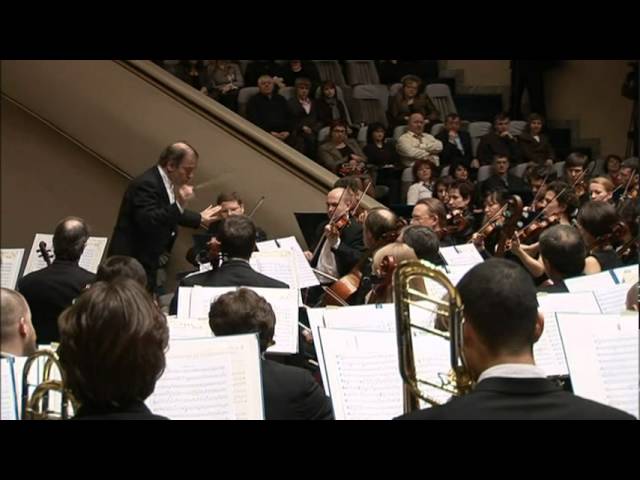
A celebrated piece that vividly portrays the Russian Orthodox Easter.
In the introduction, woodwinds and cellos play chant-like melodies, creating a mystical atmosphere.
When the main section begins, the tempo quickens, conveying a festive bustle.
The effective use of percussion and brass—evoking the sound of bells and the cheers of the crowd—is striking.
With a performance time of about 15 minutes, it masterfully fuses religious solemnity with the joy of the people.
Recommended for those interested in traditional Russian music or anyone who enjoys grand orchestral works.
From String Sextet in A major, 1st movementNikolai Rimsky-Korsakov38rank/position

From the String Sextet in A major, Movement I: Allegro vivace.
Performed by violins: Nathaniel Eulentrop and April Moon; violas: J.
David Eulentrop and Molly Prow; cellos: Nathan Hsu and Alex Cho.
From the String Sextet in A major, Fourth MovementNikolai Rimsky-Korsakov39rank/position
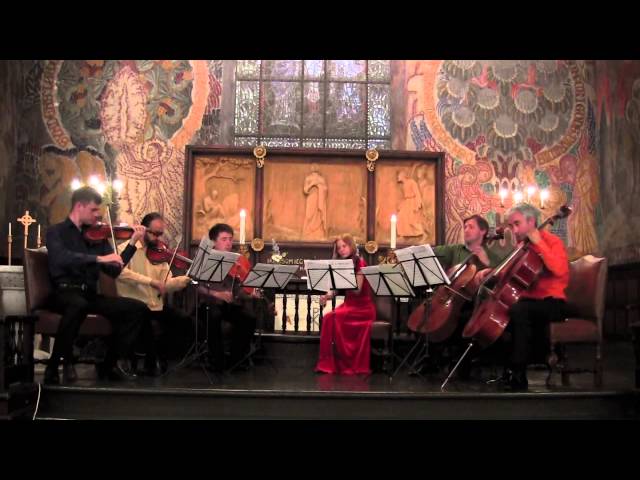
From String Sextet in A major, Movement IV: Andante espressivo.
Performed by the Moscow Academy of Chamber Music.
Violins: Andrey Sigeda, Ivan Subbotkin; Violas: Zoya Karakutsa, Nail Bakiev; Cellos: Igor Bobowitsch, Alexander Kashin.
Indian Song from the opera SatkoNikolai Rimsky-Korsakov40rank/position
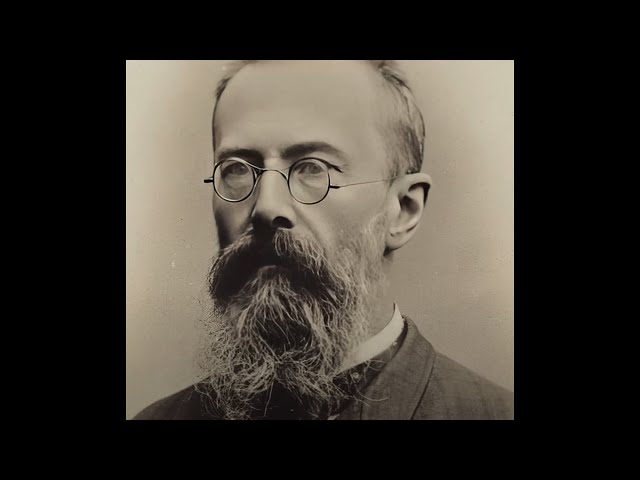
This piece captivates with its exotic atmosphere.
Its lyrics, which paint scenes of distant lands, and its beautiful melody transport listeners to faraway countries.
The words praising India’s rich nature and treasures express a longing for a mysterious world.
Since its premiere in 1898, it has continued to enchant many people.
Though originally part of an opera, it is beloved worldwide as a standalone piece as well.
There are also arrangements for various instruments such as flute and violin, so be sure to give them a listen.
Rimsky-Korsakov Popular Songs Ranking [2026] (41–50)
Procession of the Nobles, from the opera MladaNikolai Rimsky-Korsakov41rank/position

From the opera Mlada, Act II, Scene 3: Procession of the Nobles.
This opera is based on an old tale from the Baltic region.
Performed by the University of North Carolina at Chapel Hill Wind Ensemble, conducted by Jeffrey Fuchs.
Overture from the opera “The Tsar’s Bride”Nikolai Rimsky-Korsakov42rank/position

One of Rimsky-Korsakov’s signature works, The Tsar’s Bride.
The overture, written in D minor, condenses the opera’s tragic narrative.
It opens with a first theme marked by striking ornamentation, interwoven with ominous brass fanfares.
The second theme is said to express the heroine’s innocence.
After the development section heightens the tension, the piece ends quietly.
Premiered in Moscow on November 3, 1899, the opera vividly portrays a story swirling with love, jealousy, and intrigue through its music.
It is a masterpiece that powerfully conveys the depth of Korsakov’s creativity.