

Isao Sasaki Popular Songs Ranking [2026]

Sasaki, who has many hit anime songs such as his signature tracks Space Battleship Yamato and Galaxy Express 999, is known as the Grand King of the Anime Song World.
The anime songs he sings live on in the hearts of many people.
Here’s a roundup of some of his popular tracks.
- Oishi Masayoshi’s Most Popular Songs Ranking [2026]
- Hiromi Iwasaki Popular Songs Ranking [2026]
- Miyuki Nakajima’s Moving Songs and Popular Tracks Ranking [2026]
- Yashiki Takajin’s Most Popular Songs Ranking [2026]
- Shigeru Matsuzaki’s Most Popular Songs Ranking [2026]
- Yuki Saori’s Most Popular Songs Ranking [2026]
- Ichiro Mizuki’s Most Popular Songs Ranking [2026]
- Sayuri Ishikawa Popular Song Ranking [2026]
- Popular Gundam Song Rankings [2026]
- Ranking of Popular Anpanman Songs [2026]
- Yoshi Ikuzo Popular Song Rankings [2026]
- Popular Songs Ranking of Saburo Kitajima [2026]
- Kiyohiko Ozaki Popular Songs Ranking [2026]
Isao Sasaki Popular Songs Ranking [2026] (1–10)
Someday, the flowers will bloom.sasaki isao8rank/position

This song, which closed out the ending of J.A.K.Q.
Dengekitai, is a classic that sings of hope—believing that even while carrying today’s pain and setbacks, the time will come when it all pays off.
The lyrics were written by Saburo Yatsude, a familiar name in Toei productions, with composition and arrangement by Chumei Watanabe.
Built around bold brass accents and a driving rhythm section, the track runs just over two minutes, and the chorus repeats the title phrase for maximum memorability.
Released in April 1977 by Nippon Columbia as the B-side of the single “J.A.K.Q.
Dengekitai,” it aired weekly as the show’s ending theme from April to December of the same year, filling living rooms across Japan.
Serving to land the heroes’ battles for justice on an emotional note, it kept anticipation alive for the following week.
It’s a song you’ll want to hear when you don’t want to lose hope, even in difficult times.
Because it’s the path you chose.sasaki isao9rank/position

This is a song used as the ending theme for one of the many supercar-themed anime produced during the supercar boom, “Gekisou! Ruben Kaiser.” As the title suggests, it conveys a message of handling things yourself and clawing your way up, even if it’s tough, out of sheer determination.
Teresa Foreversasaki isao10rank/position
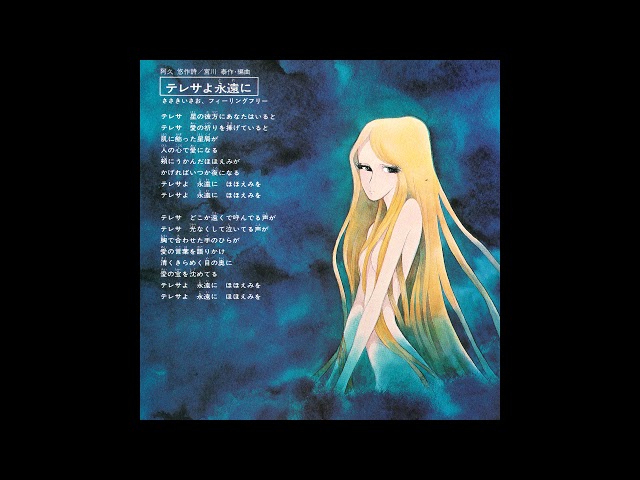
This is the ending theme of Space Battleship Yamato 2.
In fact, the character Teresa is quite mysterious, and her settings differ in the theatrical version and later remakes, so it’s a bit questionable whether she can really be called a princess.
However, in terms of her role, she’s similar to the “princess position” character that often appears in stories like this, so I think it’s fine to call her a princess.
Isao Sasaki Popular Songs Ranking [2026] (11–20)
Midnight Dekarangersasaki isao11rank/position

This ending theme expresses a unique world where police drama and hero action are fused.
Included on a single released in 2004, it’s captivating for the powerful vocals of Isao Sasaki and the bright, back-and-forth choruses of the Mori no Ki Children’s Choir.
The lyrics convey midnight highway car chases and the tension of cornering criminals—truly the very image of a flawless patroller.
The brass-driven arrangement balances a mature, hard-boiled vibe with an approachable warmth.
It was used as the ending theme for the TV series Tokusou Sentai Dekaranger, and also appeared as an insert song in the feature film.
If you want the whole family to get into a hero mood, why not crank up this fiery number?
Neo-Human Casshernsasaki isao12rank/position

It’s an anime about a cyborg hero.
Back then, it didn’t feel realistic, so I just watched it thinking it was a cool, ordinary anime.
But now that androids and human-shaped AI robots exist in the real world, it’s a bit intriguing to think that combat-capable ones might actually become possible.
Secret Squadron Gorengersasaki isao13rank/position

This is the B-side track of a single released by Nippon Columbia in April 1975, and it served as the ending theme for the memorable first entry in the Super Sentai series.
Its powerful brass, exhilarating rhythm, and the striking “Banbara banbanban” scat leave a lasting impression.
The phrase—Chumei Watanabe’s incorporation of the then-popular scat style—has an irresistible charm that sticks with listeners of all ages after just one hearing.
Sung by Isao Sasaki with a Presley-like sensuality, the piece has a kayō-rock sheen that transcends the bounds of a children’s program, and the call-and-response with the chorus group Korogi ’73 is superb.
It reached No.
4 in the TV Anime/Children’s Songs category on Oricon’s 1976 year-end chart, achieving major commercial success.
Highly recommended for anyone who wants to relive those days when the whole family gathered around the TV, hearts racing at the heroes’ exploits!
Behold!! Gorengersasaki isao14rank/position

This is a single released by Nippon Columbia in October 1976 as the later ending theme for the first installment of the Super Sentai series, Himitsu Sentai Gorenger.
The music and arrangement were by Chumei Watanabe, with lyrics by Shotaro Ishinomori.
Set to heroic brass and a march-like rhythm, Isao Sasaki delivers short, forceful phrases, supported by the rich mixed chorus of The Choruses ’73 (Korogi ’73) and The Will Beez—one of its defining features.
Rather than a conventional sung style, it adopts a declarative, spoken-address approach that boldly proclaims the ideals of the five heroes, making it an experimental work with a unique place in the history of Sentai songs.
It was used as the ending theme from episode 64 to episode 84 of the television series and was also featured in medley form in the 1978 theatrical release J.A.K.Q.
Dengekitai vs.
Gorenger.
It’s a piece that will rekindle passionate memories for adults who watched the show back then, while continuing to inspire children who look up to heroes.