

Pyotr Tchaikovsky Popular Song Rankings [2026]

Pyotr Tchaikovsky, who also composed the classic ballet pieces Swan Lake and The Nutcracker.
His musicality is still loved by many classical music enthusiasts today.
This time, we’ll introduce a ranked list of his popular works, so please take this opportunity to immerse yourself in the world of Pyotr Tchaikovsky.
- Peter Ilyich Tchaikovsky Popular Songs Ranking [2026]
- [Tchaikovsky] Pick up famous and representative pieces!
- Alexander Scriabin Popular Songs Ranking [2026]
- Igor Stravinsky Popular Songs Ranking [2026]
- Rimsky-Korsakov Popular Songs Ranking [2026]
- Sergei Prokofiev Popular Songs Ranking [2026]
- Sergei Rachmaninov Popular Songs Ranking [2026]
- Alexander Borodin Popular Song Ranking [2026]
- Modest Mussorgsky Popular Song Rankings [2026]
- [Low Difficulty] Recommended Tchaikovsky Piano Pieces [Intermediate]
- Edvard Grieg Popular Song Rankings [2026]
- Aram Khachaturian Popular Song Rankings [2026]
- Dmitri Shostakovich Popular Songs Ranking [2026]
Pyotr Tchaikovsky Popular Songs Ranking [2026] (41–50)
Symphony No. 6 “Pathétique”Pyotr Tchaikovsky43rank/position
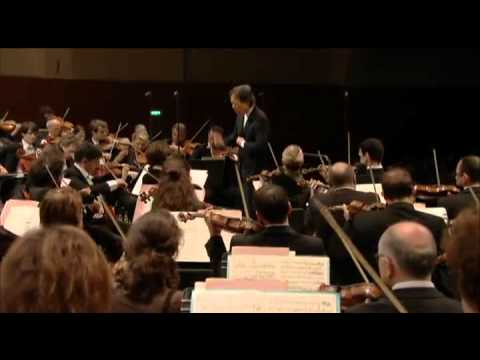
Symphony No.
6 “Pathétique” by the Russian composer Pyotr Ilyich Tchaikovsky—who left many grand works such as the ballet music Swan Lake—was his final composition and is counted among the representative symphonies of the late 19th century.
Tchaikovsky is said to have written in a letter that he was “prouder of this than any other work,” suggesting it was a piece in which he took great confidence.
Particularly famous is the fourth movement, which, true to its subtitle, is suffused with pathos.
Why not quietly savor its heartbreakingly beautiful harmonies that seem to pierce the soul?

String Quartet No. 1 in D major, Op. 11 – II. Andante cantabilePyotr Tchaikovsky44rank/position

String Quartet No.
1 in D major, Op.
11, composed in 1871 by Russian composer Pyotr Tchaikovsky.
Among its movements, the independently beloved slow second movement stands out.
As indicated by the direction “Andante cantabile,” it features a melody that draws out the singing quality of the strings to the fullest, resonating deeply in the heart.
There is even an anecdote that the great writer Tolstoy was moved to tears upon hearing this movement.
In 1888, Tchaikovsky himself arranged it for cello and string orchestra, allowing it to be performed in a wider variety of settings.
Eschewing flashy virtuosity, its long-breathed legato lines leave space that anyone can connect to some part of their own life.
It is an ideal piece of background music for moments when emotions quietly swell, such as diploma presentations or recessional scenes.
Galanthus (snowdrop)Pyotr Tchaikovsky45rank/position

Pyotr Tchaikovsky’s masterpiece The Seasons features pieces for each month from January to December.
The piece that represents April is Snowdrop.
Although it contains many delicate touches, it never becomes too intense or heavy; instead, it is characterized by a consistently gentle melody from start to finish.
While evoking the breath of new plants and trees, it also beautifully captures the fleeting nature of the short spring season.
Be sure to give it a listen.

Swan Lake · Opening 20a · TH219: Russian DancePyotr Tchaikovsky46rank/position

It is used in Act 3 of Tchaikovsky’s ballet Swan Lake, in the brilliant scene featuring dances from around the world.
Along with The Sleeping Beauty and The Nutcracker, Swan Lake is considered one of the three great ballets.
The work depicts the love story of Odette, transformed into a swan, and Prince Siegfried.
Please enjoy the virtuosic violin passages and the glittering melody.

Festive Overture ‘1812’Pyotr Tchaikovsky47rank/position

Pyotr Ilyich Tchaikovsky’s Festival Overture “1812,” with its moving, lyrical melodies, is perfect for those peak moments of emotion at graduation ceremonies.
Composed in 1880 to celebrate a historic Russian victory, the piece overflows with fervent patriotism and grandeur, leaving a powerful impression on listeners.
Although Tchaikovsky himself regarded it as having “no artistic value,” its majestic musicality continues to be widely loved today.
We highly recommend it to teachers seeking a grand and stirring BGM worthy of a memorable day.
Your sentiments are truly embedded in it, aren’t they? In the first verse, only piano and strings are used, offering a dramatic accompaniment that beautifully supports the vocals.
Suite “The Nutcracker,” Op. 71a, No. 3: “Dance of the Sugar-Plum Fairy”Pyotr Tchaikovsky48rank/position

The Nutcracker, a ballet score composed by Pyotr Tchaikovsky, a leading figure in Russian music.
Among its pieces, the Dance of the Sugar Plum Fairy depicts a banquet in the Land of Sweets and evokes a slightly mysterious world.
The delicate timbre of the celesta, a keyboard instrument, expresses the graceful dance of the Sugar Plum Fairy.
Its light, dreamlike melody, which whisks listeners away to another realm, is perfect for Halloween too! Although it’s performed by ballet companies around the world during the Christmas season, why not give it a listen a bit early at Halloween? And if you’re intrigued, try playing it on the piano as well.
Suite “The Nutcracker,” Op. 71a, No. 3: “Dance of the Sugar Plum Fairy”Pyotr Tchaikovsky49rank/position

A masterpiece by Tchaikovsky, the great composer born in Russia.
This work is associated with Christmas and is performed around the world every year during the season.
Its most striking feature is the gentle timbre of the celesta, and it portrays the solo dance of the Sugar Plum Fairy, queen of the Land of Sweets.
Tchaikovsky was captivated by the instrument’s sound and is said to have incorporated it into the orchestra earlier than other Russian composers.
The left-hand part is played pizzicato by the strings, creating a unique atmosphere.
This piece can also be enjoyed as a piano duet.
Be sure to play it while imagining the charming fairy’s dance.