

Yoshimi Tendo Popular Song Rankings [2026]

Yoshimi Tendo has been active as an enka singer for over 45 years.
Since her debut with the theme song for the Fuji TV anime “Inakappe Taisho,” titled “Daichan Kazoewuta / Inakappe Taisho,” she has produced numerous hits.
Given her long career and extensive catalog, we will introduce her songs in a ranking format.
- Enka Karaoke Popularity Rankings [2026]
- Popular Enka Singers Ranking [2026]
- Songs by Yoshimi Tendo, the songstress born in Osaka, that are easy to sing
- Aiya Shimazu Popular Songs Ranking [2026]
- Classic enka songs you’ll want to sing at karaoke: recommended popular tracks
- Yoshi Ikuzo Popular Song Rankings [2026]
- Hiroshi Itsuki Popular Songs Ranking [2026]
- Hikawa Kiyoshi Popular Songs Ranking [2026]
- Kohei Fukuda Popular Song Ranking [2026]
- Sayuri Ishikawa Popular Song Ranking [2026]
- Yoko Nagayama’s Popular Song Rankings [2026]
- Cool masterpieces of enka, the heart of Japan
- Yashiki Takajin’s Most Popular Songs Ranking [2026]
Yoshimi Tendo Popular Songs Ranking [2026] (21–30)
Encounter HighwayTendō Yoshimi21rank/position

The piece “Deai Kaido” is notable for its expressive, dynamic vocal line.
This is a pure pop work—not enka or kayōkyoku—so it doesn’t demand the intricate pitch rises and falls typical of enka.
However, it does contain quite a few slightly high phrases, so be mindful of that.
Fortunately, there aren’t many long sustained high notes.
Aim to sing in a suitable key so you can lock in your pitch.
If the high notes are challenging, it can even help to raise the key on purpose to make it easier to use falsetto.

Hokkai Meoto-bushiTendō Yoshimi22rank/position

Those who make their living from the bounty of the sea pray for their husbands’ safe return.
Constantly battling the perils of nature, they live their lives prepared for the worst.
Though she is not a widow, this is a song about a woman’s resolve to live her life without ever remarrying.
Daichan Counting SongTendō Yoshimi23rank/position

A lively counting song that makes you want to count on your fingers—“one, two”—with boundless energy.
It portrays a protagonist who leaves their hometown and lives with resilience, and simply listening to it feels like an uplifting cheer song.
This piece is the memorable debut work released by Yoshimi Tendo in September 1970 under the name Yoshimi Yoshida, and it also became widely known as the theme song for the anime Inakappe Taisho.
Singing along while folding your fingers to the story as a parent and child might naturally spark an interest in numbers.
Osaka RainTendō Yoshimi24rank/position

Speaking of Yoshimi Tendo, her works set in her hometown of Osaka are also popular.
“Osaka Rain” is a memorable song with a Latin music flavor.
In terms of genre, it’s classified as kayōkyoku (Japanese pop enka).
As such, it doesn’t feature the intricate kobushi ornamentation typical of enka.
The vocal range isn’t narrow, but it’s not particularly wide either, so if you choose a suitable key, you can fully enjoy singing it at karaoke.
Consider adding it to your repertoire.
Osaka… dreams, hope, and loveTendō Yoshimi25rank/position

Speaking of Yoshimi Tendo, in addition to her emotionally rich songs, her works themed around her hometown of Osaka are also popular.
Among them, the one I especially recommend for its ease of singing is “Osaka…
Dreams, Hopes, and Love.” This piece is pure pop, with a gentle yet bright vocal line that doesn’t have many dramatic shifts.
Its vocal range is quite narrow for a Yoshimi Tendo song, so anyone with basic singing skills should be able to perform it without difficulty.
Happiness is just around the corner…Tendō Yoshimi26rank/position

Let me introduce one of Yoshimi Tendo’s signature songs, known for its moving vocals and touching lyrics.
Released in February 2008, this track was chosen as the ending theme for the TBS music program “Kaiun Ongakudo,” winning the hearts of many listeners.
The lyrics deliver a warm message: happiness isn’t far away—it’s actually right by your side.
The song showcases Tendo’s powerful yet delicate vocal prowess, with her soaring high notes being especially breathtaking.
If you’re confident in your high range, why not give it a try?
Sky of the heartTendō Yoshimi27rank/position
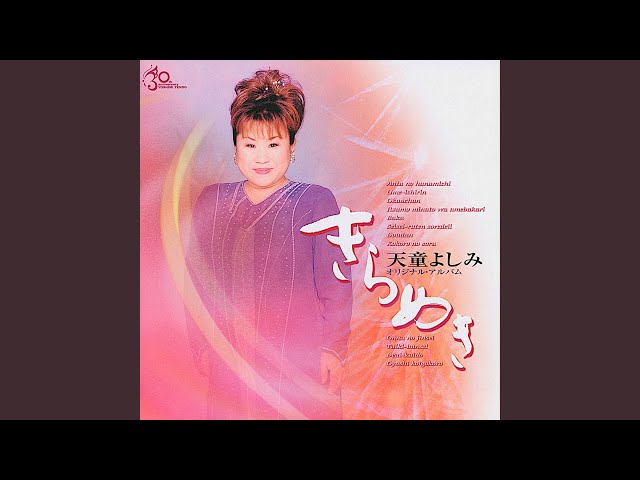
Yoshimi Tendo’s classic “Kokoro no Sora,” beloved for its warm, gentle melody.
While it may seem like enka, its vocal line is actually in the pop style.
Therefore, it doesn’t require intricate pitch inflections such as kobushi.
If you want to make it sound even better, try adopting a forward-projected Western singing technique rather than the harmonically focused, back-of-the-head resonance often used in traditional styles.
It’s highly recommended for those who want to practice achieving a rich, full vocal tone.
Be sure to add it to your repertoire.
Showa spiritTendō Yoshimi28rank/position

Speaking of Yoshimi Tendo, she’s not only renowned for her overwhelming vocal power but also for the emotional richness of her singing.
Among her works, “Showa Gokoro” stands out as especially full of emotion and, moreover, easy to sing.
While many people may find it powerful, its range is surprisingly narrow, so even those with a lower or limited vocal range can sing it comfortably.
The kobushi (ornamental vocal turns) are also relatively easy, making it a great addition to the repertoire of enka beginners.
A single plum blossomTendō Yoshimi29rank/position

Among Yoshimi Tendo’s songs, the standout classic Ume Ichirin is especially memorable for its strikingly stylish melody.
While the piece is rooted in kayōkyoku (Japanese popular song), the track also incorporates plenty of pop elements.
There are moments with an enka flavor as well, but there’s no vibrato-heavy kobushi, and the vocal line as a whole is crafted to be easy to sing.
That said, because it lacks the typical enka-style difficulty, it does present pop-specific challenges—most notably the falsetto in the chorus—so be mindful of those aspects when you sing it.
Mantenboshi ~Dōdan~Tendō Yoshimi30rank/position

The song “Mantenboshi ~Doudan~” is characterized by its gently soothing melody.
While the piece conveys a strong enka feel throughout, its vocal line is structured more like a kayōkyoku (Japanese pop) style.
As a result, it doesn’t feature kobushi—the intricate pitch bends that are a hallmark of enka.
It preserves the essence of enka while incorporating simpler, pop-like vocal lines, making it an exceptionally approachable song for beginners to enka.
Consider adding it to your repertoire.