

![Yoko Nagayama’s Popular Song Rankings [2026]](https://i.ytimg.com/vi_webp/dgYZ10jYrGY/maxresdefault.webp)
Yoko Nagayama’s Popular Song Rankings [2026]

Yoko Nagayama, whose “But you know” pose—spreading her arms to the music—became a hot topic.
Her 1995 release “Suterarete” was a hit, launching her into the ranks of popular enka singers.
She originally debuted as an idol singer.
This time, we’ll introduce her popular songs in a ranking.
Yoko Nagayama Popular Song Rankings [2026] (1–10)
Shirakami-SanchiNagayama Yōko1rank/position

Released in 2024, Shirakami Sanchi—an upright Tsugaru shamisen performance that epitomizes Yoko Nagayama—is already drawing attention as one of her signature songs of the Reiwa era.
Its major key gives it a fresh, bright, up-tempo feel, and the interplay between the shamisen ensemble and rock-style guitar is seriously cool.
It’s already a big hit at karaoke, and many people are surely eager to give it a try.
While Nagayama’s singing features her characteristic kobushi (ornamental vocal turns), the melodic development isn’t tricky, so we’d love for even enka beginners to take on the challenge.

Night Cherry Blossom BluesNagayama Yōko2rank/position

Set against the backdrop of Kyoto’s nighttime cherry blossoms, this song rides a sprightly triple-meter rhythm to sing of love’s end and a fresh new step—perfect for welcoming spring.
Released in June 2019 as a single by Yoko Nagayama, it’s cherished less as straight enka and more as an approachable kayō-blues.
There’s a playful touch too: the lyrics quietly hide titles of Nagayama’s past hit songs, a nod sure to make fans grin.
The vocals stay bright and crisp without getting too sentimental, and just listening feels like a gentle push forward.
When you sing it at karaoke, don’t focus on vocal embellishments—lock into the rhythm, relax your shoulders, and keep it light and breezy!
Love at Tsugaru Jūsan LakeNagayama Yōko3rank/position

The single “Koi no Tsugaru Jusanko,” released by Yoko Nagayama in 2014, is a classic local song themed around Tsugaru, as the title suggests, featuring a powerful shamisen melody that is quintessentially Nagayama.
It is based on the ancient tragic love story of the “Meoto-gane (Husband-and-Wife Bells),” passed down at Lake Jusanko in Goshogawara City, and it would be wonderful to sing it with the rich emotion that Nagayama herself brings to it.
While it isn’t exactly easy—given the fundamental enka techniques and the wide, dramatic pitch leaps—it isn’t an overly tricky melody either, so those familiar with singing Nagayama’s enka shouldn’t have major difficulties.
For beginners, the bar is somewhat high, but try tackling it little by little, focusing your practice on the parts that are harder to sing.
Jonkara Onna-bushiNagayama Yōko4rank/position

As one of Yoko Nagayama’s signature songs, it’s very popular at karaoke.
It features her distinctive “tachi-biki” style—singing while playing the Tsugaru shamisen—and conveys the spirit she’s built over ten years since switching to enka.
The song is also popular among my voice-training students; several of them sing it, and I’ve performed it myself—it’s incredibly satisfying to sing.
When performing, pretending to play the shamisen as you sing would likely hype things up.
The opening is crucial, so be sure to pronounce the very first word clearly when you sing.

Jongara Onna-bushiNagayama Yōko5rank/position

Featuring the boldly spotlighted sound of the Tsugaru shamisen, “Jonkara Onna-bushi” is a quintessential Japanese masterpiece in which elements of traditional music blend superbly with enka, pop, and rock.
Originally debuting as an idol singer, Yoko Nagayama later established herself as an enka artist while continuing to perform a wide range of styles, including pop and kayokyoku—this song is a perfect example of her versatility.
It was a massive hit, with Nagayama herself standing and playing the Tsugaru shamisen as she sings—an incredibly cool sight.
Vocally, however, it’s by no means an easy song: it demands a broad range and poses many technical challenges.
Although it follows the classic enka style, the uptempo beat with pop- and rock-like flavors, as mentioned, may feel particularly difficult for those used to more relaxed enka.
Conversely, if you’re not accustomed to enka vocalization, try approaching it as if you were singing rock, without initially over-focusing on enka-style emotional inflection.
Explore your own take on “Jonkara Onna-bushi” and sing it with full groove and energy!
Yokohama SilhouetteNagayama Yōko6rank/position
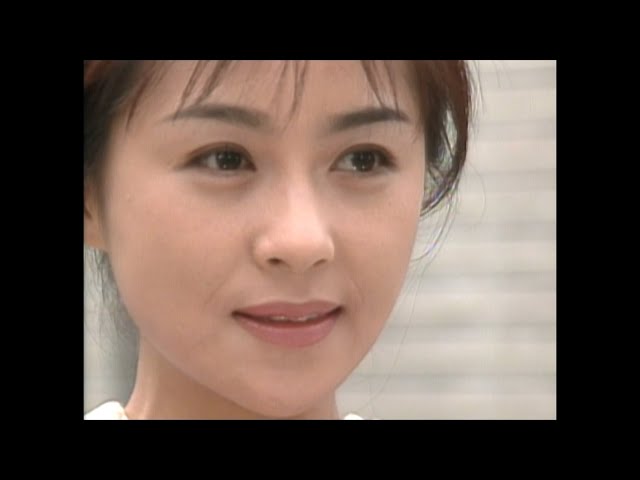
This is a classic kayōkyoku song that layers a sense of helpless longing for love onto the twilight scene of the port city of Yokohama.
Released in June 1996 as a single by Yoko Nagayama, it was produced as the third installment in her kayōkyoku-oriented direction following “Suterarete.” Drawing on the solid vocal prowess she honed in enka, the song gently portrays a woman bearing the loneliness of the city night and a heart swelling with yearning.
In this work, she sets aside her powerful kobushi ornamentation and, over a refined, pop-tinged melody, brilliantly expresses the protagonist’s delicate emotional fluctuations.
It’s a track you’ll want to listen to when gazing at the harbor nightscape, lost in solitary reflection.
VenusNagayama Yōko7rank/position

A quintessential Japanese dance music track released in 1986.
Its lyrics, portraying the charm and strength of a woman who calls herself the goddess of love, leave a vivid impression set to a glamorous Eurobeat rhythm.
It was also used as an insert song in the film “Don’t Mess with My Woman,” reached No.
10 on the Oricon chart, and sold over 160,000 copies.
For Yoko Nagayama, it’s an unforgettable song and a turning point in her career.
A must-have track for nighttime drives and livening up parties.