

Top Japanese Music / J-POP Rankings by Generation: 30s

We’re excited to present the latest top 100 rankings of Japanese music/J-POP for listeners in their 30s, listed in order of most plays!
People in their 30s are often seen as entering adulthood—but what songs are they listening to most?
The playlist is updated weekly.
- Ranking of Popular Japanese Music and J-POP Artists Among People in Their 30s [2026]
- [30s] Popular Songs Ranking by Generation [2026]
- Songs that get people in their 30s pumped up: a roundup of nostalgic tracks that are also great for karaoke
- For men in their 30s: Nostalgic music. Recommended popular songs
- [30s] Karaoke Crowd-Pleasers Ranking [2026]
- [30s] Karaoke Popularity Ranking by Generation [2026]
- Popular Japanese songs among women in their 30s. Recommended masterpieces and classic tracks.
- Great songs recommended for people in their 30s. Classic and popular Japanese songs.
- Band rankings popular among people in their 30s [2026]
- [30s] Easy-to-Sing Karaoke Songs Ranking [2026]
- [For men in their 30s] Must-play karaoke hits that always get the crowd going
- [20s] Popular Japanese Music and J-POP Rankings [By Generation]
- Songs popular among men in their 40s. Timeless classics that bring back memories.
[30s] Popular Japanese Music & J-POP Rankings [By Generation] (41–50)
Full-Power BoySukima Suichi43rank/position

A signature song by Sukima Switch, this pop track carries an encouraging message about dreams and taking on challenges.
With a lively band sound and a fairly fast tempo, you’ll need to keep the beat with your body so you don’t fall behind.
The overall vocal range is C3–A4, and it jumps into the high register in the chorus, so it’s recommended for singers who are good with high notes.
If high notes aren’t your strength, it’s fine to lower the key to make the chorus easier to sing, but be careful not to let the low notes in the verse get lost.
When you sing, lifting your facial muscles right before the chorus will help you hit the first note smoothly!

cloudy skyDOES44rank/position

The renowned trio DOES, formed in Fukuoka, rose to nationwide fame thanks to their signature song “Donten,” released in 2008.
It was used as the opening theme for the TV anime Gintama and became a major hit, reaching the top three on the Oricon charts.
The song’s raw, stripped-down guitar sound—made possible by the trio’s minimalist lineup—is incredibly cool, and it’s hugely popular at karaoke.
The rugged, husky vocals and blunt yet moving melody aren’t particularly difficult and are easy to sing, but because the melody doesn’t change much, be mindful to avoid sounding too monotone when you perform it.

cherrysupittsu45rank/position

A signature song by Spitz that sings of parting and new beginnings.
Released in April 1996, this single was a massive hit, selling over 1.613 million copies.
It depicts someone stepping forward into a hope-filled future while holding memories of a loved one close, and its refreshing yet slightly wistful melody feels like a pleasant spring breeze.
Many listeners may have been moved by the straightforward lyrics about feeling as if the mere sound of words of love could make you stronger.
The song is also included on the classic album Indigo Chiheisen, and in recent years it has been featured in NTT East’s commercials.
It’s sure to make the start of a new season even more wonderful.
Moonlight LegendDALI46rank/position

Anyone woman in her 30s will surely know Moonlight Densetsu.
I still love Pretty Guardian Sailor Moon so much that I’m even in the fan club! The song has romantic, mysterious lyrics and melody, and the vocal line itself is simple and easy to remember, making it easier to score a high pitch-accuracy rate.
The overall vocal range is G3–C5, which is very comfortable to sing if you go at it with some energy.
It might help to focus on resonating in your chest.
Even just keeping a hand on your chest lets you feel the vibration, which should increase your volume and make it easier to sing.
Give it a try!
Dan Dan Kokoro HikaretekuFIELD OF VIEW47rank/position
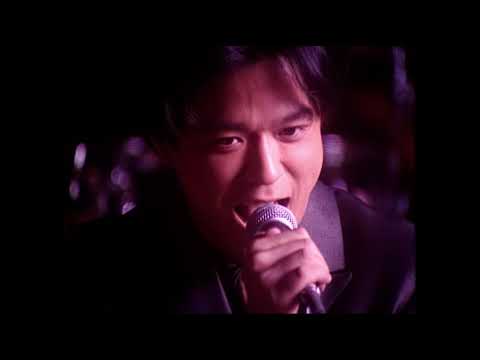
With its refreshing and powerful melody—and being the opening theme of the anime Dragon Ball GT—the lyrics evoke youth and adventure.
The fact that ZARD’s Izumi Sakai provided the lyrics is also a big hit with fans! The song’s overall vocal range spans from G#2 to A4, extending into the lower register.
The chorus consistently gives a high-register impression.
Since karaoke scoring focuses mainly on pitch, make sure to lock in both the low and high notes.
When singing, keep your eyebrows and facial muscles lifted to prevent the pitch from dropping into your throat.
Generally, imagine projecting your voice “in front of your eyebrows”: for low notes, release a steady mass of breath slowly; for high notes, use quick, explosive power to produce the sound.
This approach should make it easier to stay on pitch!
A third of pure-hearted feelingsSIAM SHADE48rank/position

Although they disbanded once in 2002, SHIAM SHADE has captivated fans with several temporary reunions.
This signature song of theirs is widely known as the ending theme for the TV anime Rurouni Kenshin: Meiji Swordsman Romantic Story.
Its structure is very straightforward: the chorus comes first, followed by verse A and verse B, building excitement.
The beginning of verse A hits the song’s lowest note, D#3, which might be a bit low even for male singers.
Be careful not to let your voice get muffled in this part.
Another challenging aspect of the song is the rhythm.
In the chorus, if you sing it in a typical 4/4 feel, it won’t lock in with the backing drums and will sound flat.
Try singing it with a driving triplet feel instead—you’ll sound much cooler! It may be difficult until you get used to it, but definitely give it a try.
water lily blossomShonan no Kaze49rank/position

This is a track that embodies the heat of summer and the passion of youth.
It features an impressive, innovative sound that blends Shonan no Kaze’s signature reggae and hip-hop with Caribbean SOCA.
The lyrics convey the strength to overcome tears and move forward, as well as the joy of living freely, inspiring courage in listeners.
Released in June 2007, it was also used as the theme for the commercial of the film “Shonan no Kaze 3D LIVE Gundan Densetsu 2010.” It’s a perfect pick for getting the crowd going at karaoke or when you need a boost of energy.