

Recommended Japanese Music Artists and Popular Song Rankings for Men in Their 30s [2026]

People’s tastes in Japanese music vary from person to person and by generation, and some of you may find that the types of songs you like have changed compared to when you were in your twenties.
For those in their thirties, we’ve put together a ranking of recommended Japanese artists and popular songs for men in their thirties that you should check out.
Be sure to use it as a reference!
- [30s] Popular Songs Ranking by Generation [2026]
- [For men in their 30s] Must-play karaoke hits that always get the crowd going
- Ranking of Popular Japanese Music and J-POP Artists Among People in Their 30s [2026]
- Recommended for men in their 30s: Karaoke songs that were a hit back in the day
- A roundup of songs for men in their 30s to sing [’90s–’00s tracks]
- [Enka] A special feature on male singers in their 30s: authentic kayōkyoku brimming with sensual allure
- Youth Songs for Your 30s: Iconic and Popular Tracks That Are Both Heart-Pounding and Heart-Melting
- Recommended Japanese Music Artists and Popular Song Rankings for Men in Their 20s [2026]
- Popular Japanese songs among women in their 40s: recommended classics and standard hits
- Recent songs sung by male vocalists in Japanese music [2026]
- [Spring Songs Recommended for People in Their 30s] Carefully Selected Nostalgic Classics & Big Hits
- [2026 Edition] Youth Anthems for Your 40s! A Roundup of Popular Heart-Pounding × Heartwarming Songs
- For men in their 30s: Nostalgic music. Recommended popular songs
Top Japanese Music Artists and Popular Songs for Men in Their 30s [2026] (1–10)
Effeminate; overly sentimental; being clingy/whiny (context-dependent)Gōruden Bonbā8rank/position

Air Band, the seventh single by Golden Bomber (hereafter, Kinbaku), was released in October 2009.
Hard to believe it’s been almost ten years! As of the time of writing (April 2020), if you’re in your 30s, this was probably right in your wheelhouse.
With some lyric changes, it was also used as the theme song for House Foods’ “Mega Shaki” commercial.
Not just with this song, but as a common trait in Kinbaku’s music, the vocal melodies are very Showa-kayō in style.
Speaking of Showa-era pop, compared to modern songs, the melodies are often very simple and easy to get into, which is one reason this is great even for people who aren’t confident singers.
In terms of key, most men should be fine singing it in the original key, but just in case, check in advance to find the key that suits you best.
The tempo makes it really easy to groove to, so don’t sweat the small stuff—just have fun singing it!

cherrysupittsu9rank/position

This song features a catchy melody that makes you want to hum along and lyrics that resonate with the heart.
Released in April 1996, it became a massive hit, selling over a million copies.
It’s easy to see why it continues to be cherished as one of Spitz’s signature songs.
It’s a perfect choice to sing together with someone of the opposite sex at karaoke.
With a gentle yet powerful vocal tone, you can deliver a performance that truly touches the other person’s heart.
Many people likely treasure this as a song filled with memories.
The White LoversKuwata Keisuke10rank/position

As a solo artist, Keisuke Kuwata’s seventh single overall, released in October 2001.
It was used as the song for Coca-Cola’s “No Reason” campaign commercials, in which Kuwata himself appeared, as well as for UNIQLO’s “LifeWear/HEATTECH: Winter Is the Time to Go Outside” commercials.
You could truly call this a staple of late-’90s to early-2000s J-pop.
Many songs from that era are very easy to sing, and this ballad is no exception—it’s something anyone can casually sing and enjoy.
It might even be fun to sing it while doing a Kuwata-style impression, don’t you think?
Recommended Japanese Male Singers and Popular Song Rankings for Men in Their 30s [2026] (11–20)
Goodbye ElegySuda Masaki11rank/position
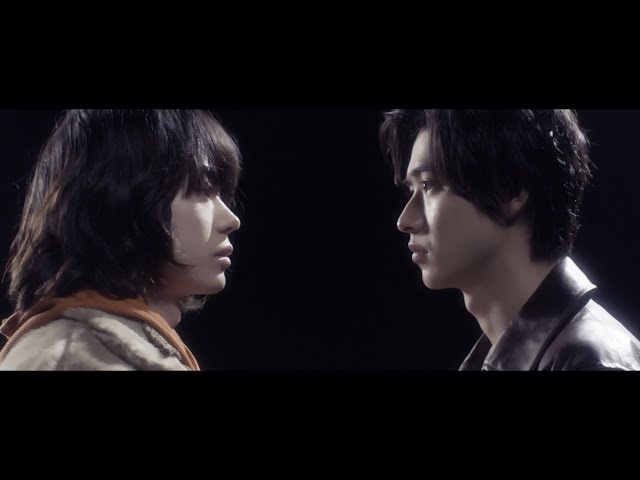
Masaki Suda, who is active both as an actor and a singer.
His song “Sayonara Elegy” is my top recommendation for men in their 30s: it’s easy to sing at karaoke and really livens up the room.
The song’s vocal range is just over one octave, which makes it accessible even for people who struggle with very high or very low notes—another reason it’s a great pick.
Although it was released in 2018, it has a vibe that’s somewhat reminiscent of 90s music, making it familiar and comfortable for people in their 30s.
The rhythm in the final chorus drop has a bit of a quirk, so focus your practice on that part!

The Story You Don’t Knowsupercell12rank/position

Isn’t this the generational anthem packed with the golden age of late-night anime × Nico Nico culture × the bittersweetness of youth—the ending theme of the anime Bakemonogatari? The overall vocal range is A3 to D5 and stays fairly high throughout.
In particular, the top note D5 appears frequently in the chorus, so it’s best to sing it without straining by incorporating falsetto.
The tempo isn’t too fast and should be easy to groove to while singing, so try to feel it with your body as you listen closely to the backing band.
In the chorus, be mindful of accents and align your vocal timing to hit the pitch bar!

single bedSha ran Q13rank/position

This is a wistful ballad that poignantly sings of lingering feelings for a former lover, a classic that gently teaches the preciousness of love.
As the protagonist looks back on memories left behind on a single bed, they realize that a romance once taken for granted was in fact more valuable than jewels, weaving a moving drama.
Released by Sharam Q in October 1994, the song became a major hit, ranking 24th on the year-end charts.
It was also used as the ending theme for the anime D.N.A²: They Were Once a Thing, and included on the album Inferiority Complex.
It’s the perfect track for reminiscing about youthful love while sharing memories with friends.
All of the YouthFujifaburikku14rank/position

Released in October 2007, “Wakamono no Subete” is one of the signature songs of Fujifabric from the period when the late Masahiko Shimura was a member, and it’s still fresh in our memory that it surpassed 100 million streams on the Oricon Weekly Streaming Ranking in 2024.
It’s a defining classic of the 2000s, and many people in their 30s today likely have it in their karaoke repertoire.
The song’s structure is essentially classic J-pop, with clear sections and no surprising high notes or long sustained tones, making it generally easy to sing.
If you sing with an awareness of the contrast between the restrained first half and the soaring chorus, it will sound even better!
