

Recommended Japanese Music Artists and Popular Song Rankings for Men in Their 30s [2026]

People’s tastes in Japanese music vary from person to person and by generation, and some of you may find that the types of songs you like have changed compared to when you were in your twenties.
For those in their thirties, we’ve put together a ranking of recommended Japanese artists and popular songs for men in their thirties that you should check out.
Be sure to use it as a reference!
- [30s] Popular Songs Ranking by Generation [2026]
- [For men in their 30s] Must-play karaoke hits that always get the crowd going
- Ranking of Popular Japanese Music and J-POP Artists Among People in Their 30s [2026]
- Recommended for men in their 30s: Karaoke songs that were a hit back in the day
- A roundup of songs for men in their 30s to sing [’90s–’00s tracks]
- [Enka] A special feature on male singers in their 30s: authentic kayōkyoku brimming with sensual allure
- Youth Songs for Your 30s: Iconic and Popular Tracks That Are Both Heart-Pounding and Heart-Melting
- Recommended Japanese Music Artists and Popular Song Rankings for Men in Their 20s [2026]
- Popular Japanese songs among women in their 40s: recommended classics and standard hits
- Recent songs sung by male vocalists in Japanese music [2026]
- [Spring Songs Recommended for People in Their 30s] Carefully Selected Nostalgic Classics & Big Hits
- [2026 Edition] Youth Anthems for Your 40s! A Roundup of Popular Heart-Pounding × Heartwarming Songs
- For men in their 30s: Nostalgic music. Recommended popular songs
Top Japanese Artists and Popular Songs for Men in Their 30s [2026] (Ages 31–40)
Goodbyeofukōsu36rank/position

This is one of the signature songs by Off Course, a music group that was active in the 1980s.
Kazumasa Oda, who was the lead vocalist, is still well-known today.
It can be called a classic breakup song for men.
If you haven’t heard it, please give it a listen.
heartKobukuro37rank/position

The song “Kokoro” (“Heart”) is a number that gives you an opportunity to face your own heart.
Released in 2017, it was chosen as the theme song for the film “I’m Taking a Break at Work Now” (Chotto Ima Kara Shigoto Yamete Kuru), and the music video features NAOTO from EXILE and Sandaime J SOUL BROTHERS from EXILE TRIBE.
The track unfolds at a relaxed pace, as if having a gentle conversation with your heart, making it easy to sing without rushing.
If the key feels a bit high, try lowering it a few steps so you can sing more comfortably and freely.

Together foreverKobukuro38rank/position

Eternally With You, a song beloved as a wedding classic, was released in 2004 as a double A-side single along with Million Films.
The song was written by Kentaro Kobuchi for a friend’s wedding.
Its simple, easy-to-remember melody makes it very singable, so even those who aren’t confident at karaoke can give it a try.
The harmony part isn’t too difficult either, so it could be great to practice as a duo and perform as a wedding reception entertainment.
the red threadKobukuro39rank/position

This is a long ballad that carefully depicts the feelings of a young person entering a rough patch with their partner, unfolding over seven minutes.
As a year passes, the protagonist’s heart gradually starts to look forward, and that progression is portrayed in a striking way.
Included on the album “Root of my mind,” which Kobukuro produced soon after forming, the song gently conveys the importance of trust in love.
It’s recommended for those who, while struggling with a relationship with someone important, still want to cherish their feelings for each other.
It’s a song you’ll want to sing with all your heart at solo karaoke or in the company of close friends.
YELL ~Yell~Kobukuro40rank/position

This song is the memorable formation anthem of Kobukuro, and its sound builds as it goes, giving you encouragement.
When singing it at karaoke, it might be good to focus on dynamics and put your emotions into it.
It’s also recommended as a pep song before heading to work.
Recommended Japanese Music Artists and Popular Songs for Men in Their 30s [2026] (Ranks 41–50)
A flower that blooms only hereKobukuro41rank/position
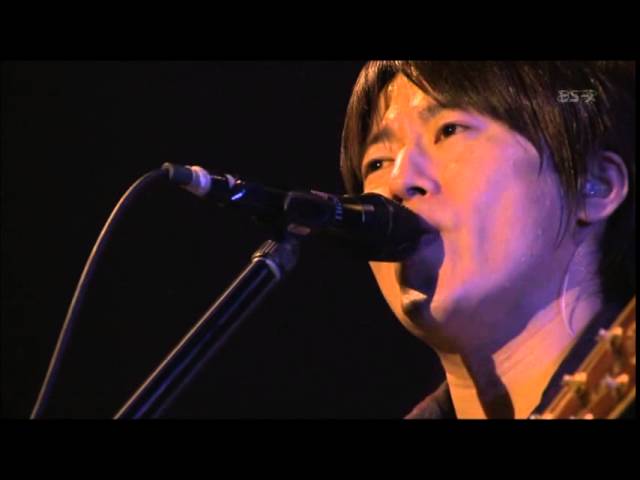
In today’s world, where life has grown more complex and busy work schedules have made it common for both men and women to marry after 30, there’s a wonderful song that can warm the heart when a man feels shy and can’t confess his feelings to the woman he loves.
If he sings Kobukuro’s “The Flower That Blooms Only Here” and then expresses his feelings, it seems like things might go well.
futureKobukuro42rank/position

The intro piano is striking, and from the A verse there was a stable voice.
Around the B verse, the two voices overlap, and I think it’s a message song.
I also felt a strong sense of anticipation for the chorus.
How about taking this opportunity to try it at karaoke?