
Songs that have won the Japan Record Award throughout its history

The Japan Record Awards, cherished as a year-end staple in the music scene.
Launched in 1959, the award has annually honored the songs that drew the most attention that year.
Many of you are probably wondering, “What song will be chosen this year?” or thinking, “It’s got to be that one, right?”
In this article, we present all the past Grand Prize–winning songs at a glance.
Seeing the winners lined up like this lets you enjoy a wealth of masterpieces from Japan’s music history all at once.
Take this opportunity to revisit and listen to the timeless classics that have defined the domestic music scene.
- Masterpieces of the Reiwa Era: Hit Songs That Define the Times
- Old songs from the Showa to Heisei eras: a collection of timeless classics loved across generations
- Hit songs in Japan in the late 1960s
- [Showa Era] A Collection of Enka Hits: Timeless Classics Loved Across Generations
- Songs from the Heisei retro era that will get any generation excited! Timeless tracks you’ll want to listen to now.
- Showa-era love songs: A roundup of timeless love songs cherished across generations
- A roundup of classic Showa-era kayō songs: a comprehensive introduction to timeless tracks loved across generations.
- Just listening to it purifies the heart... A healing song born in the Showa era.
- [Bereavement Song] To you, my precious one whom I can no longer meet. Tear-jerking songs about death
- Classic Christmas Songs That Resonate with the Hearts of Those in Their 80s
- Evokes the charm of the good old days. Showa-era inspirational songs that are still loved today.
- Resonates across generations! Hit songs that colored the Heisei era, perfect as BGM
- Heisei Song Collection: Iconic Hits That Colored the ’90s and 2000s
Japan Record Award Winning Songs Through the Years (31–40)
Nagaragawa ElegyItsuki Hiroshi

This song was their first big hit since their debut in 1964, winning the Japan Record Award in 1984 as well as the Japan Kayō Grand Prize and the FNS Music Festival Grand Prix.
Inspired by the Nagara River in Gifu City, it resonated locally, and a monument has been erected near Nagarabashi Bridge.
ButterflyKōda Kumi

The grand prize of 2005.
With Kumi Koda’s revealing outfits and sexy dancing in this song, the coined term “ero-kakkoii” (erotic and cool) was born, and she enjoyed immense popularity among high school girls.
It was used as the theme song for the TBS drama “The Magic of Cosmetics 2,” sharing the theme of women becoming more beautiful along with the music.
Longing for RainYashiro Aki

The grand prize of 1980 (Showa 55).
Yashiro’s “Funauta,” released the previous year, was a major hit, and along with this song, “Minatomachi Zesshō,” it’s referred to as the “Trilogy of Melancholy.” Yashiro achieved both consecutive hits and nationwide popularity, earning her the title “Queen of Enka.” The choreography is memorable for the gesture in the chorus where she waves her palm facing upward.
Love Song AnthologyHoriuchi Takao

It’s a song composed by Takao Horiuchi in 1990, which won both the Japan Record Award and the Cable Radio Award that year.
It was his first major award since his debut in 1971.
Some of you may have heard it as the ending theme of the TV Asahi drama “Hagure Keiji Junjō-ha.”
The Scent of CyclamenFuse Akira
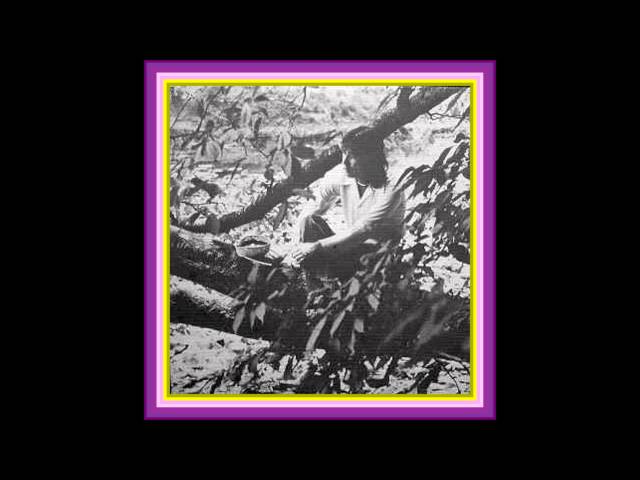
Winner of the Grand Prize in 1975 (Showa 50).
Akira Fuse’s only million-seller (1.05 million copies).
Kei Ogura, who wrote the lyrics and composed the music, also released a self-cover that became a hit.
Fuse performed this song three times on the NHK Kouhaku Uta Gassen.
In addition to being a singer, he is also active as an actor and has a history of working in the United States.
Japan Record Award winning songs through the years (41–50)
Cape ErimoMori Shinichi

Lyrics by Osami Okamoto.
The golden folk duo of Takuro Yoshida (composer) provided a song to an enka singer, which became a hot topic.
In 1975, a kayō (popular song) film based on the song was also produced.
In Erimo Town, where Cape Erimo is located, a commemorative monument has been erected.
Until we meet againOzaki Kiyohiko

Speaking of Kiyohiko Ozaki, he’s a singer well known for his mustache and also plays instruments like the guitar and ukulele.
His vocal ability is so impressive that he was once called the Japanese Tom Jones.
The song that won the Japan Record Award in 1971 was his second single overall.