

Hit and popular songs by Kenji Sawada

Let me introduce the songs of Kenji Sawada, a male singer who represents the Showa era.
Even if you didn’t listen to them in real time, you’ve probably heard several of his songs at least once, such as “Katte ni Shiyagare” and “TOKIO.”
Kenji Sawada began his career in the 1960s, during the heyday of Group Sounds, debuting as the lead vocalist of The Tigers, a central band in the Group Sounds scene.
His nickname is “Julie,” which is said to come from the fact that he was a fan of the actress Julie Andrews.
Now, please enjoy these masterpieces that dominated the Showa-era pop scene.
- Kenji Sawada Popular Song Rankings [2026]
- Karaoke Ranking of Popular Kenji Sawada Songs [2026]
- Masterpieces and popular songs by Keisuke Kuwata
- Hit and popular songs by Kenji Ozawa
- Showa-Era Wedding Songs: A Timeless Collection to Grace Your Ceremony
- JUNRETsu’s classic and popular songs
- Sawada Chikaco Popular Songs Ranking [2026]
- A lineup of classic hits! Karaoke songs recommended for the yutori generation
- The Tigers’ Most Popular Songs Ranking [2026]
- A roundup of classic Showa-era kayō songs: a comprehensive introduction to timeless tracks loved across generations.
- [Classic Showa Kayō Hits] The captivating Showa-era pop songs beloved even by younger generations
- I Want to Sing at Karaoke! A Roundup of Recommended Oldies Classics and Popular Songs
- Songs by Showa-era idols that you’ll want to listen to now, in the Reiwa era!
Kenji Sawada's Classic and Popular Songs (21–30)
St-r-i-p-p-e-rsawada kenji

The 34th single.
Contrary to its shocking title, the song itself is a classic “Julie” style.
The outfit is flamboyant in a way typical of Julie, but on the other hand, the conventional displays of “masculinity”—embodying innocence, bravado, and stoic endurance—are fading into the background.
Winner of the Gold Prize at the 23rd Japan Record Awards.
Reminiscencesawada kenji
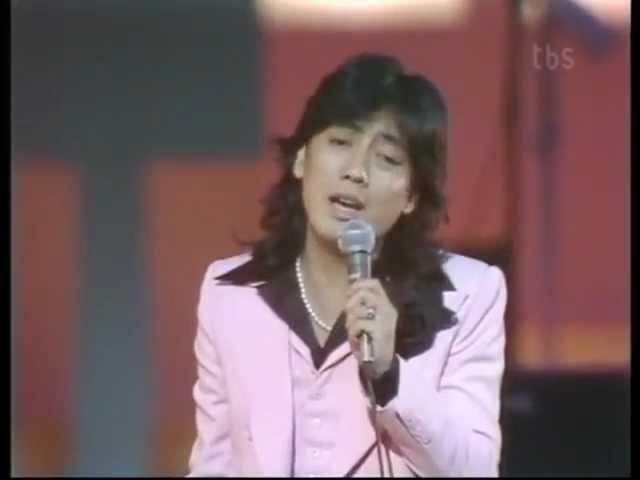
The tenth single and the second song to reach No.
1 on the Oricon chart.
It can be said to be the first work in which the world of classic foreign films—later often used as a motif—appeared, and it also became a catalyst for turning their gaze overseas.
Winner of the 16th Japan Record Award.
Kenji Sawada's Famous and Popular Songs (31–40)
An incorrigible good-for-nothing you just can’t hatesawada kenji

21st single.
Since the previous release, “MEMORIES,” was a work with English lyrics aimed at overseas markets, this is effectively the successor to “Katteni Shiyagare,” and it further pursued the Julie-world—its music, costumes, and choreography—that drew great acclaim with that song.
In fact, it was a piece Katsuo Ōno had prepared as an alternative to “Katteni Shiyagare.” While it undeniably feels derivative, it still managed to become a respectable hit.
TOKIOsawada kenji
Their 29th single.
It was the first composition by Kunihiko Kase in four years since the 16th single “Wink de Sayonara,” and the lyrics by Shigesato Itoi—who was then a wildly popular copywriter—left a striking impression.
Matching the power of the song, the flamboyant costumes featuring illuminated, military-style outfits and a massive parachute on the back became a hot topic.
It’s a song that has often been covered, notably becoming a hit later as “O-Edo” by Kabuki Rocks.
With this track, the Inoue Takayuki Band, which had long served as the backing band, disbanded.
The Sixth De-pre-ss-ionsawada kenji

37th single.
In recent releases, the songs have tended to emphasize a rock band feel over performance, and this work is part of that series.
It became only the third in history to achieve 30 songs in the Oricon weekly Top 10.
In addition, its total sales surpassed Momoe Yamaguchi—who had retired two years earlier—to take the number one spot, a position it maintained for the following nine years.
Long Good-byesawada kenji

A message song sent to drummer Minoru Hitomi, with whom contact had been lost since The Tigers disbanded on January 24, 1971.
In 2008, after Sawada performed it on NHK’s “SONGS” to mark his 60th birthday, Hitomi returned three years later and The Tigers reunited.
The lyrics are a continuous appeal to Hitomi, interwoven with real events, and there’s an anecdote that Hitomi, having heard about the program by word of mouth, was so moved that he began to consider returning.
Beautiful personsawada kenji

The 35th single, released in 1982.
Julie composed the music himself, with lyrics by Yū Aku.
The cover art features a design that blends Taisho-era romanticism with pop culture, reminiscent of artists like Tadanori Yokoo and Suehiro Maruo.
It was a smash hit, selling 200,000 copies.