

Indoor and outdoor activities that avoid crowding. Enjoyable for students from first to sixth grade.

Some of you may be looking for games that can be played while maintaining social distance as a way to prevent colds and protect against viruses.
Games that can be played without close contact—such as ones that involve “minimal talking” or “keeping children from getting too close to each other”—are ideal.
In this article, we’ll introduce games that elementary school students from first to sixth grade can enjoy.
We’ve picked a wide range of themes, from activities that can be played in the classroom to ones that let kids move their bodies outdoors.
Try setting different rules for lower and upper grades and give them a go!
- Play ideas kids can enjoy from 1st to 6th grade [indoors & outdoors]
- [Play Right Away!] Exciting Recreation Games Recommended for Elementary School Students
- [Elementary School] Quick and Easy! Indoor Recreational Activities Perfect for Lower Grades
- Fun Indoor Games for Elementary School Kids Without Any Equipment
- [Children’s Club] Easy and fun indoor games. Exciting party games
- Recommended for upper elementary grades! Exciting indoor recreation and games
- [Elementary School Rec] Recommended Games and Performances for a Fun Party
- Elementary School Fun Day a Big Hit! Indoor Game Idea Collection
- [Elementary School] Indoor Games and Recreational Activities Recommended for Upper Primary Grades
- Outdoor games and recreational activities recommended for children
- [For Kids] Exciting Class-vs-Class Games: Team Competition Activities
- A big hit at after-school childcare! A special feature on group games and activities you can play without any equipment
- A simple and fun co-op game that enhances teamwork
Indoor and outdoor activities that avoid crowding. Enjoyable for grades 1 through 6 (1–10)
NG Word Showdown
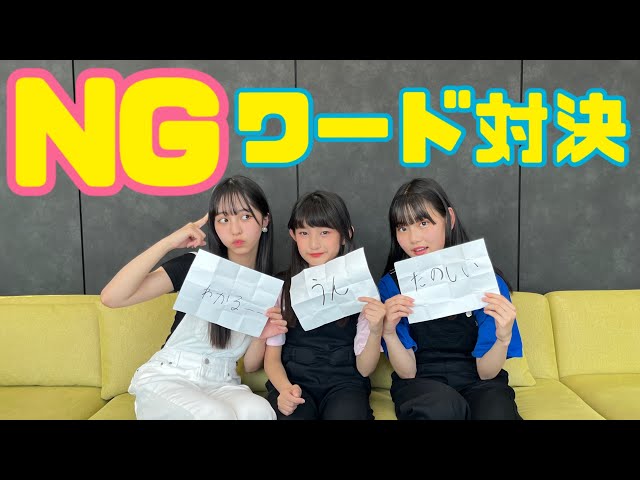
The “NG Word” game is a fun activity that can liven up gatherings with people of all ages.
In this game, words that people might casually say in conversation are designated as “NG words,” and the winner and loser are determined by how many times those words are said.
How to play: First, each participant writes one NG word on a piece of paper.
Collect all the papers, shuffle them, and then have everyone hold one above their head so that everyone else can see it, but they themselves cannot.
Start a conversation in this state, and the person who says their NG word the most times loses.

Solo partner acrobatics

Group gymnastics often conjures images of crowded formations.
This idea is for a “solo technique group gymnastics” routine performed individually.
Start by trying simple movements like balancing on one leg.
Once you get used to it, add actions such as leaning your body forward.
If everyone in a line performs this, you can create a sense of unity like group gymnastics without actually forming groups.
Other movements include the V-hold and the bridge.
If you want to make it look even better, pay attention to synchronizing the timing of the movements.

Signaling Game

The signal game is a game where you move in ways that match the teacher’s or leader’s instructions.
The way to play is to give directions based on traffic rules.
When the teacher or leader says a color, move accordingly.
For “blue,” march in place with one step; for “yellow,” move your head to look around as if watching passing cars; and for “red,” squat down on the spot.
It’s a game where everyone can have fun while learning traffic rules!
Indoor and outdoor activities that avoid crowding. Enjoyable for grades 1 through 6 (11–20)
Text erasure

Let me introduce a letter-erasing game you can enjoy with nothing more than a whiteboard.
First, write out the full set of Japanese syllabary (the gojūon) on the whiteboard.
Then make words by combining those syllables and erase each character as you use it.
Keep repeating this and experiment to see how many characters you can erase in total.
It’s not a competitive game, so everyone can cooperate and play together.
You can take turns in a large group, or split into smaller groups—either works.
By the way, a tip is to use “ぬ,” “む,” “ろ,” and “る” early on.
Illustration Telephone Game

The game of Telephone is something many people have played.
The “Illustrated Telephone Game” is a variation of it.
The first player looks at a prompt image and draws an illustration resembling it.
When finished, they show their drawing to the next person, who then draws their own illustration in the same way.
Because the game is about how much you can convey using only drawings, no conversation is allowed during this process.
After the last person finishes their drawing, they reveal what they were drawing along with the picture.
If the final answer matches the original illustration, you’ve succeeded!
Caricature Game
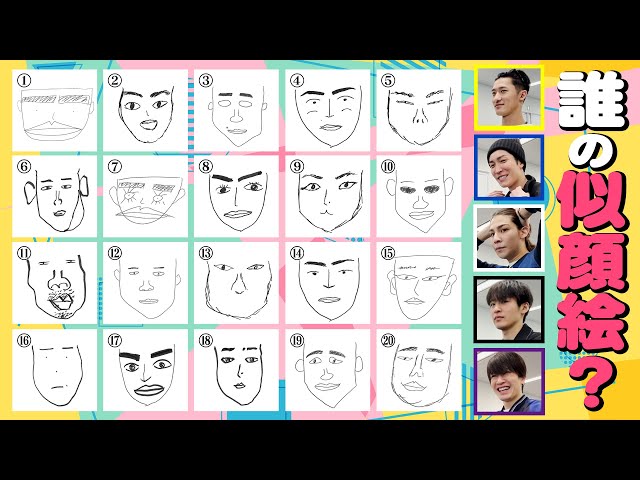
A portrait-drawing game everyone can enjoy with just paper and pens.
How to play: first, pick one person in the group as the model, and the other members draw that person’s portrait.
You only get one minute to draw! Do this for every person in the group.
When all the portraits are finished, gather the drawings and shuffle them.
Then, pick four drawings that you think are portraits of yourself.
The person who correctly identifies the most drawings they made wins.
It’s an even more exciting game when the players aren’t confident in their drawing skills!
A Daruma’s Day

You know the game “Daruma-san ga koronda,” right? A variation of it is called “Daruma-san’s Day.” Normally, when the It player turns around, everyone has to freeze, but in this version you have to move according to a prompt.
For example, if the caller says, “Daruma-san spun,” you must spin.
It also gets exciting if, instead of specific actions, you call out animal names.
Ultimately, players aim to tag the It player, but try to adapt the rules so there’s no physical contact.