

[Self-Introduction & Games] Icebreaker Ideas Collection

Are you familiar with “icebreakers”? They’ve become a popular method among business professionals, so if you’re in the workforce, you may have experienced them at least once.
An “icebreaker” is a way to break (or loosen) the stiff atmosphere (the “ice”) when you’re in the same place with people you’re meeting for the first time or haven’t spoken with much.
What do you actually do? Everyone present participates in activities such as game-like self-introductions and games that help shorten the distance with others or create opportunities for people to get to know you.
In this article, we’ll introduce icebreakers that are actually used in practice.
They’re effective for moments like “no one is speaking” or “the atmosphere feels heavy.” Be sure to give them a try!
- Liven up even first meetings! A collection of fun games perfect for welcome parties
- Fun games recommended for making friends with people you’ve just met
- [Let’s Get Closer] A Collection of Engaging Questions for Self-Introductions
- [In a Short Time] Icebreakers and Fun Games That Shine at Morning Meetings
- A roundup of recommended icebreakers for college students
- Games you can play with just conversation. Classic and popular activities you can enjoy without any props!
- Icebreakers that get people moving (for both small and large groups)
- A collection of icebreakers you can enjoy with a small group
- [Play Right Away!] Exciting Recreation Games Recommended for Elementary School Students
- A roundup of recommended personality tests for icebreakers
- Icebreaker Ideas and Games Collection
- [Conversation Skills] Get the Crowd Going! A Collection of Talk Theme Ideas
- A collection of hilarious questions that will liven up the conversation and might help you learn more about the other person
[Self-Introduction & Games] Icebreaker Ideas Collection (21–30)
Paper puzzle

Paper Puzzle is an easy icebreaker you can do anywhere with just paper and scissors.
Each team prepares a sheet of paper, cuts it up randomly, and shuffles the pieces on the table.
Teams then swap and try to reassemble another team’s paper like a puzzle; the first team to restore the original sheet wins.
Surprisingly, curvy cuts—though they look messy—are often easier, while pieces cut straight down in vertical lines can be trickier because the edges are subtly similar.
Work together as a team to put it back together!

Self-introduction through gestures

It’s an icebreaker game where you communicate a recent event using gestures.
The best part is that you can play even if you don’t share a language! In other words, it’s perfect for trying with people from abroad who don’t speak the same language.
Since a person’s personality shows in their movements, it might even be better than a self-introduction using words alone.
Sometimes the fact that your message doesn’t get across actually creates laughter and helps everyone relax.
Don’t be shy—go all out with your gestures!

Common Self-Introduction Relay
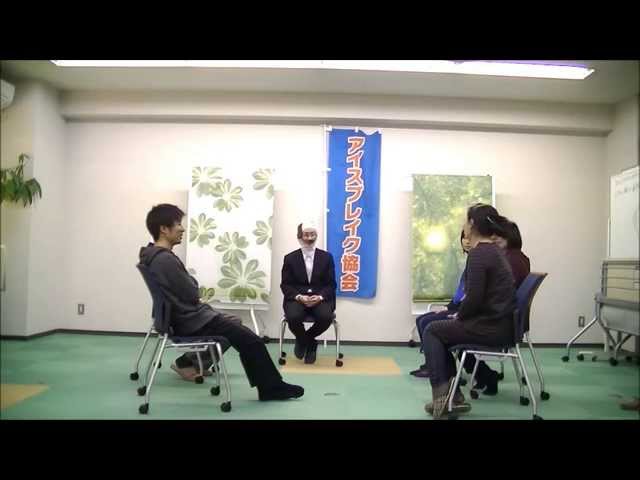
Have you ever heard of a common self-introduction relay? Some of you might have even tried it when meeting people for the first time! It helps first-time acquaintances keep the conversation going, find shared topics, and have a fun exchange.
Even if the conversation stalls, someone will surely step in to help…! If you’re a new employee or a new student, why not try it together with everyone?

Introduce yourself to the rhythm

It’s a game where you call out your own name in rhythm, then the person next to you does the same, and it keeps going.
Decide in advance whether it will go to the right or to the left.
All you do is move your hands while saying your name, but it’s a game that has you do two things at once, keep the rhythm going without breaking it, and introduce yourselves at the same time.
Kanji Self-Introduction

This is an icebreaker game where you express yourself with a single kanji character and explain why.
It’s true—rather than explicitly listing your traits or personality, using concise, instantly understandable words like “雑” (rough/messy) or “絆” (bond) makes it easier for others to remember you.
Taking time to think about it also leads to self-reflection.
Which kanji would you choose for yourself?
Training icebreaker

In training settings where you meet people for the first time or feel tense, using various icebreakers is recommended to ease the nerves.
For example, in the classic game where teammates try to give matching answers, matching responses help you find common ground, and even when they don’t match, discussing why you chose your answer encourages communication.
In a game where participants line up in ascending order by something like birthday or height without speaking, you can foster cooperation.
During introductions, asking slightly unusual questions can reveal unexpected sides of others.
Choose icebreakers that suit the group you’ve gathered.

No equipment needed! Air catch ball

“Air Catch,” a make-believe game of tossing an imaginary ball without any props, is a very simple team-building activity.
Participants form a circle.
Someone calls another person’s name while miming a throw of the “air ball,” and the next person pretends to catch it and continues in the same way.
The rules are: make eye contact and call the person’s name before you throw.
Once everyone gets used to it, you can increase the difficulty by tossing multiple balls at once or speeding things up.
It builds communication skills and concentration and gets people laughing, making it great for training icebreakers and strengthening team cohesion.
It takes about 5–15 minutes, so give it a try!
