

Karaoke songs you’ll want to sing for men in their 70s: Enka and nostalgic Showa-era pop

In this article, we’ll introduce a comprehensive list of karaoke songs perfect for men in their 70s.
Focusing on tracks from the 1960s to the 1980s that they likely listened to in their youth, we’ve gathered many classic enka and Showa-era pop songs.
If you’re in your 70s, you’ll probably know every song here—and each one may bring back a variety of memories.
We hope this article helps you choose songs for your next karaoke session.
Reminisce about the old days and have a great time singing with friends of the same generation!
- [Recommended for people in their 70s] Songs that really move you. Beloved classic Japanese hits of the past.
- [For men in their 70s] A collection of easy-to-sing songs even for people who are tone-deaf
- [Recommended for people in their 70s] Songs that get everyone excited. Songs you’ll want to sing at karaoke.
- [For Seniors] Crowd-Pleasers! A Collection of Classic Karaoke Songs
- Songs I want men in their 70s to sing: a roundup of tracks I'd like to hear at karaoke
- Energizing songs recommended for men in their 70s: A roundup of nostalgic power tracks
- Easy-to-sing songs recommended for men in their 70s: A collection of classic hits you’ll want to sing at karaoke
- [Karaoke] Songs That Get Men in Their 70s Fired Up! A Collection of Nostalgic Japanese Hits [2026]
- [Nostalgic Songs] A collection of tear-jerking Japanese tracks recommended for men in their 70s
- [Karaoke] Recommended Songs for Men in Their 80s: A Collection of Showa-Era Classics You’ll Want to Belt Out
- Recommended love songs for men in their 70s: A collection of nostalgic love songs
- [For Seniors] Songs Everyone Can Sing Together! A Roundup of Recommended Crowd-Pleasers
- Easy-to-sing songs recommended for men in their 80s: Showa-era classics to perform at karaoke
[For men in their 70s] Karaoke songs you’ll want to sing: Enka and nostalgic Showa-era kayōkyoku (41–50)
SaraiKayama Yūzō

This is a heartwarming classic that brings back nostalgic memories.
It delicately portrays the feelings of people who leave their hometowns to chase their dreams, and was created by Yuzo Kayama and Shinji Tanimura in November 1992 as the ending theme for Nippon TV’s “24-Hour Television.” Its title derives from a Persian word meaning a desert oasis or a staging post, and the soothing melody—like a spiritual homeland—leaves a lasting impression.
The piece was composed based on messages of love sent in by viewers from across the country, and even after more than 30 years, it remains deeply etched in many hearts.
It’s a recommended song for times when you want to quietly bask in memories or connect heart-to-heart with someone special.
For men in their 70s: Karaoke songs you’ll want to sing. Enka and nostalgic Showa-era pop (51–60)
Forever with youKayama Yūzō

A beautiful love song that gently seeps into our hearts, set to a light ballad that carries eternal love and hope for the future.
Featured as the theme song for the films “Young Guy with an Electric Guitar” and “Young Guy in the Alps,” this piece celebrates everlasting love against the backdrop of a sunset, tenderly expressing the sweetness and ache of young romance.
Released in 1965, it became a massive hit, selling over three million copies and receiving a Special Award at the 8th Japan Record Awards.
Yuzo Kayama’s gentle vocals and the beautiful string arrangements are soothing to the soul.
For seniors, it’s a song that will resonate with memories of their youth.
Whether you listen to it quietly on your own or sing it together with family and friends at karaoke, it’s a piece that brings a sense of calm.
festivalKitajima Saburō

A song that powerfully sings of the spirit of Japan’s festival culture was released by Saburo Kitajima in November 1984.
It beautifully expresses gratitude to the mountain and sea deities, traditions passed from parent to child, and the passion of men.
The song was performed a total of six times on NHK’s Kōhaku Uta Gassen up to 2013, serving as the grand finale five of those times.
In 2014, it was also used in Suzuki’s New Year sales campaign commercial, making it beloved by a wide audience.
With its powerful vocals, moving melody, and the universally relatable fervor of festivals, this is a song that’s perfect for belting out at karaoke.
A Man’s LifeKitajima Saburō

A heartfelt, powerful song that reexamines the joys and sorrows of life and celebrates living with sincerity.
It carefully weaves together a half-life spent overcoming hardships and trials while valuing duty and truth.
Released by Saburo Kitajima in January 2011, this work conveys the sentiments of his more than 50-year career in show business with a mature vocal performance that deeply resonates with listeners.
While honoring the traditional flavor of enka, the song features contemporary arrangements that give it a profoundly moving quality that sinks into the heart.
It is a gem of a masterpiece to listen to when you stand at a crossroads in life or want to savor your gratitude toward someone important.
Waltz of StarlightSen Masao

Known as a masterpiece that gently sings a heartrending love story, Masao Sen’s work was released in March 1966 and gradually drew significant attention.
The delicate lyrics by Sonoe Shiratori and the beautiful melody crafted by Minoru Endo harmonize wonderfully, making it a gem that resonates with the heart.
Set to a waltz rhythm, it tenderly depicts the protagonist’s complex feelings as they resolve to part with their beloved.
Spreading by word of mouth through cable broadcasting, it achieved an astonishing 2.5 million sales.
Its gentle, nostalgic melody invites humming along and remains a beloved classic that many people still enjoy singing together today.
A Letter Waiting for Springyoshida takurou

This is a gem of a melody by Takuro Yoshida, warmly depicting a heartfelt exchange through letters that gently convey the feelings and memories of a man and a woman.
The image of two people far apart, drawing close to each other through their letters, carries a nostalgic sentiment that many have felt.
Accompanied by a calm guitar tone, the feelings of a couple trying to connect while awaiting the arrival of spring leave a lingering resonance.
Released in October 1979, it reached No.
52 on the Oricon Weekly Singles Chart.
It was also included on the album “ONLY YOU 〜since coming For Life〜,” and has long been loved by many.
It’s a perfect song for those moments when you want to relax and enjoy music while looking back on memories with someone special.
Let’s get married.yoshida takurou
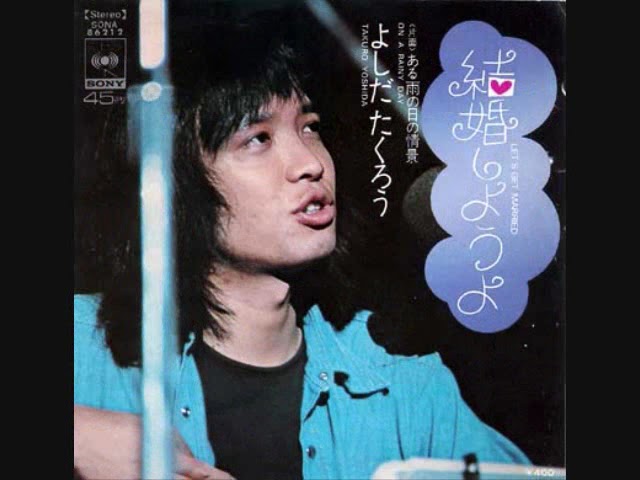
This work is memorable for its translucent, beautiful melody and sweet, poignant vocals.
Released in 1972, the song marked a major turning point in the history of folk music.
Centered on acoustic guitar, its warm sound creates an atmosphere that gently envelops feelings of love.
While poetically depicting springtime scenes, Takuro Yoshida expresses sincerity and pure affection.
Simple yet profound in its message, this classic reached a peak of No.
3 on the Oricon weekly chart.
Its heartwarming, gentle tone and tender vocal timbre enrich everyday moments.
It’s a song to savor slowly on a blossoming spring day, reminiscing with those of the same generation as memories come into full bloom.