

A Collection of Moving Shakuhachi Masterpieces | Beautiful Japanese Melodies That Stir the Heart

Transcending the ages, the profound melodies of the Japanese traditional instrument, the shakuhachi, bring quiet and peace to our hearts.
The shakuhachi pieces passed down through the generations carry the breath of nature and people’s emotions, and their tones move those of us living in the present day as well.
In this article, we have gathered shakuhachi masterpieces that resonate with the soul.
From works woven by our predecessors to pieces that harmonize classical sonorities with contemporary essence, we have selected a wide range.
If you wish to experience the spirit of Wa or are interested in Japanese traditional music, please take your time and enjoy.
- The soul’s cry woven into Japanese elegies: unraveling supreme masterpieces that resonate with the heart.
- The Spirit of Japan: A Collection of Famous and Popular Shamisen Pieces
- Traditional Japanese Music: Famous Pieces of Gagaku and Kagura. Recommended Traditional Japanese Music
- Spirit of Wa: Masterpieces for the Koto — Japan’s Beautiful Melodies
- [Hometown Songs] A curated selection of popular Japanese tracks that fill your heart with nostalgia
- Cute masterpieces of J‑Pop: recommended popular songs
- Masterpiece and popular songs by 88Kasyo Junrei
- [2026] A Collection of Classic Japanese Ballads with a Jazz Flavor
- [New Year’s Songs] Timeless classics and popular New Year tunes you’ll want to listen to at the start of the year
- Famous Japanese saxophonists
- A classic song that celebrates Niigata. The enduring spirit of our hometown passed down through song.
- Songs by male artists known for their captivating deep voices. Classic Japanese hits and recommended popular tracks.
- A medley of crowd-pleasing classics. Iconic Japanese songs and recommended popular tracks.
A Collection of Shakuhachi Masterpieces That Resonate with the Heart | Beautiful, Moving Melodies of Japan (11–20)
Poem No. 2Matsumura Teizō

Teizo Matsumura, a Japanese composer who has been familiar with traditional Japanese instruments since childhood.
This piece he composed for solo shakuhachi exudes profound spirituality.
Breath-taking stillness intertwines with surging inner energy, stirring the listener’s heart.
Premiered in November 1972, it was also included on the acclaimed 1996 album “Shikyoku / Teizo Matsumura Selected Works II.” It’s the perfect track for a night when you want to forget the clamor of daily life and quietly face yourself.
Why not listen closely to this one-of-a-kind melody, where the traditions of Japanese music and a modern sensibility are seamlessly fused?
November Steps, Tenth SectionTakemitsu Tōru
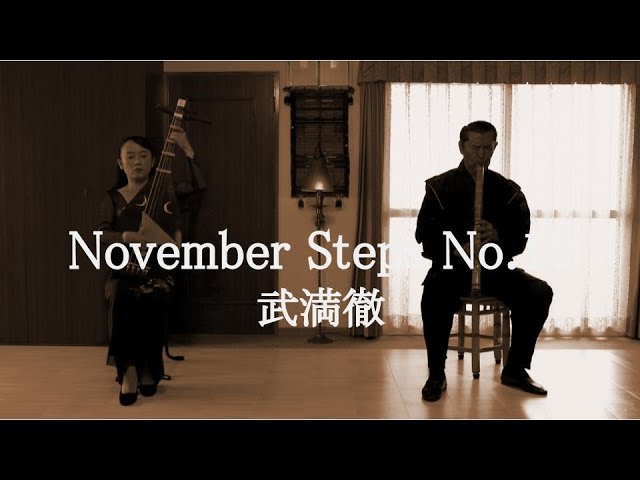
This is a groundbreaking work by Toru Takemitsu, who brought contemporary Japanese music to worldwide attention.
Rather than fusing the Western orchestra with traditional Japanese instruments, he deliberately sets them in opposition, which accentuates the distinct beauty of each sound.
The timbre of the shakuhachi—described by Takemitsu as “rising vertically like a tree”—evokes a solitary spirituality, like a single bamboo standing upright in silence.
The piece premiered in November 1967 as a commission from the New York Philharmonic, and was also performed at Expo ’70.
Song of the TravelerFukuda Randō

It’s a masterpiece whose somewhat wistful, nostalgic shakuhachi tone resonates deeply in the heart.
The piece was created by Rando Fukuda, a composer who infused traditional Japanese music with elements of Western music.
Within its approachable, folk song–like melody, it poignantly depicts the melancholy and longing for home felt by someone journeying far from their hometown.
In addition to being included on the renowned album “Rando Fukuda Shakuhachi Masterpieces,” it was also featured—performed with a fresh interpretation—on the mini-album “Solo Works for Shakuhachi” released in August 2016.
It’s the kind of music that gently seeps into your heart when you want a quiet moment of reflection or to let your thoughts drift back to home.
bonfireNomura Shoho

This evocative piece of Japanese music, whose ethereal melody evokes flickering flames and a sense of hope for the future, is one of the masterpieces by koto composer Masamine Nomura.
While honoring classical traditions, Nomura continually produced new works with a modern sensibility.
Composed in celebration of the 1970 Osaka World Expo, the piece was originally written for transverse flute and later expanded to include shakuhachi and koto.
In this work, the intricate ensemble of shakuhachi and koto unfolds like flames flaring in stillness, dramatizing both their flicker and a prayer for the future.
On a night when you wish to immerse yourself in the dreamlike world woven by traditional Japanese instruments, why not savor it slowly?
Song of the Hu JiaNomura Shoho

Composed by Masamine Nomura, this work unfolds like a grand panorama, expressing the protagonist’s sense of futility and homesickness through a dialogue between the sobbing timbre of the shakuhachi and two kotos.
Written in 1975, it appeared on the 1985 LP “The World of Masamine Nomura, Vol.
9,” and in March 2002 it was newly recorded for the acclaimed album “Song of the Hu Jia: Masamine Nomura Works, Vol.
3.” It’s a perfect piece for those who wish to contemplate the flow of eternity and quietly fill their hearts.
Why not listen closely to the story woven by Japan’s traditions?
Singing Dragon in the VoidShakuhachi koten honkyoku

This is an original piece in the Kinko-ryū and Meian Shinpor-ryū traditions.
It is a type of “Koku,” and according to the shakuhachi repertoire list in the Kinko Notebook, it is said to have been transmitted by Ginryūshi, a disciple of Ichigetsu-ji Temple.
Originally, Ginryūshi arranged “Koku” and passed it on to Kurosawa Kinko; hence it came to be called “Ginryū Koku,” taking its name from him.
A Collection of Moving Shakuhachi Masterpieces | Beautiful, Stirring Sounds of Japan (21–30)
Banshikichō / Shinkore

One of the core pieces of the Kinko-ryu repertoire, this work forms the foundation of the Kinko school.
It is one of the eighteen pieces listed in the Omote collection, titled “Koden no Honte” (Ancient Transmission, Fundamental Hand).
When played on an 8-sun flute and set, as the name suggests, in the Banshikicho mode, it is said to be very difficult to perform—for example, it requires producing a deeply meri’d D (the F pitch, the same as “tsu”), among other challenges.