

Now’s the time to listen! Uplifting Showa-era songs that brightened Japan

The Showa era was a time when Japan underwent major changes, having experienced war and then rapid economic growth.
From the late Showa period into the Heisei era, the bubble economy collapsed, and perhaps it was precisely because those times were so unstable that many people drew energy from music.
So this time, we’re introducing some uplifting songs that represent the Showa era.
Each one is a classic that brightened the hearts of the nation, so they’re tracks we hope people of all generations will give a listen to!
- [Showa-Era Classics] A carefully selected collection of uplifting anthems that empower people across generations
- Evokes the charm of the good old days. Showa-era inspirational songs that are still loved today.
- Just listening to it purifies the heart... A healing song born in the Showa era.
- Just listening will lift your spirits! Energetic and cheer-up songs that defined the Heisei era.
- So nostalgic it feels new? Showa retro classics that colored Japan’s period of rapid economic growth
- Cool songs from the Showa era. Masterpieces from Showa that shine with sensuality, passion, and rugged charm.
- [Classic Showa Kayō Hits] The captivating Showa-era pop songs beloved even by younger generations
- Songs from the Heisei retro era that will get any generation excited! Timeless tracks you’ll want to listen to now.
- Uplifting! Heisei-Era Cheer Songs: The Best Hits
- Songs by Showa-era idols that you’ll want to listen to now, in the Reiwa era!
- Showa-era masterpieces roundup: A must-listen collection of nostalgic oldies and hit songs
- Old songs from the Showa to Heisei eras: a collection of timeless classics loved across generations
- Listening will surely fill you with courage! Cheer songs released in the Reiwa era
Listen now! Energetic Showa-era songs that brightened Japan (1–10)
Cheer up!Yakushimaru Hiroko

A song written and composed by Mariya Takeuchi for Hiroko Yakushimaru.
It’s known for its lyrics that encourage a friend hurt by a broken heart.
Classified as pop/city pop, it has been loved by many across generations.
The track was included on Yakushimaru’s first album, “Kokinshū,” released in February 1984.
It was also used in 1988 as a commercial song for SEIKO Dolce & Exceline.
It’s a tune you’ll want to hear when you want to overcome heartbreak or setbacks and make a fresh start.
It’s an uplifting, quintessentially Showa-era “genki” song that can truly put you in a positive mood.
Startled! GoodTahara Toshihiko

This was Toshihiko Tahara’s second single, released when he was one of the most popular idols of the 1980s.
The song was written specifically for a Glico chocolate commercial and drew attention for his co-starring appearance with Seiko Matsuda.
Its lyrics, depicting the moment of love at first sight, evoke the sweet-and-sour memories of youth.
It debuted at No.
1 on the Oricon chart and sold over 620,000 copies.
It also helped lay the foundation for Tahara’s music career, winning the Best New Artist award at the 22nd Japan Record Awards in 1980.
A quintessential Showa-era pop tune, perfect for rekindling the flutter of falling in love.
Sūdara-bushiUeki Hitoshi
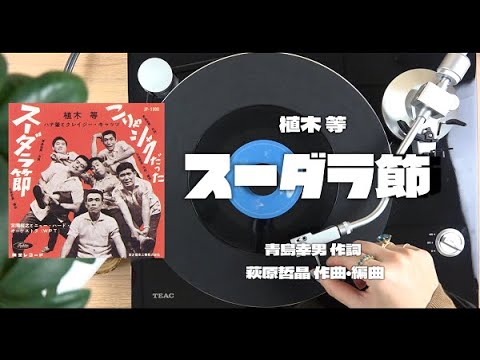
When it comes to upbeat songs that define the Showa era, you can’t leave out this classic by Hitoshi Ueki.
Its lyrics humorously portray everyday failures and setbacks.
Released in August 1961, it became a huge hit, reaching 16th on the year-end chart.
It’s been used in films and commercials, and Ueki himself remade it in 1990, proving its timeless appeal.
It’s the perfect song for laughing off your mishaps—whether you’ve had too much to drink or lost at the races.
Now’s the time to listen! Lively Showa-era songs that brightened Japan (11–20)
Linda LindaTHE BLUE HEARTS

This is the major debut single by THE BLUE HEARTS, a four-piece punk rock band that captivated junior and senior high school students nationwide from the 1980s to the 1990s.
Their high-velocity punk sound and electrifying, impactful performances were rare in the music scene at the time, and their uniquely poetic, incisive lyrics—seemingly at odds with that sound—enchanted many listeners.
Released in May 1987, the song has continued to be widely used in commercials, TV dramas, and films, and remains beloved by many to this day.
It is an immortal classic to play when you want to get pumped up or need the courage to protect what matters most.
Blue Coral ReefMatsuda Seiko

It’s a classic summer hit from the 1980s that evokes the refreshing breezes of the tropics.
Also used as the CM song for Glico’s ice cream “Yolel,” this track was released in July 1980 as Seiko Matsuda’s second single after her debut.
Its clear, transparent vocals and lyrics that capture both the excitement and the bittersweetness of love leave a lasting impression on many listeners.
On TBS’s “The Best Ten,” her performance on the runway at Haneda Airport became a hot topic, and the song took the No.
1 spot for three consecutive weeks.
It’s perfect for seaside dates and making summer memories, and it’s guaranteed to be a crowd-pleaser at karaoke.
Equator Girl: Dokki!Yamashita Kumiko

This is the sixth single by Kumiko Yamashita, released in 1982.
It became a major hit as the summer campaign image song for Kanebo Cosmetics.
With lyrics by Takashi Matsumoto and music by Haruomi Hosono, the song features evocative lyrics that conjure images of blazing sun and tropical romance.
Paired with a buoyant techno-pop rhythm, it captures both the heat of summer and the precarious intensity of love.
Yamashita’s captivating vocals vividly portray a passionate love affair in a southern paradise.
It’s the perfect track for outdoor fun like summer drives or seaside BBQs.
240 Million Eyes -Exotic Japan-Gō Hiromi

This is one of Hiromi Go’s signature songs, blending lyrics that celebrate the beauty and culture of Japan with an energetic disco-style rhythm.
Released in November 1984, the track coincided with a time when Japan was beginning to attract international attention, and it became a major topic of conversation.
Through this work, Hiromi Go expressed a strong desire to share the uniqueness and allure of Japanese culture with the world.
In live performances, flashy staging further enhances the song’s atmosphere, continuing to captivate audiences.
It’s a recommended track for anyone who wants to rediscover what makes Japan special or needs a boost of energy.