

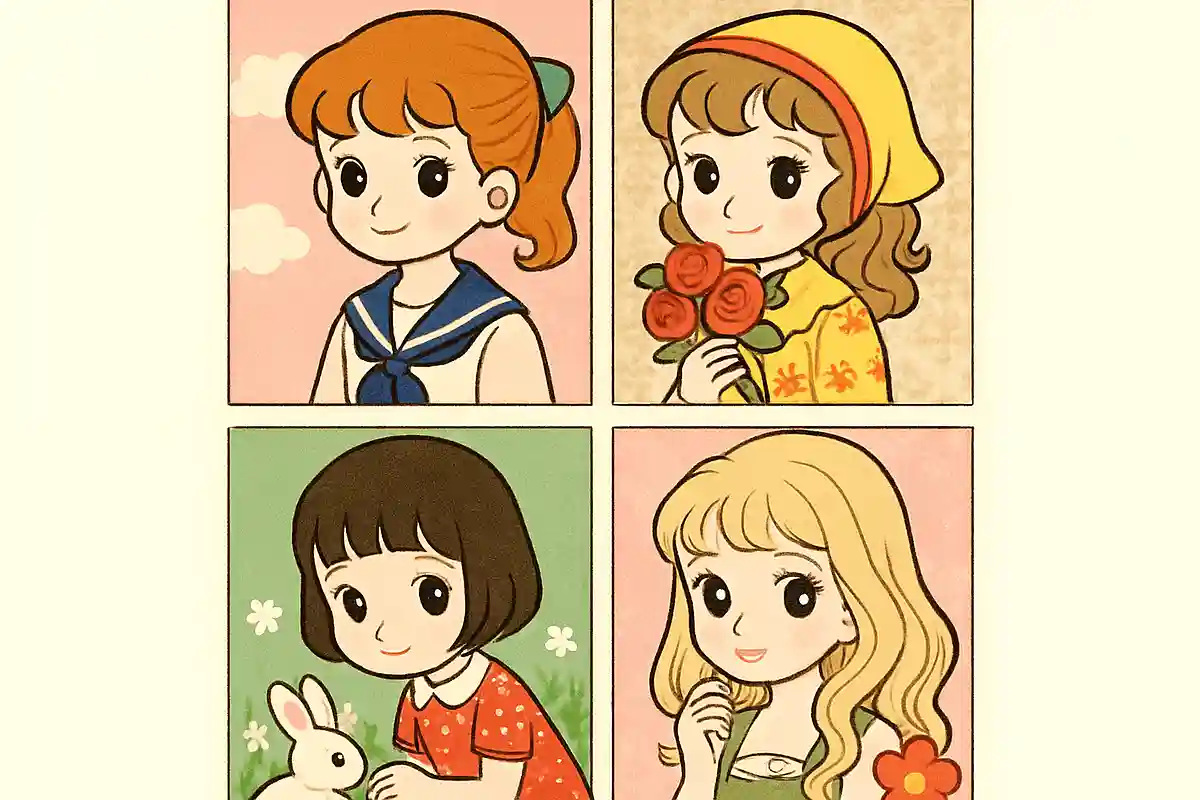

Shōwa-era shōjo manga includes countless masterpieces—from sweet love stories that make your heart flutter, to sports manga brimming with fighting spirit, and even moving tales that bring you to tears.
Why not look back on the worlds you were obsessed with back then—reading after school with friends or sharing with your sisters? In this article, we’ll introduce a selection of shōjo manga that represent the Shōwa period.
- A nostalgic feature on Showa-era magazines: looking back at the popular magazines of the time.
- A must-see for the Showa generation! Nostalgic popular snacks from the old days
- Special feature on popular anime from the Showa era. Looking back at the hit shows of the time!
- Nostalgic chocolates from the Showa era. A lineup of masterpieces that brings back memories.
- The nostalgic world of Showa-era films. Revisiting masterpieces that linger in the heart.
- [Nostalgic Memories] Popular Menu Items from Showa-Era School Lunches
- List of popular Showa-era actresses that bring back memories: introducing iconic stars who evoke nostalgia
- Recommended love songs for people in their 90s: A collection of classic Shōwa-era romance songs
- Nostalgic foods of the Showa era. Let’s trace the memorable flavors and the memories they evoke.
- Nostalgic ice cream from the Showa era. From today’s classic staples to old-time favorites.
- [Nostalgic Showa Fashion] The changing trends that feel both nostalgic and fresh
- A directory of popular women’s pro wrestlers from the Showa era: the star players who energized the times.
- Recommended love songs for people in their 80s: A collection of classic love songs that colored the Showa era
Nostalgic shoujo manga from the Showa era. A collection of masterpieces representing the times (1–10).
an ephemeral, fleeting dream

Many people fall in love with its delicate, beautiful artwork! Let us introduce Asaki Yumemishi.
This is a work by Waki Yamato, who adapted The Tale of Genji into manga, and although serialized irregularly, it began running in the monthly magazine mimi in 1972.
The manga’s popularity is not limited to Japan; it has been translated into multiple languages and appears to have many fans overseas as well.
Beyond the story itself, the characters are also highly popular, and merchandise such as postcards and calendars has reportedly been released.
Behind-the-scenes stories about Waki Yamato’s sincere dedication to her craft are all fascinating, too!
Chibi Maruko-chan

A beloved manga among the Japanese public! Let me introduce Chibi Maruko-chan.
It began serialization in 1986 in the girls’ manga magazine Ribon.
It later became an anime, and even today it’s cherished by both children and adults.
Not only Maruko’s classmates, but also her family and people in the neighborhood are distinctive and endearing—that’s a big part of its charm.
Plus, the everyday stories are highly relatable, so you can’t take your eyes off the narrative.
It’s a manga you’ll want to read again and again.
Tokimeki Tonight

A manga that many people were absolutely hooked on! Let me introduce Tokimeki Tonight.
This manga began serialization in the July 1982 issue of the girls’ magazine Ribon.
Centered on a girl from the demon world whose parents are a vampire and a werewolf, the story is filled with compelling expressions that draw you right into its world as you read.
It’s not just comedy—there are plenty of serious moments too, so the suspense and excitement never stop as you turn the pages.
I bet it made many of you want to reread it!
Aim for the Ace!

If you’ve played tennis or love sports, you’ve probably read it! Let me introduce Aim for the Ace! This sports manga by Sumika Yamamoto began serialization in Weekly Margaret in 1973.
Many people may have started playing tennis because of the manga’s influence.
Its popularity led to TV anime and live-action drama adaptations, making it a cultural phenomenon.
You won’t be able to take your eyes off the protagonist as she faces bullying and hardships while striving to become a top-class tennis player.
Glass Mask

Let me introduce Glass Mask.
Many of you were probably hooked on Glass Mask, the Japanese shoujo manga series by Suzue Miuchi.
First serialized in 1975, this work is captivating for its story centered on theater and the stage.
Scenes like auditions and stage performances create such a gripping progression that many readers likely watched with bated breath and pounding hearts.
As you read while considering the characters’ emotions, you find yourself drawn into the story—it’s a truly remarkable work.
Patalliro!

Unique characters are the charm! Let me introduce Patalliro! Serialized in Hana to Yume since 1978, Patalliro! is a gag manga by Mineo Maya.
Its popularity led to an anime adaptation, a live-action film, and even stage productions.
Set in the fictional island nation of the Kingdom of Marinera, the unfolding stories are so entertaining that you can’t help but keep reading—one of its key appeals.
The distinctive personalities of the characters, especially the king Patalliro, really shine, making it a series well worth revisiting.
The Rose of Versailles

A timeless classic loved for generations! Let us introduce The Rose of Versailles.
This manga by Riyoko Ikeda began serialization in 1972 in the magazine Weekly Margaret.
Affectionately nicknamed “Beru-bara,” it has been cherished for many years.
Its popularity led to a stage adaptation by the Takarazuka Revue, which sent its fame soaring.
In the 1970s, it was also made into a live-action film and a television anime, becoming such a hot topic that it turned into a social phenomenon.
Even today, the original work still has many fans, and exhibitions and other events continue to be held.