

[Revisited] A roundup of popular and classic Showa-era songs that are trending now [2026]


The Showa era gave birth to countless timeless classics loved across generations.
Now, those masterpieces from the Showa period are once again in the spotlight.
They’re gaining attention as they’re used on social media and video platforms like TikTok and YouTube, and as various artists and actors release cover versions.
In this article, we’ll introduce Showa-era songs that are trending right now!
For those who listened in real time back then, it’ll be nostalgic; for younger generations who didn’t experience the era, it might help you think, “So these are the songs that are trending on social media.”
Be sure to find your own favorite Showa tune!
- [Classic Showa Kayō Hits] The captivating Showa-era pop songs beloved even by younger generations
- Revival hits driven by social media! Classic Showa-era songs popular with Gen Z
- Showa-era nostalgic songs: Popular ranking
- Popular Showa-era pop. Timeless hit songs.
- [Songs from the Showa Era] Introducing classic tracks that are easy to sing at karaoke.
- So nostalgic it feels new? Showa retro classics that colored Japan’s period of rapid economic growth
- A Showa-era song that had a revival hit on YouTube Shorts
- A classic Showa-era kayōkyoku song sung by a female vocalist. A nostalgic tune passed down through the years.
- Cool songs from the Showa era. Masterpieces from Showa that shine with sensuality, passion, and rugged charm.
- Evokes the charm of the good old days. Showa-era inspirational songs that are still loved today.
- [2026] Only Masterpieces Born in the Reiwa Era! Spring Songs Recommended for Teens
- Karaoke Popularity Ranking by Generation [50s] [2026]
- Popular 80s hits for karaoke. Sing kayōkyoku and pop songs!
[Spotlight Again] A Collection of Popular and Classic Showa-Era Songs Trending Now [2026] (31–40)
School HeavenFingā 5

Released in 1974, Finger 5’s “Gakuen Tengoku” is a classic that straightforwardly sings about a boy who’s head over heels for the heroine of his class.
The song is famous for its memorable opening calls—“Are you ready?” and “Hey hey hey heeey!”—and has been covered by many artists.
Notable versions include Kyoko Koizumi’s 1989 cover, Shingo Mama (played by Shingo Katori) in 2001, and Dream5 in 2011.
Loved and passed down through the generations, the song continues to be sung across eras.

Until we meet againOzaki Kiyohiko

“Mata Au Hi Made” is a song released in 1971 by Kiyohiko Ozaki, known for its beautiful and masculine melody.
It was later covered by Takumi Kitamura—known as the vocalist of DISH//—in 2021, and by the idol group Momoiro Clover Z in 2022.
One reason the song remains popular today may be the chorus, which features sustained, higher notes in chest voice that let artists showcase their vocal ability.
By the way, since it requires solid vocal power, it’s also a great choice as a vocal training piece!
You are in full color.Ohtaki Eiichi

This is a masterpiece by Eiichi Ohtaki, who left a profound mark on the history of Japanese pop music.
Released in March 1981, the song was also included on the album “A LONG VACATION” and captured the hearts of many.
Its delicate lyrics depict the sweetness of romantic memories alongside the premonition of parting.
The striking chorus line, “Memories are monochrome,” is said to have been inspired by lyricist Takashi Matsumoto’s personal experiences.
Ohtaki’s rich, layered production—often called the Japanese version of the Wall of Sound—beautifully brings the lyrical world to life.
It’s a recommended track for anyone who has experienced heartbreak or wants to bask in nostalgia.
You’re Kiwi, Papaya, and Mango, aren’t you?Nakahara Meiko

The song drawing renewed attention thanks to TikTok dance videos is “Kimi-tachi Kiwi Papaya Mango da ne.” It’s a track released by Meiko Nakahara in 1984.
Written specifically for Kanebo’s summer campaign, the lyrics are a romantic and exotic portrayal of a summer romance.
Incidentally, because the melody features dramatic pitch changes, it’s often chosen as a challenge piece for “I tried singing” videos, where delivering it well really stands out.

wicked womanNakajima Miyuki

Still beloved today as a classic from the Showa era, this work features Miyuki Nakajima’s soul-stirring vocals and a poignant love story that resonates deeply.
Released as a single in October 1981, it is known as one of Nakajima’s signature songs.
The lyrics, which portray a woman’s feelings as she sacrifices herself for the one she loves, strike a chord with listeners.
Covered by numerous artists, it has been cherished both in Japan and abroad.
It’s a song recommended for listening alone on a quiet night.
A gem that accompanies those suffering in love or harboring a bittersweet longing.
MUGO… so sexyKudō Shizuka

Crafted by the golden duo of lyrics by Miyuki Nakajima and composition/arrangement by Tsugutoshi Goto, this song was released in August 1988 as Shizuka Kudo’s fifth single.
Its hallmark is lyrics that portray the feelings of a woman carrying emotions she cannot put into words, with the central theme being a yearning to connect through a meeting of the eyes.
It was used as Kanebo’s 1988 autumn promotion image song, and it’s intriguing that the title was taken from the advertising copy.
As a significant work in Kudo’s career, it continues to be loved by many fans.
It’s a track I especially recommend to anyone burdened with feelings they can’t express in words.
EnchantedJudi Ongu
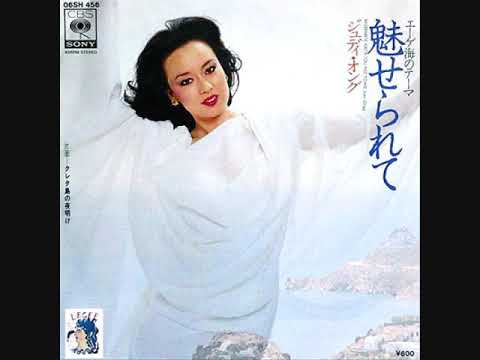
This is one of Judy Ongg’s signature songs, which became a massive hit with total sales of two million copies.
It was used in a commercial for an underwear brand, and at first the singer’s name was withheld at the production company’s request.
After the commercial aired, record stores were flooded with inquiries asking, “Who’s singing that song?” Her name was later officially announced.
Speaking of Judy Ongg performing this song, the striking image is her pure white costume that spreads like wings when she extends her arms.
It’s been frequently parodied on impression and comedy shows, and as both a piece of music and a performance, it remains a beloved classic across a wide audience.

Red Sweet PeaMatsuda Seiko

“Red Sweet Pea” is a catchy song, exemplary of idol pop, released by Seiko Matsuda in 1982.
The composition was handled by Yumi Matsutoya, known for songs like “Haru yo, Koi,” and it features an inventive touch of adding another melody after the main chorus.
As an aside, at the time Yumi Matsutoya was considered Seiko Matsuda’s rival, so having her compose a song for that rival was quite a sensational event.
The Door to SummerMatsuda Seiko

A classic hit by Seiko Matsuda that evokes a refreshing summer breeze.
The lyrics overflow with youthful vitality, and together with the light, buoyant melody, they brilliantly capture the fluttering heartbeat of a girl in love.
Released in April 1981 as Matsuda’s fifth single, the song became a major hit.
It remains a beloved staple at her concerts, where the signature “Fresh!” call always sparks excitement.
It’s the perfect track for those whose hearts dance with summer romance or who fondly reminisce about their youth.
After all, I’m an idolKoizumi Kyoko

This song is known as a quintessential work of 1980s idol pop.
The lyrics open with a scene of jumping out of a red convertible and go on to portray an idol’s everyday life and feelings.
The phrase “pure, proper, and beautiful” underscores the importance of image management for idols.
Released in November 1985, it was also used in a commercial for Fuji Photo Film’s “Cardia.” In 2006, it was featured in a Subaru Stella commercial by Fuji Heavy Industries.
Kyoko Koizumi’s clear and charming vocals remain as captivating as ever.
It’s a recommended track for those who want to look back on the idol era or are interested in 1980s music.