

A roundup of recommended instruments to start fresh: instruments I’d love adults to take up as a hobby

If you love music, many of you may be thinking about starting an instrument as a new hobby.
Playing an instrument has great depth; it takes a lot of practice to improve, and once you can play a full piece, it becomes so enjoyable that you’ll find yourself getting more and more absorbed.
In this article, we’ll introduce a range of instruments recommended for starting as a new hobby.
In addition to popular instruments like piano, saxophone, and guitar, we’ve also picked out some slightly unusual ones, including traditional Japanese instruments and folk instruments from around the world.
Please use this as a reference.
- A roundup of quiet instruments you can play at home. Silent instruments you can play at home.
- For adult women: solo activities you can enjoy, and a chance to discover new hobbies
- [For Men] A Collection of Hobby Ideas You Can Get Absorbed in on Your Own
- What does the word “repezen” used by rappers mean?
- [For Adults] Recommended Craft Kits
- [For Middle School Students] Recommended Ways to Spend Your Free Time
- What Is This? A Collection of Rare and Unique Musical Instruments from Around the World
- Handmade instruments with plastic bottles: try making flutes, percussion, and traditional ethnic instruments.
- What does the “a.k.a.” you often see in artist names mean?
- Christmas crafts for adults: stylish project ideas you'll want to display
- [Rock] Easy Band-Style Vocaloid Songs for Beginners [Simple]
- [Easy] Practical craft ideas. Great for beginners too!
- [For Adults] Fun Activities and Hobby Ideas for Rainy Days
A roundup of recommended instruments to start anew. Instruments I’d like adults to take up as a hobby (1–10)
piano

The piano is known as a highly versatile instrument because, by its very design, a single player can cover both accompaniment and melody, and it boasts a range even wider than that of a full orchestra.
In recent years, it has been attracting renewed attention, exemplified by YouTuber Harami-chan successfully holding a solo piano concert at the Budokan—the first by a female pianist in 15 years.
While it may seem difficult since your hands must move independently and you also operate the sustain pedal with your foot, beginners can certainly learn to play by practicing gradually, such as working with one hand at a time.
Unlike other instruments, the piano alone can complete and fully realize a piece of music, making it a perfect instrument to pursue as a hobby.

Kalimba

A musical instrument also known as a thumb piano or hand-cranked music box, played by plucking thin metal tines arranged on a box.
It’s known as a traditional African instrument, and its clear, organic tone is wonderfully soothing.
Because the instrument is quite small and uses an African tuning system different from Western music’s note layout, even beginners can produce distinctive melodies simply by sounding the tines from one end to the other—unlike a piano.
It even appeared in the recent cultural phenomenon Animal Crossing: New Horizons, so if you take it up as a hobby, you’re sure to attract attention.
silent guitarNEW!
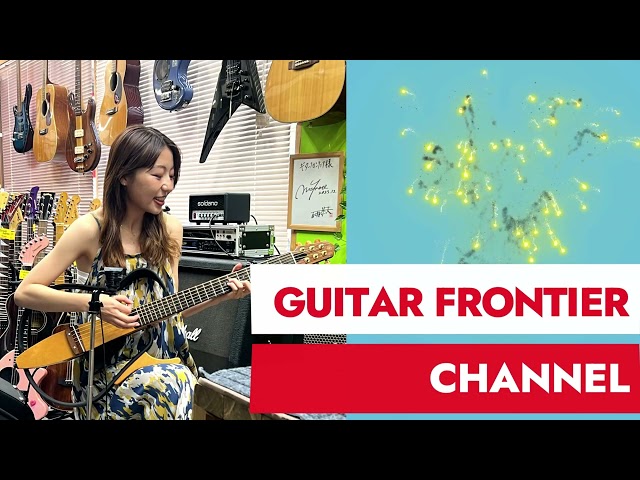
Even Michael Schenker and Yngwie Malmsteen started out as beginner guitarists.
They learned chords—C, A, and so on—one by one and became world-class guitarists.
The guitar is an instrument of youth for everyone, regardless of gender.
For those living in apartments, a silent guitar offers peace of mind; its volume is said to be about 10–20% of an acoustic guitar’s.
This groundbreaking guitar, which has no resonant body, was developed by Yamaha.
Prices start from around 70,000 yen.
It’s also recommended for anyone looking for a new hobby!
Recommended instruments to start anew: Instruments I hope adults will take up as a hobby (11–20)
silent violinNEW!

Wasn’t it Taro Hakase who turned the violin—previously heard only in classical music—into a decidedly pop instrument? Especially the main theme of “Jonetsu Tairiku”; it’s a track that needs no introduction.
Why not start playing the violin yourself? Several silent violins are available from Yamaha.
The YSV104 is for beginners, equipped with a mini jack for headphones.
The SV250 is aimed at intermediate and advanced players and is suitable for live performances.
The most expensive, the SV255, is a five-string model that covers down to the low C string.
I’ve roughly categorized them as stage-ready instruments that can handle any genre.
I hope you find a violin that suits you.
Hand roll pianoNEW!

Hand roll pianos that let you practice anywhere without taking up space are perfect for practicing at home.
Since many of them have a place to plug in headphones, you can practice at night or whenever you like.
Another plus is that when you’re done, you can roll it up for storage, so you can practice freely without worrying about securing space.
Choosing a rechargeable model may also be a perk, as you won’t need to look for an outlet and can secure a practice spot anywhere.
Being able to practice without worrying about noise or location is the key advantage of a hand roll piano.

trumpet

When you hear the colloquial term “rappa,” the brass instrument that probably comes to mind first is the trumpet.
It’s known as the star of genres where brass shines—jazz, ska, concert band—and its rich, penetrating tone catches the ear across generations.
Brass instruments are often thought to be difficult just to produce a sound on, but if you practice your embouchure—the shape of your mouth on the mouthpiece and how you vibrate your lips—you’ll be able to get a tone, so beginners should definitely give it a try.
However, because the instrument’s natural sound is quite loud, if you practice at home, use a trumpet mute, or practice in a place where you won’t bother others, such as a park or by a river.
violin

The violin, known as a star of classical music and increasingly embraced in popular music, is the highest-pitched instrument among the four members of the violin family—violin, viola, cello, and double bass—and often takes the solo part.
Although it has a reputation for being difficult, with its distinctive posture of resting on the shoulder and being held in place by the chin, and the challenge of producing a clear tone depending on the angle of the strings and bow, it is an instrument whose elegance makes you want to overcome those hurdles.
It’s a string instrument I’d recommend as a hobby for beginners—one you might suddenly find yourself able to play and eager to perform in front of others.