

A roundup of recommended instruments to start fresh: instruments I’d love adults to take up as a hobby

If you love music, many of you may be thinking about starting an instrument as a new hobby.
Playing an instrument has great depth; it takes a lot of practice to improve, and once you can play a full piece, it becomes so enjoyable that you’ll find yourself getting more and more absorbed.
In this article, we’ll introduce a range of instruments recommended for starting as a new hobby.
In addition to popular instruments like piano, saxophone, and guitar, we’ve also picked out some slightly unusual ones, including traditional Japanese instruments and folk instruments from around the world.
Please use this as a reference.
- A roundup of quiet instruments you can play at home. Silent instruments you can play at home.
- For adult women: solo activities you can enjoy, and a chance to discover new hobbies
- [For Men] A Collection of Hobby Ideas You Can Get Absorbed in on Your Own
- What does the word “repezen” used by rappers mean?
- [For Adults] Recommended Craft Kits
- [For Middle School Students] Recommended Ways to Spend Your Free Time
- What Is This? A Collection of Rare and Unique Musical Instruments from Around the World
- Handmade instruments with plastic bottles: try making flutes, percussion, and traditional ethnic instruments.
- What does the “a.k.a.” you often see in artist names mean?
- Christmas crafts for adults: stylish project ideas you'll want to display
- [Rock] Easy Band-Style Vocaloid Songs for Beginners [Simple]
- [Easy] Practical craft ideas. Great for beginners too!
- [For Adults] Fun Activities and Hobby Ideas for Rainy Days
Recommended instruments to start anew: A roundup. Instruments I’d like adults to take up as a hobby (21–30)
cajón

A box-shaped instrument known for the way you straddle it and strike the playing surface and its edges with your bare hands.
In addition to the Peruvian style of cajón that most people imagine, there’s also a Cuban style played between the knees like a conga, and in flamenco accompaniment you’ll even find versions with strings or jingles installed behind the front panel—one of the pleasures of such a simple construction is the variety of creative tweaks.
Even on the same playing surface, different spots produce low or high tones, so one advantage is that even beginners can enjoy making music just by playing with enthusiasm.
Of course, the deeper you go, the more complex techniques you’ll discover, so start by giving it a try—and if it grabs you, dive in further.

button accordion

Unlike the accordion most people imagine, a button accordion has buttons on both the right and left sides.
The buttons on the right hand correspond to the black and white keys of a piano, while each button on the left is designed to produce an entire chord.
The layout of the buttons may feel complicated to beginners, but because commonly used notes are grouped close together, it becomes easier to play once you get used to it—even for novices.
With its distinctive, mellow tone that adds color to your leisure time, it’s an ideal instrument for those who want to learn something unique and different from what others play.
harmonica

When it comes to harmonicas, many people have probably tried playing one at least once.
It’s a familiar and approachable instrument.
Broadly speaking, there are two types of harmonicas: the diatonic harmonica—represented by the blues harp—which can play the notes of a major scale, and the chromatic harmonica, which has a slide lever that allows you to play semitones as well.
Choose one that suits the songs you want to play.
If you can play the harmonica, you can even accompany yourself by playing the guitar while blowing the harmonica.

djembe

This is a percussion instrument from West Africa that has been gaining recognition in Japan.
Its appearance clearly gives off a traditional ethnic vibe, and even if you don’t end up playing it well, it seems like it would make a great decorative piece.
The body is made of wood, and the striking surface is said to be covered with goat skin.
Since you play it with your hands, the vibrations transmit directly through your body, letting you feel the heartbeat of the earth.
It’s a loud percussion instrument, so practicing outdoors on your days off—by a riverbank, lakeshore, beach, or in a park while feeling the natural breeze—sounds like it would be a lot of fun.
mandolin

The mandolin has a cute, small, rounded shape.
It has eight strings, but since they’re tuned in pairs to the same pitch, you can play it like a four-string instrument, similar to a violin or ukulele.
Because its sustain—especially in the higher register—is limited, it characteristically uses tremolo when holding notes.
You can also play chords on a mandolin, so it works for singing while playing.
There are electric mandolins as well, letting you enjoy a wide range of genres from rock to classical.
It’s a recommended instrument for anyone looking to start a new string instrument.
shakuhachi

The shakuhachi has been played in Japan since long ago.
There are different schools and traditions, so it can seem intimidating, but because it’s a bamboo instrument, there are options that are more affordable and easier to obtain than you might expect.
If you don’t have time to take lessons, learning through videos is also a good choice.
While the embouchure is unique, the fingerings are similar to a recorder, so it’s one of the instruments you can start without much resistance.
Getting familiar with a traditional instrument can open up a whole new world.
And although it’s an ancient Japanese instrument, once you learn the fingerings you can also play pop or jazz.
clarinet
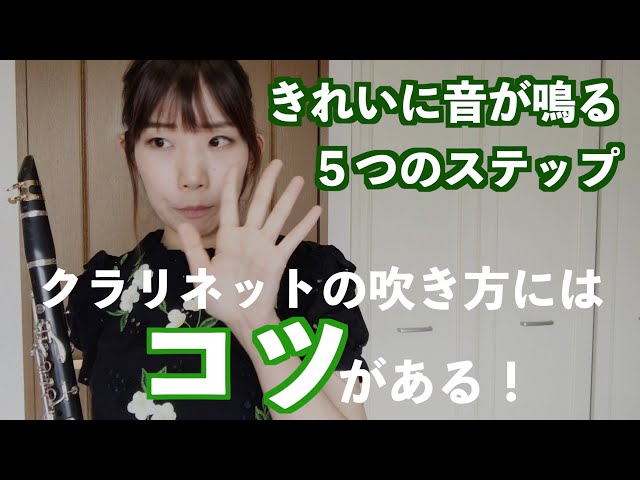
The clarinet is a famous woodwind instrument that many people likely first heard in nursery rhymes during childhood.
While it’s strongly associated with classical music and wind ensembles, did you know it’s also commonly used in jazz? Its soft, warm tone is soothing both to play and to listen to, making it a perfect choice for those starting music as a hobby.
It’s relatively approachable for beginners, so it’s popular not only among students but also as an instrument to start learning in adulthood.