

Take on the Lightning Trivia Quiz! From common knowledge to surprising fun facts

“How many times does lightning strike the Earth in one second?” How much do you know about lightning, the awe-inspiring force that rains down from the sky? Although it feels familiar, there’s a lot about lightning we don’t actually know.
We bring you fun facts and surprising trivia in a quiz format.
It’s packed with fascinating lightning knowledge that will make you say, “Wow!” and want to share with others.
From general knowledge that both adults and kids can enjoy to unexpected facts you’d never guess, why not get closer to the world of lightning?
- [For Kids] Trivia Quiz & Fun Facts About Rain
- Make weather forecasts more fun! Trivia and fun facts about the weather
- Learn to Love the Rain! Fun Facts & Trivia Quiz about the Rainy Season for Kids
- Get Interested in Rain! A Collection of Trivia and Fun Facts
- How many do you know? An earthquake trivia quiz: from general knowledge to fun facts
- Useful in emergencies! Learn disaster preparedness the fun way with a disaster-prevention trivia quiz
- A trivia quiz about typhoons you might not know: questions range from general knowledge to disaster preparedness.
- [Trivia] Did You Know? A Collection of Weather Proverb Quizzes!
- Trivia quiz with useful tips to know: fun facts that come in handy at school or at home [for kids]
- Learn while having fun! Ocean Trivia Quiz & Fun Facts for Kids
- [For Kids] Fun Summer Trivia Quiz & Facts
- A compilation of unsettling trivia and fun facts about Earth
- A quiz of fun trivia: bite-sized knowledge that leads to new insights.
Take on the Lightning Trivia Quiz! From basic general knowledge to surprising facts (1–10)
When is the season said to have especially frequent lightning?
- spring
- summer
- Autumn
See the answer
summer
Thunder is more frequent in summer because thunderclouds, made of warm and humid air, tend to develop during that season. For many of us, those heart-pounding sudden evening showers and thunder we remember from childhood also came in summer. There are many words about thunder used as seasonal terms in haiku: the clear, far-running winter thunder, the hazy glow of spring thunder in a misted sky, and more. It seems the Japanese have found a sense of elegance even in thunder.
What exactly is lightning?
- light
- oxygen
- electricity
See the answer
electricity
Lightning is a phenomenon in which a large amount of electricity is generated in places like inside clouds and then suddenly flows through the air. In the process, flashes of lightning and thunder occur. Speaking of familiar electricity, in everyday life there’s static electricity, which often happens during the dry winter season. Thinking that the electricity we know well could gather in great amounts and turn into lightning… it feels a little scary, doesn’t it?
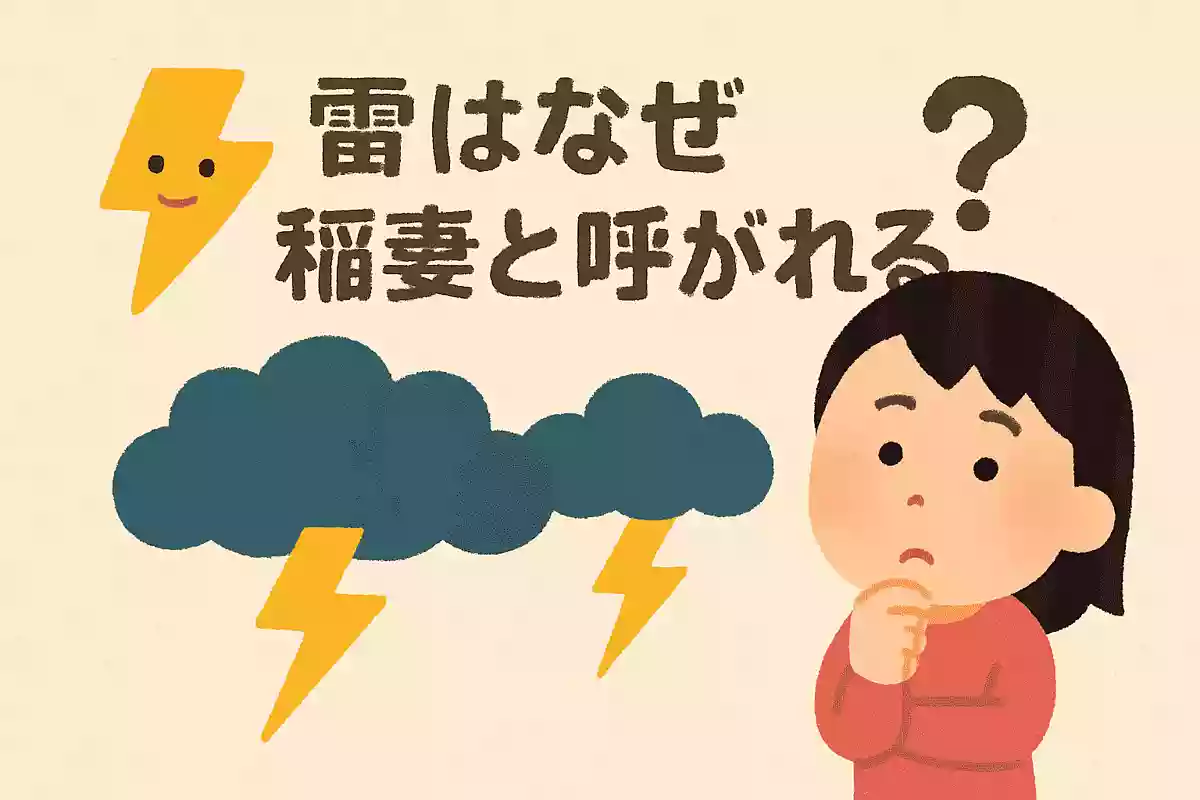
Why is thunder sometimes called lightning?
- Because it was believed that lightning helps rice plants in the paddies grow
- Because it was named after the phenomenon of rice leaves shining
- Because lightning often occurs during the rice-planting season.
See the answer
Because it was believed that lightning helps rice plants in the paddies grow
It is said that the word inazuma (lightning) originates from the phrase “the husband of the rice plant.” Since thunder brings rain, it may also have been seen as “a good partner for rice.” In the word inazuma, the element tsuma refers to a woman, symbolizing the source of life and, by extension, a bountiful harvest. The term likely arose from the complex interweaving of ancient people’s beliefs that linked thunder with good harvests.
Take on the Lightning Trivia Quiz! From general knowledge to astonishing facts (11–20)
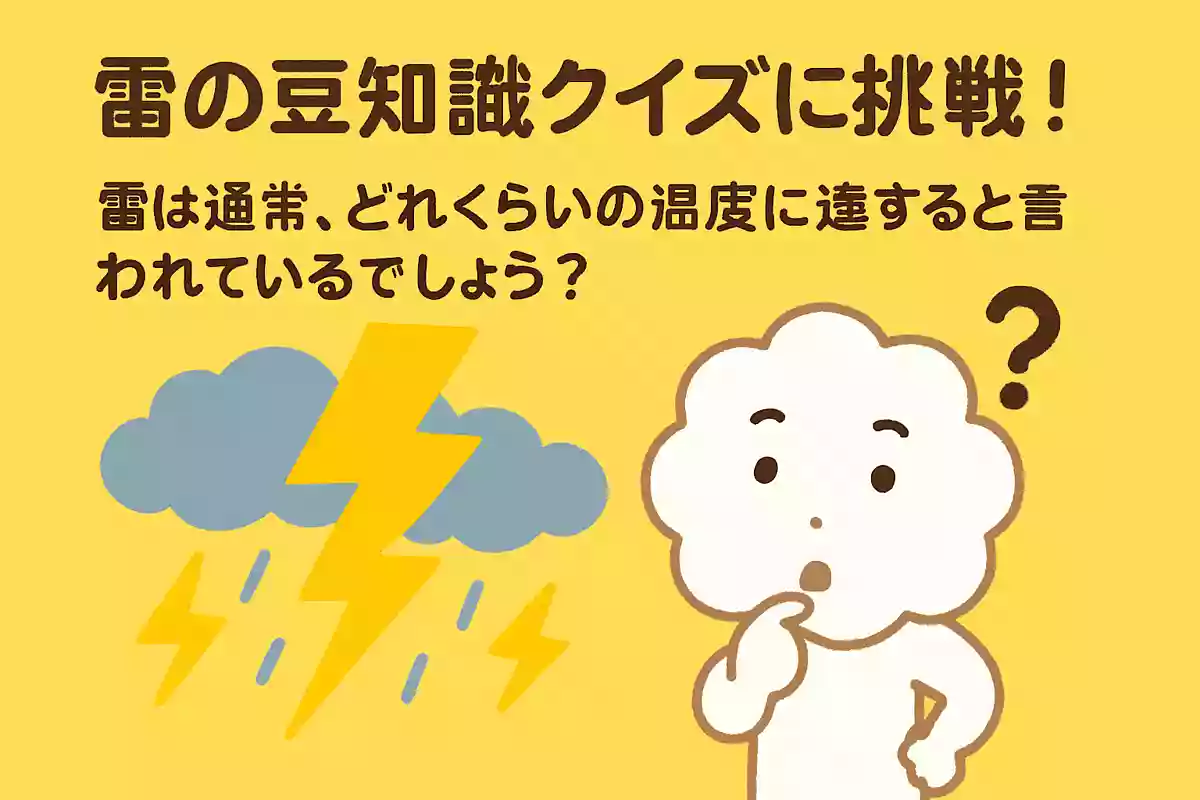
What temperature is lightning generally said to reach?
- about 300 degrees
- about 3000 degrees
- about 30,000 degrees
See the answer
about 30,000 degrees
When lightning occurs, the temperature in the air instantly reaches over about 30,000 degrees. The surface of the Sun is around 6,000 degrees, so it’s far hotter than that. If lightning strikes the ground and the current doesn’t flow properly, it can discharge into trees or buildings, generating heat and causing fires. Thinking about that, it feels like there aren’t many effective ways to deal with lightning, are there…?
On what kind of days is lightning more likely to occur?
- A dry, sunny day
- A winter day with low temperatures
- A summer day with high humidity and rising temperatures
See the answer
A summer day with high humidity and rising temperatures
Lightning is more likely to occur when warm, moist air rises rapidly, causing strong convection within clouds. For that reason, lightning is especially common on hot, humid summer days. Although lightning can be seen in any season—such as winter lightning or spring thunder—the lightning during summer evening showers is the most impressive, isn’t it? When I was a child, I often hid my belly button during thunderstorms.
When lightning actually strikes, which electrons flow from the sky to the ground?
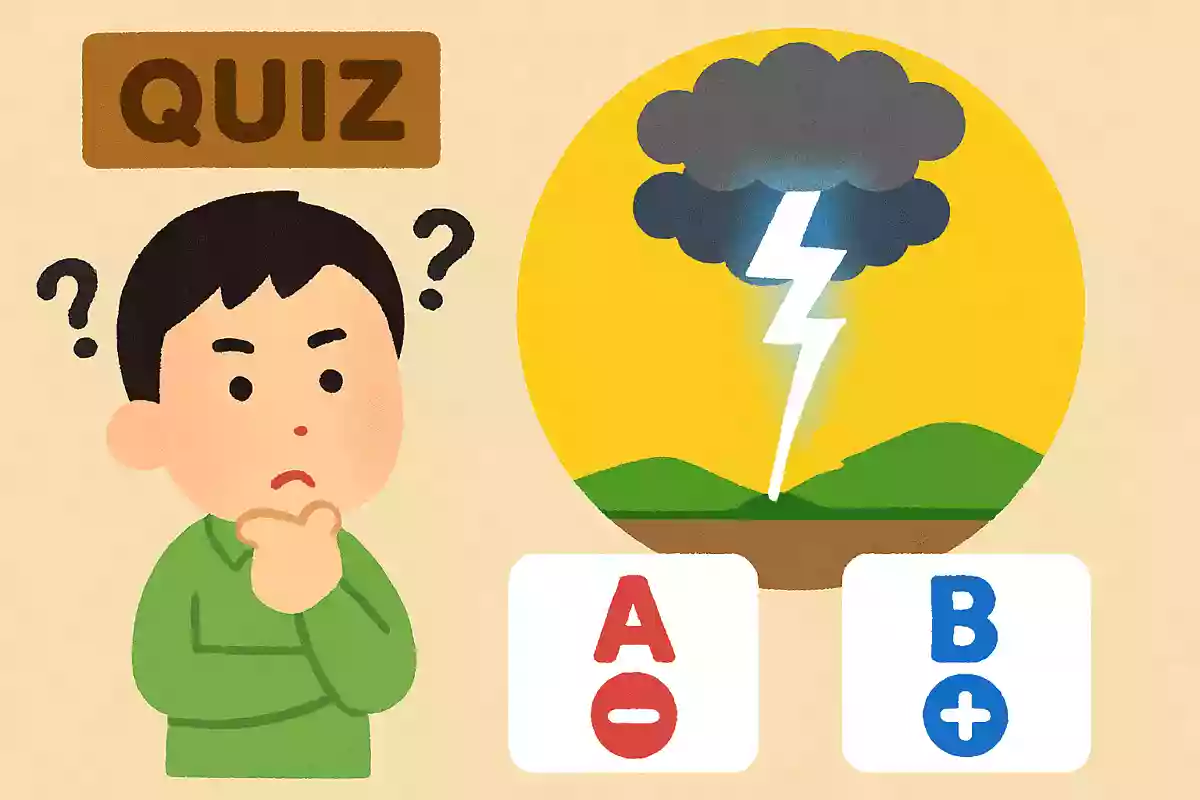
- positive electron
- negative electron
- Both electrons
See the answer
negative electron
When lightning occurs, the main electric charge flowing from the sky to the ground is electrons. Lightning happens when the electrons stored in a cloud suddenly flow down to the ground. Ordinary electric current is defined as flowing from the positive terminal to the negative terminal, but the flow of electrons is the opposite. There are different kinds of electricity, aren’t there? By the way, that rumbling sound you hear is the sound of lightning tearing through the air.
Which of the following locations is more likely to be struck by lightning?
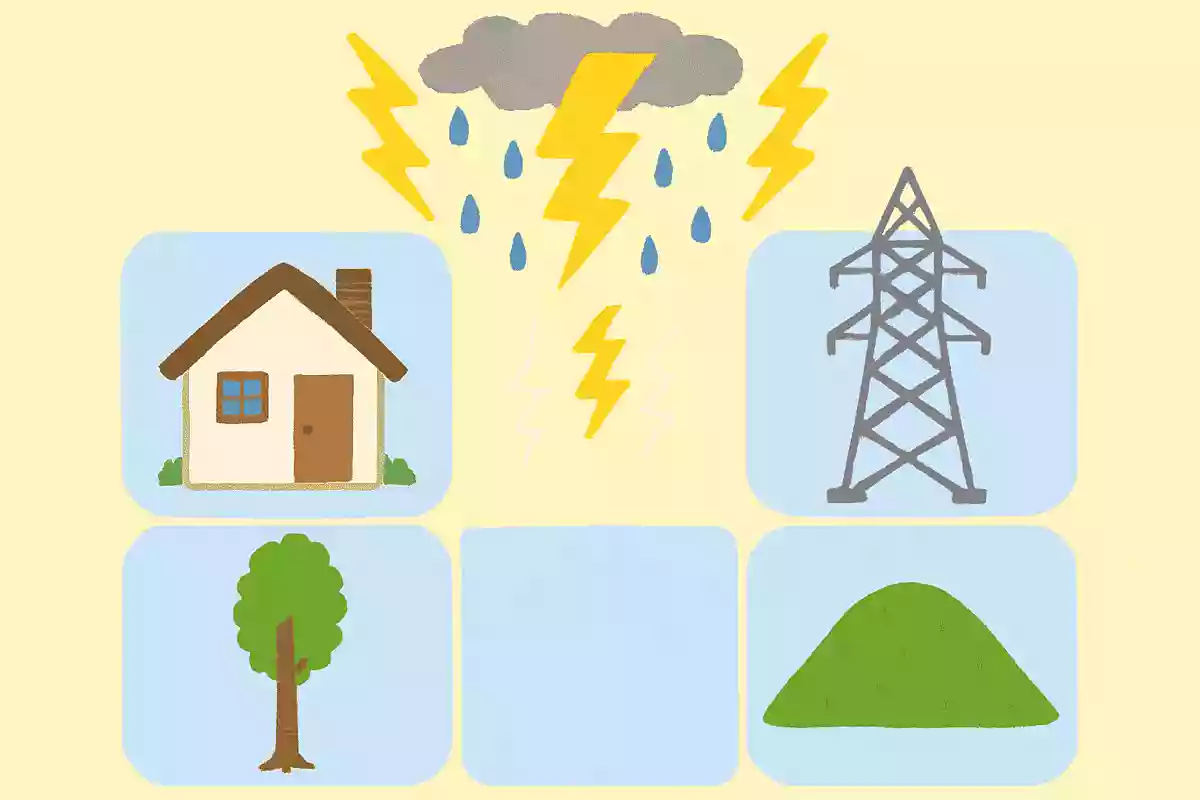
Lightning is said to strike tall objects and open areas more easily. Please choose the place where lightning is most likely to strike from the options below.
- Inside the building
- in the middle of a large field
- Inside the car
See the answer
in the middle of a large field
In open areas like sports fields where there’s nothing taller than you, lightning is more likely to strike. In fact, there have been incidents where lightning struck a field and students practicing club activities were taken to the hospital. If you hear thunder in a place with nothing taller than you, take shelter inside a building immediately.