

Collection of winter nursery rhymes, folk songs, and children's songs. Includes fun winter hand-play songs too.


Do you like winter?Although winter is very cold, there are many unique ways to enjoy it: you can see a beautiful silver world created by pure white snow, and you can feel a special kind of warmth you can only experience in winter, like hot pot dishes or sitting in a kamakura snow hut.There are also lots of fun events like Christmas and New Year’s!Children are probably looking forward to making snowmen, having snowball fights, and enjoying Christmas presents and cakes, aren’t they?In this article, we’ll introduce nursery rhymes, folk songs, traditional children’s songs, and hand-play songs themed around various aspects of “winter.”There are many songs that will turn a winter that’s “just cold” into wonderful memories, so please give them a listen!
- December children's songs, folk songs, and nursery rhymes: fun winter hand-play songs
- [February Songs] Introducing children's songs, folk songs, nursery rhymes, and hand-play songs about Setsubun and winter!
- Songs for January: Nursery rhymes and fingerplay songs we want children to grow familiar with
- Snow Songs to Enjoy in Winter! Children's Snow Nursery Rhymes & Hand-Play Songs
- [For Seniors] Winter songs you'll want to hum along to. A collection of classic tunes recommended for BGM and recreational activities
- [Snow Songs] Classic winter tunes themed around snow. Snow songs that touch the heart.
- [Winter Songs] The Best Classic and Popular Winter Tunes to Listen to in Winter
- [Hand Play] Popular with kids! A collection of trendy hand-play songs and nostalgic traditional children’s songs
- [Children’s Song] A Collection of Hand Play Songs Perfect for Christmas
- Masterpieces to Listen to in January: New Year-Themed, New Year-Ready, and Winter Songs
- Recommended Christmas songs for people in their 70s: A collection of classic winter hits from the Showa era
- Popular winter songs on YouTube Shorts. Winter song special.
- [Elementary School Music] List of Popular and Nostalgic Songs That Have Appeared in Textbooks
Collection of winter children’s songs, folk songs, and nursery rhymes. Fun winter hand-play songs too (81–90)
Tonight is a happy Christmas.

Aramaki Shake’s “Tonight Is a Joyful Christmas” is a hand-play song filled with Christmas items that get kids excited.
It also features fun words related to colors like “red,” “white,” and “brown,” as well as words that describe shapes such as “triangle” and “round.” It can be fun to add your own second and third verses and tweak the parts that describe colors and shapes.
With its relaxed, simple melody, it’s easy for little ones to learn—so give it a try!

Quiet Christmas

The songs by the duo Toshihiko Shinzawa and Hirotaka Nakagawa are filled with masterpieces that warm the listener’s heart.
This piece, included on the album “Happy Kids X’mas! Christmas Song Best ~With BGM for Parties~,” released by King Records in November 2019, gently portrays a quiet Christmas night.
The lyrics, which describe various people drifting off to sleep—such as shepherds, a shoeshine boy, and the little match girl—leave a strong impression.
Coupled with its calm melody, it brings peace to those who listen.
It’s often sung at Christmas events in nurseries and kindergartens, and singing it together with children will surely make for wonderful memories.
Troika

This is a Russian folk song from a land with much harsher cold than Japan.
In Japan, the group Katusha has provided a translation.
It is a sorrowful song about someone whose beloved has been taken away, so the lyrics are very plaintive and the mood is dark.
In Japan, it’s also well known as the song used in the game Tetris.
Song of the Four Seasons
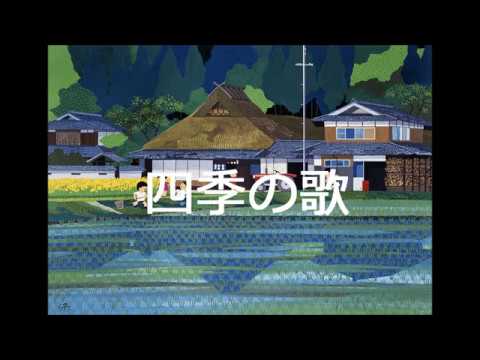
Even in the winter chill, this song offers a warm light.
It’s perfect for nursery and kindergarten teachers to teach their children.
Singing it with family will make for a lovely time to share the changing seasons.
Since it was included in a music textbook compiled by the Ministry of Education in 1971, it has been loved by many people.
Through this piece, why not discover the joy of music and learn about Japanese culture?
A Town Where It SnowsSakkyoku: Nakada Yoshinao

Yuki no Furu Machi o is a song whose lyrics were written by imagining oneself walking alone through a snow-covered town.
The melody, which quietly moves forward over an accompaniment that evokes steadily falling snow, conveys the chill of winter, yet in the final section it hints at the coming of spring.
It is a classic of the Showa era, where the words woven by playwright Naoya Uchimura and the melody composed by Yoshinao Nakada are beautifully matched.

mochi poundingSakkyoku: Isobe Atsushi

This song is based on mochi pounding, which is done to make kagami mochi and other items in preparation for the New Year holidays.
The feel is like singing along to the exact tempo of the mochi pounding.
The lively, bright flow of the tempo is great, so you’ll find it’s over before you know it.
Collection of Winter Children’s Songs, Folk Songs, and Nursery Rhymes: Fun Winter Hand-Play Songs Too (91–100)
The earliest one first thing in the morningSakkyoku: Koshiji Nobuyoshi

It’s a song that Osamu Sakata and Yuko Kanzaki sang on “Okaasan to Issho.” It lists jobs that start work in the morning, and at the end there’s a funny punchline about someone who oversleeps.
It’s really hard to get out of bed in winter, isn’t it?
