

[Piano] Classic masterpieces you’ll want to listen to and play in winter

In winter, when the severe cold can make going out feel like a chore, why not enjoy listening to music and playing the piano in the warmth of your home?
This time, we’ve picked out classic masterpieces that evoke winter—piano pieces as well as orchestral works with beautiful piano arrangements.
The piano’s timbre is a perfect match for the crisp winter air and stunning snowy landscapes.
Relaxing at home and listening is wonderful, but we also recommend challenging yourself to actually play the piano to make your time at home even more fulfilling.
Please enjoy winter-themed classical works in whatever way feels most comfortable for you!
- [Christmas] Songs That Sound Cool on Piano! A Pick of Classics and All-Time Favorites
- Piano Masterpieces: Surprisingly Easy Despite Sounding Difficult!? A Curated Selection Perfect for Recitals
- [Classical Music] All pieces under 3 minutes! A collection of short and cool piano pieces
- Masterpieces of classical piano that are too beautiful for words. A gathering of delicate tones that cleanse the soul.
- For Advanced Players: Showstopping Classics to Play at a Piano Recital
- [Advanced] Super cool if you can play it! Selection of famous piano pieces
- Poignant and beautiful! A collection of recommended piano pieces
- [Masterpiece Classics] A special showcase of gem-like masterpieces so beautiful they’ll move you to tears
- [For Intermediate Players] Challenge Yourself! Recommended Masterpieces That Shine at Piano Recitals
- [Intermediate Level] A curated selection of piano masterpieces featuring strikingly brilliant melodies!
- Piano Masterpieces: Music you’ll want to listen to and play—beloved classic works
- [Intermediate Level] Cool Piano Pieces You Can Play [Great for Recitals Too]
- Piano × Dark Pieces: Classic Masterworks to Sink Deep into Sorrow
[Piano] Classic Masterpieces You’ll Want to Listen to and Play in Winter (21–30)
Album for the Young, Op. 68 No. 38: In Winter Time IRobert Schumann

Album for the Young, written in 1848 by Robert Schumann—one of the leading composers of 19th-century Germany—includes a short piano piece themed around winter.
Although it spans only 16 measures, it carries Schumann’s distinctive Romantic atmosphere, portraying the quiet and chill of winter with a gentle yet introspective melody.
For piano learners, it’s an ideal piece to refine dynamic control and expressive nuance.
Why not play or listen to it at a relaxed pace during the winter season, and experience Schumann’s delicate sensibility?
Christmas Time Is HereVince Guaraldi
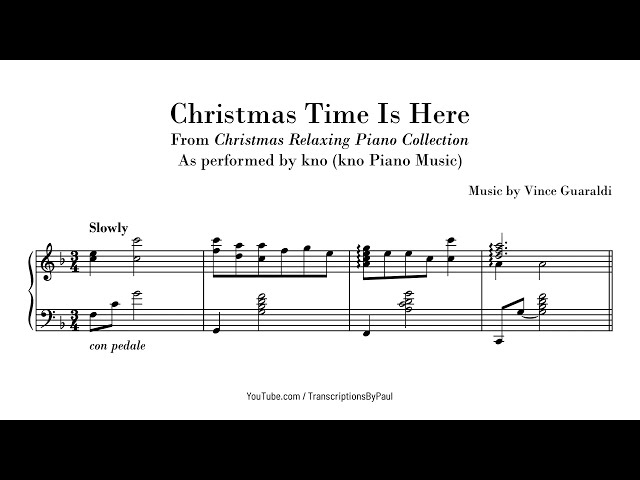
This piece portrays a snowy landscape and a gentle festive atmosphere, set to a three-beat waltz.
Written for the December 1965 TV special “A Charlie Brown Christmas,” it has captivated many with its unique world where the transparent harmonies of a children’s choir intertwine with the language of jazz.
The lyrics describe the quiet and hope of Christmas from a child’s perspective, and their simple, unadorned word choice—eschewing excessive virtuosity—speaks directly to the listener’s heart.
The piano’s soft arpeggios and resonant use of silence evoke both the chill and the warmth of winter.
It’s a perfect song for those who seek inner tranquility over flashiness, and for anyone wishing to color moments with family or loved ones through music.
Trepak from The NutcrackerPyotr Tchaikovsky

The Russian Dance appearing in Act II of The Nutcracker by Pyotr Tchaikovsky was received so enthusiastically that it was encored at the suite’s premiere in March 1892.
Characterized by a driving, breathless momentum in 2/4 time and a strong, Cossack-style rhythm, it has been featured in Disney’s Fantasia and in video game music, making it beloved across generations.
Though short, the piece radiates exuberant energy—perfect for livening up a party or expressing the festive spirit of Christmas.
Played on the piano, it offers a different kind of vitality and brilliance from the orchestral version.
Three Romances, Op. 11 No. 1Clara Schumann

A piano piece that conceals profound lyricism within restrained expression.
Opening a set of three romantic miniatures, this work was written in 1839, when the composer was nineteen, imbued with feelings for her fiancé, Robert Schumann.
The theme, sung over extended arpeggios, seems to delicately reflect a love and longing kept within.
The piece also appears in the film “Geliebte Clara,” serving as a crucial key to portraying Clara Schumann’s inner world.
It is an ideal piece for a quiet, contemplative night, when you want to listen to the singing tone of the piano and take time to face your own heart.
Songs Without Words, Book V, Op. 62 No. 5, No. 3: “Venetian Boat Song”Felix Mendelssohn

This is a piece from Felix Mendelssohn’s celebrated collection of piano miniatures, the masterpiece “Lieder ohne Worte” Op.
62.
The 6/8 accompaniment in the left hand deftly depicts a gondola gliding along the canals of Venice, while the right hand sings a melody like a plaintive song echoing over the water.
Its appeal lies in the way it conveys a poised dignity and elegance within sorrow, rather than being merely dark.
Published in 1844, this set is dedicated to Clara Schumann.
It is recommended for those times when you don’t want to force yourself to feel cheerful, but instead wish to surrender to this beautiful melody and savor the sensation of quietly sinking into the depths of your heart.
Serenade from SchwanengesangFranz Schubert

This is a piece included in Franz Schubert’s renowned song collection Schwanengesang, which he worked on from August 1828 onward.
Its sweet yet heartrending melody is striking, as if whispering hidden feelings to a beloved in the stillness of the night.
The delicate piano accompaniment captures the protagonist’s trembling heart and even the touch of the night breeze, drawing listeners into the world of the story.
It is also known for its use in the 1933 film Gently My Songs Entreat.
The wistfulness that pervades this work gently accompanies nights when one is overwhelmed by sorrow, making it a masterpiece you should listen to when you wish to indulge in sentiment.
Nocturne No. 19 in E minor, Op. 72 No. 1, “Posthumous”Frederic Chopin

Composed around 1827, this nocturne is imbued with a depth of melancholy that seems far beyond the work of a mere seventeen-year-old.
The left hand’s unceasing triplet arpeggios convey the tremors of the heart, while the simple, plaintive melody in the right hand gently voices feelings kept hidden within.
Although the piece begins in E minor, it is notable for closing quietly in a warm major key, suggesting a calm solace after tears.
It was also used in the TV drama Fringe.
It’s a piece that accompanies those moods when you want to spend a sentimental night in quiet contemplation.