Do you have any memorable piano pieces that make you feel healed when you listen to them, or that you’d like to play someday?
A favorite piece can soothe a mind clouded by stress or anxiety.
In this article, we’ve carefully selected world-famous piano works from among the classics that could become your go-to soothing track.
Even if you’re not very familiar with classical music, we’ve chosen only well-known pieces you’ve likely heard somewhere before, so please enjoy reading to the end!
[Piano Masterpieces] Want to Listen & Play! Beloved Classical Works (1–10)
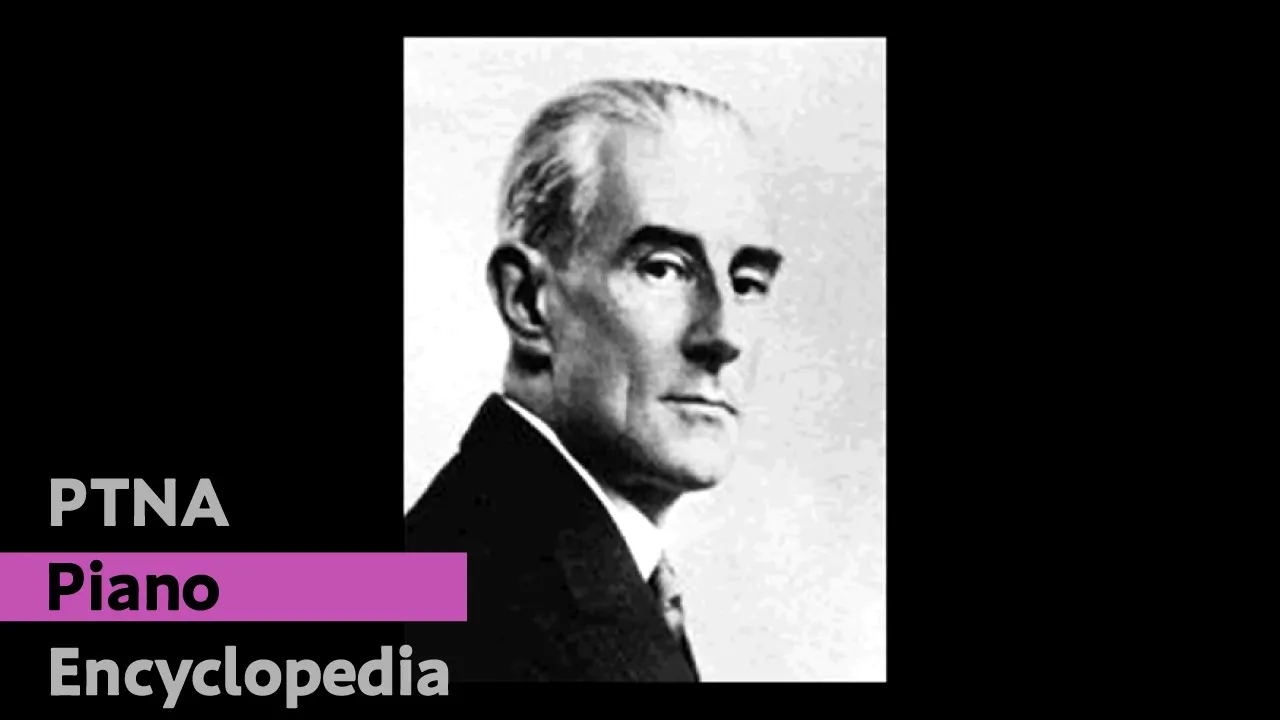
Pavane for a Dead Princess in G majorMaurice Ravel
Ravel / Pavane for a Dead Princess / Performed by Rentarō Daidōji
One of the most famous classical pieces, Pavane for a Dead Princess in G major.
A masterpiece by Maurice Ravel.
I think it’s a piece you often hear at piano recitals.
The key point of this work is the left hand in the B section.
For those whose hands can just barely stretch a ninth, it may feel quite difficult.
If octaves are a weak point for you, this piece might seem hard to approach, but that’s also where it really shines.
It’s not overwhelmingly difficult overall, so I encourage you to give it a try.
Grand Etudes after Paganini, No. 3 ‘La Campanella’Franz Liszt
Franz Liszt — Grandes études de Paganini, No. 3 in G-sharp minor, “La Campanella,” S.141
Franz Liszt’s masterpiece, Grandes études de Paganini No.
3 “La Campanella.” It’s one of the most famous piano pieces, so I imagine many of you know it.
The difficulty is at the very highest level, and even advanced players can slip and make mistakes if they lose focus.
All the more reason it’s incredibly rewarding to listen to.
The key challenges of this work are its numerous leaps and the extremely high degree of finger agility it demands.
There are no shortcuts—you can only build your skills steadily—but I encourage you to set this piece as a goal and devote yourself to practicing the piano.
Debussy / Two Arabesques: No. 1 in E major / Performed by Masako Nakai
Among Claude Debussy’s works, the especially famous masterpiece is Two Arabesques, No.
1 in E major.
It’s one of the Debussy pieces most often heard at piano recitals.
The difficulty is toward the higher end of the intermediate level.
The key point of this piece is how you apply force.
“Arabesque” means a decorative pattern; accordingly, the piece emphasizes an impersonal, patterned quality in performance, which requires the technique of maintaining a consistent strength throughout.
In that sense, it’s a piece that demands considerable hand stamina, similar to “Feux follets.”
Songs Without Words, Book V, Op. 62, No. 6, Spring SongFelix Mendelssohn
Spring Song (Mendelssohn) – Lieder ohne Worte, Op. 62, No. 6 in A major – Spring Song
Felix Mendelssohn’s masterpiece “Songs Without Words, Book 5, Op.
62, No.
6, Spring Song.” While Mendelssohn is best known for the “Wedding March,” this time I would like to highlight “Spring Song.” The charm of this piece lies in its exquisitely refined, beautiful melody.
In terms of difficulty, it’s just within reach for beginners—about the level of Czerny 30.
However, if we’re talking about delivering a truly beautiful performance, it ranks among the upper tier of intermediate pieces.
If you want to cultivate your sensitivity and expressive power, I encourage you to take it on.
Among Frédéric Chopin’s works, the Polonaise in A-flat major, Op.
53—known as the “Heroic”—is regarded as a masterpiece of considerable difficulty, corresponding to an advanced level.
It features many challenging passages, such as the right-hand fourths written in sixteenth notes that appear early on, the unison ascending figures, and the left-hand octaves.
Despite the difficulty, it is a highly rewarding piece to listen to.
If you’re an intermediate player aiming for an advanced level, why not challenge yourself with this work?