

Piano Masterpieces: Music you’ll want to listen to and play—beloved classic works

Do you have any memorable piano pieces that make you feel healed when you listen to them, or that you’d like to play someday?
A favorite piece can soothe a mind clouded by stress or anxiety.
In this article, we’ve carefully selected world-famous piano works from among the classics that could become your go-to soothing track.
Even if you’re not very familiar with classical music, we’ve chosen only well-known pieces you’ve likely heard somewhere before, so please enjoy reading to the end!
- It’s so cool if you can play these on the piano! A selection of irresistibly charming masterpieces.
- [Classical] Famous Piano Works | Gem-like Masterpieces You’ll Want to Play at Least Once in Your Lifetime
- [For Adults] Recommended for Piano Recitals! A Curated Selection of Impressively Sounding Masterpieces
- [Advanced] Super cool if you can play it! Selection of famous piano pieces
- [Classical Music] All pieces under 3 minutes! A collection of short and cool piano pieces
- Piano Masterpieces: Surprisingly Easy Despite Sounding Difficult!? A Curated Selection Perfect for Recitals
- Masterpieces of classical piano that are too beautiful for words. A gathering of delicate tones that cleanse the soul.
- A must-see for piano beginners! Carefully selected classic pieces you should play at least once
- [For Advanced Players] A Curated Selection of Classical Masterpieces to Tackle at Piano Recitals
- [For Piano Recitals] Simple yet Cool Classical Pieces
- [For Elementary School Students] Brilliant, Showy Masterpieces That Sound Impressive at Piano Recitals
- Beethoven: A selection of gem-like masterpieces that are easy to play on the piano
- [Piano Recital] Recommended for Boys! A Curated Selection of Cool, Impressive, and Popular Pieces
Piano Masterpieces: Pieces You Want to Listen to and Play! Beloved Classical Works (21–30)
Sonata No. 12 in A-flat major, Op. 26 “Funeral March”Ludwig van Beethoven

Beethoven’s masterpiece, Sonata No.
12 in A-flat major, Op.
26 “Funeral March.” It’s not as difficult as the “Pastoral,” but for beginners it can be challenging—overall it’s about an intermediate-level work.
That said, the difficulty varies by movement: the first and fourth movements are approachable for new intermediate players.
The second movement is difficult and requires substantial practice.
Fast arpeggios and passages appear in every movement, so you’ll also need exercises to improve finger agility.

Flower SongGustav Lange

“Blumenlied” (Flower Song) is a work by the German composer Gustav Lange.
He left over 400 piano pieces, most of which are salon miniatures.
Other well-known pieces include “Edelweiß” and “Heidenröslein,” Op.
78.
4 minutes 33 secondsJohn Cage
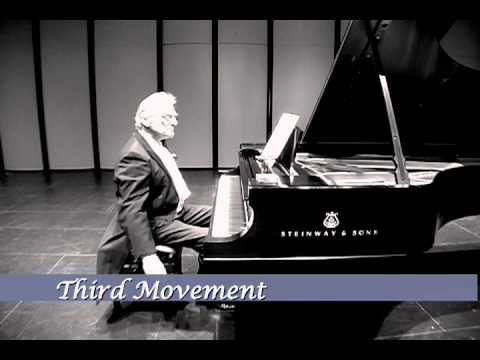
4’33” is a three-movement piece composed by the American composer John Cage and premiered in 1952.
In this work, every movement of 4’33” consists of rests.
Far from being a mere prank, the piece embodies the composer’s creative vision and has received high acclaim worldwide.
The Fir Tree, from Five Pieces (Suite of Trees)Jean Sibelius

The Spruce is a piece by the Finnish composer Sibelius.
It is the fifth piece in his unique Five Pieces for Piano, Op.
75—each piece named after a tree—and is among the most frequently performed of his piano works.
Romanian Folk Dances: ‘Romanian Polka’ and ‘Fast Dance’Bartók Béla

This is a work by the composer Béla Bartók from the Kingdom of Hungary, composed using folk songs from Transylvania, which was once part of the Kingdom of Hungary that governed the region centered on present-day Hungary.
Romanian Folk Dances consists of six pieces, but the fifth piece, Romanian Polka, and the sixth, Fast Dance—both used as background music in a famous TV program—are particularly familiar to Japanese listeners.
In a brief span of time, this piece lets you enjoy a distinctive atmosphere completely different from Japanese folk music and the like.

Songs Without Words, Book V, Op. 62 No. 5, No. 3: “Venetian Boat Song”Felix Mendelssohn

This is a piece from Felix Mendelssohn’s celebrated collection of piano miniatures, the masterpiece “Lieder ohne Worte” Op.
62.
The 6/8 accompaniment in the left hand deftly depicts a gondola gliding along the canals of Venice, while the right hand sings a melody like a plaintive song echoing over the water.
Its appeal lies in the way it conveys a poised dignity and elegance within sorrow, rather than being merely dark.
Published in 1844, this set is dedicated to Clara Schumann.
It is recommended for those times when you don’t want to force yourself to feel cheerful, but instead wish to surrender to this beautiful melody and savor the sensation of quietly sinking into the depths of your heart.
Serenade from SchwanengesangFranz Schubert

This is a piece included in Franz Schubert’s renowned song collection Schwanengesang, which he worked on from August 1828 onward.
Its sweet yet heartrending melody is striking, as if whispering hidden feelings to a beloved in the stillness of the night.
The delicate piano accompaniment captures the protagonist’s trembling heart and even the touch of the night breeze, drawing listeners into the world of the story.
It is also known for its use in the 1933 film Gently My Songs Entreat.
The wistfulness that pervades this work gently accompanies nights when one is overwhelmed by sorrow, making it a masterpiece you should listen to when you wish to indulge in sentiment.