

Perfect for killing time! Games you can play with two people.


When you’re looking for a game for two, wouldn’t it be nice to have simple indoor games you can enjoy without any special equipment? It’s great to have something easy and fun to play when plans get canceled due to sudden rain or when you find a bit of free time.
In this article, we’ve gathered easy-to-start indoor activities for two, focusing on rhythm games and conversation games.
The rules are simple, but each one has surprising depth and will make you want to play again and again!
- Fun two-player games recommended that you can play using conversation only
- Recommended games for two people that you can enjoy without any equipment
- [For 2 Players] Easy Pen-and-Paper Time-Killing Game
- For two players: from games without equipment to tabletop games and apps
- Brain-teasing game roundup
- A card game for two players
- Perfect for killing time! Fun games you can easily play on LINE
- For Couples: Fun and Exciting Punishment Game Ideas
- Games you can play with just conversation. Classic and popular activities you can enjoy without any props!
- Recommended for couples and married partners! A roundup of board games for two
- [Play Right Away!] Exciting Recreation Games Recommended for Elementary School Students
- Get Caught? Or Not!? Simple Ways to Kill Time During Class
- [Recommended for middle schoolers] Love psychology tests that couples can do to get excited
Simple indoor games for two people (1–10)
Ten Times Game

The “10 Times Game” is where you have someone repeat a word ten times and then hit them with a trick question using a similar-sounding word.
The rules are simple, but the fun comes from the unexpected answers it prompts.
For example, after having someone say the word “pizza” ten times, you point to your knee and ask, “What is this?” Even though they know the right answer, they might slip up because they’ve been repeating a similar word.
If you’re playing with two people, it’s recommended to take turns asking questions so the roles of questioner and answerer switch back and forth.

Magical Banana

Magical Banana, which is perfect for killing time with two people, is a word-linking game.
For example, you connect words in a chain like, “Banana makes me think of yellow,” “Yellow makes me think of lemon.” If you mess up the order or can’t come up with an associated word, you’re out on the spot.
Its appeal is that it requires no props at all and can move along at a brisk pace.
Another key part of its fun is how it tests quick thinking and judgment, making it enjoyable for everyone from adults to children.
It’s also charming how a single word can spark a variety of associations.
You’ll often end up laughing at unexpected remarks along the way, so you’re sure to have a great time!

Shiritori

Shiritori is a traditional game you can enjoy without any tools, and because you can freely set the rules, it offers a wide range of variations.
You can narrow it down to a specific genre or shared hobby, add penalty games to raise the stakes, and more—the ways to play are endless.
You can also enjoy it online, letting you capture the feeling of playing together with someone in real time! Its simplicity is what makes it profound, and perhaps the real charm of shiritori is that anyone can enjoy it anytime, with any number of people.
Simple indoor games for two people (11–20)
The “whoever says 30 loses” game
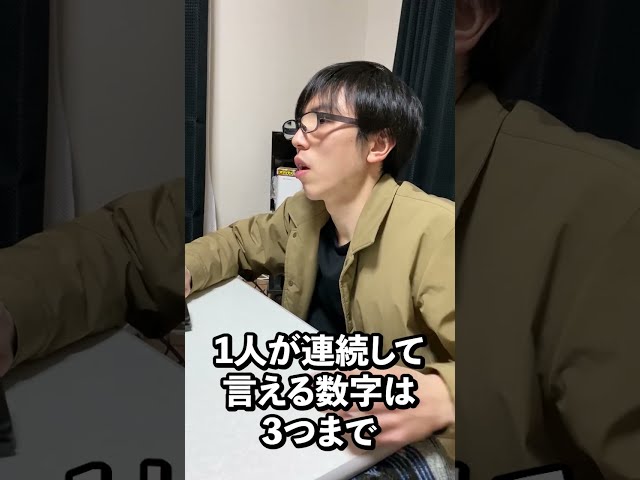
The “Say 30 and you lose” game is simple yet mentally engaging.
Two players take turns saying numbers in sequence, choosing to say one to three numbers at a time.
For example, if the first player says “1, 2,” the next player might say “3” or “3, 4, 5,” and the player who says “30” loses.
This game tests strategy and calculation, and the excitement ramps up toward the end.
When playing with two people, your turn comes around quickly, so you don’t have much time to think—that’s the key point.
It’s a fun psychological battle of reading each other’s thoughts, and as 30 gets closer, the outcome becomes clearer, which makes the game compelling.
I love you game

Introducing the “I love you game,” a simple yet surprisingly deep wordplay where embarrassment and laughter hold the key to victory.
Two people face each other, and one says “I love you” with a straight face.
If the person who hears it—or the one who said it—laughs, they lose.
It sounds easy, but when someone looks you in the eyes and says it, it’s strangely hard to hold it in.
The tension of suppressing laughter and the flutter from the power of the words become addictive.
You can also try using funny voices or expressions—the rules are pretty flexible.
No special props are needed, and you can start anywhere.
It’s a unique game that lets you enjoy the embarrassment and gets everyone—friends or family—fired up.

Abbreviation guessing game
https://www.tiktok.com/@oideyo_gafter/video/7302724727364259073To keep everyday conversations flowing smoothly, we often have chances to use abbreviations.
This simple game turns those abbreviations into quiz prompts, asking players to guess the original terms.
The key is to play to a rhythm, using the pressure of needing instant answers to ramp up the difficulty.
Some abbreviations are even more common than their full forms, so incorporating those well could spark deeper interest and knowledge about language.

Ultimate choice

The Ultimate Choice is a game that helps you get to know each other better.
You ask questions with two possible answers, then choose which viewpoint you agree with or which one you prefer.
If your answers match, you’ll feel a sense of connection and the conversation will pick up; if they differ, you can enjoy discussing your reasons.
The questions can be about anything! For example: “Dog person or cat person?”, “If you had a time machine, would you go to the future or the past?”, “If you could only eat one thing for the rest of your life, would you choose meat or fish?” Whether you’ve just become friends or just started dating, give it a try and deepen your bond!
