

Recommended games for two people that you can enjoy without any equipment


When it comes to games you can play without any tools, many of them use words.
Word-based games are great because many can be enjoyed by just two people, making them perfect for friends or couples! In this article, we’ll introduce wordplay and brainy games you can play in pairs without any equipment.
We’ve gathered a variety of games—from classics like Shiritori, the Yamanote Line game, and games where certain words are forbidden, to activities that have trended online and on social media.
There are also plenty of games you can play remotely, so try them out with friends or partners you can’t easily meet in person!
Wordplay, Shiritori, and Brain Games (1–10)
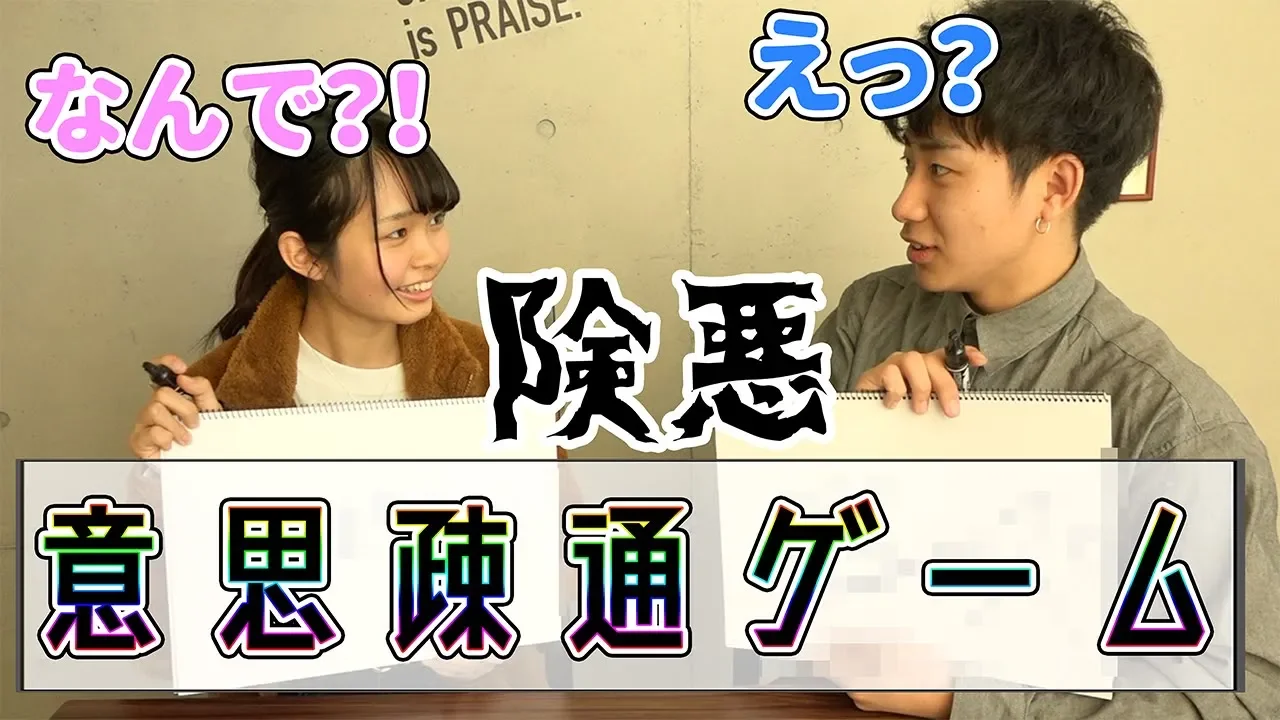
Communication game

Introducing a game where you come up with a few prompts and enjoy seeing how accurately you can guess what the other person is thinking.
It’s a game to see how well you can communicate with each other.
All you need are prompts and something to write your answers on.
Having a mix of simple questions and more unique ones will liven things up.
If your answers match for a given question, it means you successfully communicated.
Adding a penalty game at the end can be fun too.
It’s an entertaining game that tests your imagination to guess what the other person is thinking, as well as your empathy.

Yamanote Line game

In the Yamanote Line game, where you answer words that fit a given theme in rhythm one after another, quick thinking is key! The person who can keep their brain firing on all cylinders without succumbing to the pressure of “answering in time with the rhythm” will come out on top.
Some people also enjoy it with their own rules, such as a version where “whoever can name all the Yamanote Line stations in order without hesitating wins,” rather than the standard format.
The most important thing is to have fun, so try playing with the rules that will get the two of you most excited.

The game where you lose if you say 20

The “Say 20 and You Lose” game is a simple yet brainy psychological battle where players take turns counting numbers.
The rules are easy: starting from 1, each player may say 1 to 3 consecutive numbers in order, and whoever says 20 loses.
Because strategy can flip the outcome, it’s more than just a number game—it’s a battle of wits.
You have to think about things like “when to say how many” and “how to guide your opponent.” The flow also changes depending on whether you go first or second, which makes you want to say “one more round!” and play again.
It doesn’t require a specific number of players, any space, or any tools, so it’s great that you can start right away whenever the idea strikes.

The ultimate choice between two options

This is an activity where you pose either-or questions that force a choice between two options, and use the selections to explore each other’s values.
Through a variety of prompts—some asking you to pick the more desirable option, others asking you to choose the lesser of two unpleasant choices—you can discover both your common ground and your differences.
It can also deepen your understanding of the other person, including how they approach romance and what they value most in life.
Be sure to clearly explain why you chose your answer, and aim to reach mutual understanding of each other’s ways of thinking.

Impromptu Novel Relay

It’s a game where you improvise a story-like passage, read it aloud, and then continue by building on the words spoken by the other person.
It tests not only writing skills but also mutual trust and creativity, such as how you expand the story from your partner’s words.
If two people are rallying back and forth, your turn will come quickly, so proceed while trying to anticipate how your partner will develop the story.
Since it can go on endlessly without rules, it’s a good idea to set things like keywords to use and how to wrap it up in advance.
No-Foreign-Language Game

If you play a game where foreign words are forbidden and you have to carry on a conversation using only Japanese, you’ll realize there are a lot of foreign words you use unconsciously in everyday speech.
If you can’t use the foreign words you take for granted—like “Please check that” or “Let’s have a coffee break”—the conversation doesn’t move along so easily.
It actually takes more brainpower than you’d expect, so it might be better to avoid it when one of you is driving.
Why not enjoy the halting conversation, prepare a funny penalty, and give it a try together?
tongue twister

Tongue twisters are a light, fun word game that can make everyone smile with just a quick phrase.
Phrases like “nama mugi, nama gome, nama tamago” (raw barley, raw rice, raw egg) are familiar to many, but once you actually say them out loud, they’re surprisingly tricky—and the moment you stumble, laughter spills out.
The faster you try to say them, the harder they get.
You can compete to see who says them best, make your own originals, or enjoy them with creative variations.
They’re also good for practicing articulation and concentration, so while the energy rises, you get a little brain-training feel, too.
It’s the perfect out-loud, laugh-together talking game.