

Recommended for 3-year-olds! Fun indoor activities and group game ideas

Three-year-olds experience a surge in vocabulary and are characterized by enjoying communication with those around them and showing interest in many things.
They are full of curiosity and eager to say, “I want to try it!”
So this time, we’re introducing ideas for indoor activities and group games that are perfect for the development of three-year-old children.
From games that let them fully move their bodies and discover the joy of interacting with friends, to activities that foster imagination and expressive skills, we’ve gathered a wealth of indoor play ideas that will satisfy three-year-olds!
Please use these as a reference and have fun together!
- No prep needed! Indoor activities for 3-year-olds, including movement play and group games.
- For 3-Year-Olds! Indoor & Outdoor Physical Play and Game Ideas
- [Childcare] Recommended for 3-year-olds! Play ideas everyone can enjoy
- [Childcare] Full of energy! Indoor activity ideas to get kids moving
- No prep needed! Indoor play and game ideas that 2-year-olds will enjoy
- Let’s make it with 3-year-olds! Fun handmade toy ideas
- Ideas for indoor play, physical activities, and games suited to the development of 2-year-olds
- [Childcare / Physical Play] Fun Activities to Get Moving
- [For 2-year-olds] Let’s get moving! A collection of ideas for physical play and movement games
- [For Preschoolers] Fun Riddle Collection
- [For 4-year-olds] Ideas for group games and craft activities that can be done indoors
- [For 4-Year-Olds] A Collection of Indoor Play and Game Ideas That Get Everyone Excited
- For 2-year-olds! Fun craft activities and indoor play ideas
Recommended for 3-year-olds! Fun indoor activities and group game ideas (41–50)
drawing relay

Here’s a drawing relay that everyone can get excited about.
Split into teams, and only the first person looks at the prompt.
The first person draws the prompt and passes it on to the next player.
The next player interprets the drawing and conveys it to the following player with another drawing.
The team whose final player’s drawing matches the original prompt the fastest wins.
It’s best to use simple prompts that are easy for kids to understand.
You can enjoy this game indoors or outdoors, so grab some paper and felt-tip pens and give it a try!

Recommended for 3-year-olds! Fun indoor play and group game ideas (51–60)
Chestnut Ogre

A tag game perfect for autumn! Here’s an idea called Chestnut Tag (Kuri Oni).
It’s similar to Freeze Tag, but the twist is that you transform into a chestnut! Choose one person to be ‘it’ (the oni), and everyone else runs to avoid being tagged.
If you’re about to be tagged, you can transform into a chestnut to create a barrier.
If a teammate touches you, you can start running again.
However, if you get tagged before transforming into a chestnut, move to the spectator area.
gomudan
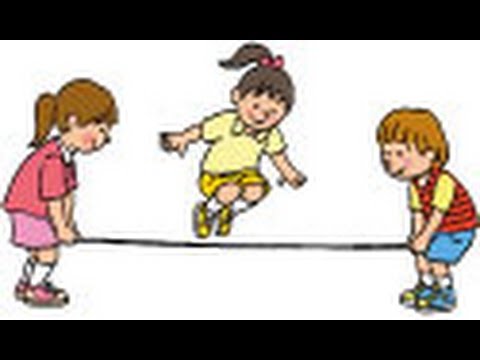
Here’s how to play Gomu-dan (rubber band jumping).
First, prepare a flat elastic band, and have two people hold the ends.
Let’s start with a simple jump-over game.
Hold the band at ankle height and jump over it.
Even if your feet catch on the band, it’s a success as long as you make it through to the other side.
Try different ways of jumping, like two-footed jumps, backward two-footed jumps, and cartwheel jumps! You can also raise the height to increase the difficulty and excitement.
Be sure to keep the band pulled tight—if it’s slack, it can be dangerous.

Rock-Paper-Scissors Balance Game

Here’s a rock-paper-scissors balance game that gets your whole body moving.
Play rock-paper-scissors with your friends.
If you win, do a one-legged balance for 5 seconds.
If it’s a tie, spin around twice and then do a one-legged balance for 5 seconds.
If you lose, spin around three times and then do a one-legged balance for 5 seconds.
For children who find one-legged balancing difficult, it’s recommended to hold onto something while balancing.
When playing the rock-paper-scissors balance game, secure a spacious area and keep a safe distance from one another to ensure safety.
Red Light, Green Light

Let’s play by adding new rules! Here are some ideas for Daruma-san ga Koronda.
Daruma-san ga Koronda is a traditional Japanese game played with one child as “it” (the oni) and the other children as players.
The oni turns around while saying, “Daruma-san ga koronda.” The participants can move forward until the oni finishes saying “Daruma-san ga koronda,” but the moment the oni turns around, the participants must freeze.
By customizing this rule with elements like balance beams, hula hoops, or balls, you can keep the game fresh and fun.
Anything Basket

Listen carefully, think carefully, and move! Here’s an idea for a “Anything Basket” game.
Are you familiar with Fruit Basket? In this game, participants are assigned the names of fruits like apple, banana, and orange.
The facilitator calls out, “○○ fruit!” and the children who have that fruit name quickly move to the seats designated for that fruit.
As a variation of Fruit Basket, let’s try “Anything Basket.” It’s a great way to develop good listening skills!
Bomb game

The excitement just won’t stop! Here’s a fun idea for a bomb game.
It’s a great way to build concentration and decision-making skills while playing.
All you need is a device that can play music and a ball or balloon.
Have the participants stand in a circle facing each other.
While the music is playing, pass the ball to the person next to you.
When the music stops, whoever is holding the ball loses—simple as that.
It’s sure to be a hit with preschool classes!