

[Childcare] Recommended for 3-year-olds! Play ideas everyone can enjoy

Three-year-olds start interacting much more with friends and teachers.
You want to watch them grow through a variety of play activities, right?
But when you’re busy every day, it’s hard to come up with new ideas for play…
For teachers with that concern, we’ve gathered play ideas recommended for three-year-olds.
Each idea is something the whole group can focus on and enjoy, so try choosing based on the weather and your class’s mood.
If one becomes a favorite, the children might say, “Teacher, let’s do that again!”
- Recommended for 3-year-olds! Fun indoor activities and group game ideas
- No prep needed! Indoor activities for 3-year-olds, including movement play and group games.
- For 3-Year-Olds! Indoor & Outdoor Physical Play and Game Ideas
- [Childcare] Recommended for 3-year-olds! Craft activity ideas
- Useful for childcare! Today’s recommended recreational activities, including fingerplay and games!
- [Childcare] Full of energy! Indoor activity ideas to get kids moving
- [Childcare] DIY Ideas for Circuit Play
- [For 4-year-olds] Ideas for group games and craft activities that can be done indoors
- No prep needed! Indoor play and game ideas that 2-year-olds will enjoy
- Kids go wild! Popular hand games and fun sing-alongs
- For 4-year-olds! Introducing recommended indoor activities, group games, and crafts
- [For 4-Year-Olds] A Collection of Indoor Play and Game Ideas That Get Everyone Excited
- At-home play for 3-year-olds! Let’s play freely with materials you have at home.
[Childcare] Recommended for 3-year-olds! Play ideas everyone can enjoy (41–50)
Thunder Game

Let me introduce a thunder-rock-paper-scissors game where moving your body to the chant is lots of fun.
Have the children lie down on their backs.
The teacher says, “Goro goro goro—DOkkaaan!” and the children should quickly roll their bodies to hide their belly buttons by turning over onto their stomachs.
The key is to roll fast so your belly button doesn’t get ‘taken.’ You can make it even more exciting by changing the volume of your voice or the speed of the chant.
Once everyone gets used to it, try switching the direction they roll to keep it fun!

Chestnut Ogre

A tag game perfect for autumn! Here’s an idea called Chestnut Tag (Kuri Oni).
It’s similar to Freeze Tag, but the twist is that you transform into a chestnut! Choose one person to be ‘it’ (the oni), and everyone else runs to avoid being tagged.
If you’re about to be tagged, you can transform into a chestnut to create a barrier.
If a teammate touches you, you can start running again.
However, if you get tagged before transforming into a chestnut, move to the spectator area.
gomudan
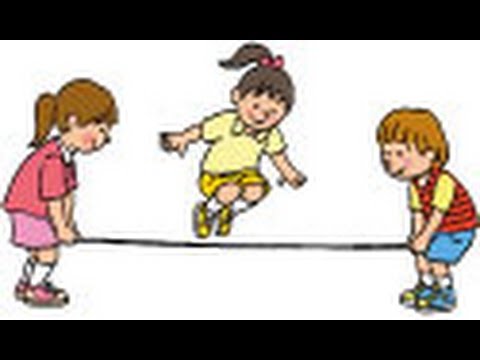
Here’s how to play Gomu-dan (rubber band jumping).
First, prepare a flat elastic band, and have two people hold the ends.
Let’s start with a simple jump-over game.
Hold the band at ankle height and jump over it.
Even if your feet catch on the band, it’s a success as long as you make it through to the other side.
Try different ways of jumping, like two-footed jumps, backward two-footed jumps, and cartwheel jumps! You can also raise the height to increase the difficulty and excitement.
Be sure to keep the band pulled tight—if it’s slack, it can be dangerous.

Soap bubble play

Wrapped in the warm, pleasant weather and with more days at comfortable temperatures, spring makes you want to head outdoors and play to your heart’s content with the kids, doesn’t it? How about incorporating bubble play into those outdoor activities? Fill a basin with plenty of bubble solution and use things like fans or hangers to enjoy making big, dynamic bubbles.
In the spring sunlight, the bubbles will likely sparkle and shine.
I can just picture the children happily running around with the bubbles.
Give it a try for some inspiration!
Rock-Paper-Scissors Balance Game

Here’s a rock-paper-scissors balance game that gets your whole body moving.
Play rock-paper-scissors with your friends.
If you win, do a one-legged balance for 5 seconds.
If it’s a tie, spin around twice and then do a one-legged balance for 5 seconds.
If you lose, spin around three times and then do a one-legged balance for 5 seconds.
For children who find one-legged balancing difficult, it’s recommended to hold onto something while balancing.
When playing the rock-paper-scissors balance game, secure a spacious area and keep a safe distance from one another to ensure safety.
Churippu sharippu

Hold hands with your friends and play while calling each other’s names! Let me share the idea for “Churippu Sharippu.” There’s nothing to prepare, so just hum the song together and play.
There are moments in the song where you call out names, which makes it great for learning your friends’ names.
It’s especially recommended for classes with new or transferring children! You can adapt the way you play, so it’s an idea that children from infants to preschoolers can enjoy.
Be sure to try it in your activities.
Knock knock knock knock, Grandpa with a beard

Clench your hands and let’s play! We’re introducing the hand game “Ton ton ton ton Hige Jiisan.” Many parents and teachers have loved this game since they were little, so it might sound familiar to you, too.
Try playing it with children! It’s fun to clench your hands to the rhythm and transform into different grandpas as you play.
Through the game, kids can develop a sense of rhythm and hand-movement coordination—that’s a key benefit! There’s also a version featuring Anpanman characters that really gets everyone excited.
Be sure to give it a try!