

Recommended Independent Research Projects for 5th Graders [Elementary School Students]


Among summer vacation assignments, the most challenging one is often the independent research project.
Many elementary school students probably struggle each year with what topic to tackle.
So in this article, we’ll introduce independent research ideas especially recommended for fifth graders.
We’ve picked ideas mainly related to what fifth graders actually learn in science, social studies, and home economics.
You can choose a field that interests you from what you learned in the first term at school, or it’s also a good idea to work on something related to a topic that caught your attention while reading the textbook.
Now, let’s dive into the recommended ideas!
- [5th Grade Elementary School] Independent Research Themes & Crafts | A Collection of Ideas That Lead to Learning
- Simple and cute summer project crafts! A collection of ideas for girls that will make you want to create
- Elementary School Students: Simple One-Day Science Project and Craft Ideas
- For upper-grade boys! Simple yet awesome craft project [Don’t call it lazy]
- Simple but awesome! Craft ideas for upper-grade girls
- [Middle School Students] Easy One-Day Science Projects and Crafts Ideas
- Recommended for elementary school students! Science fair topics & craft ideas
- For summer vacation homework! Simple and amazing crafts for elementary school students that you’ll want to make after seeing them
- [For Upper Elementary Students] Simple but Awesome! A Collection of Summer Vacation Craft Ideas
- Recommended for high school students! A collection of easy one-day science project ideas
- Stand out with your junior high school independent research! A collection of fun experiment and craft ideas
- [Summer Vacation Crafts] Stylish Ideas for Girls
- [For Adults] Simple yet Impressive Crafts: A Stylish, Eye-Catching Collection
Recommended Independent Research Projects for 5th Graders [Elementary Students] (11–20)
Make an electromagnet and investigate its properties
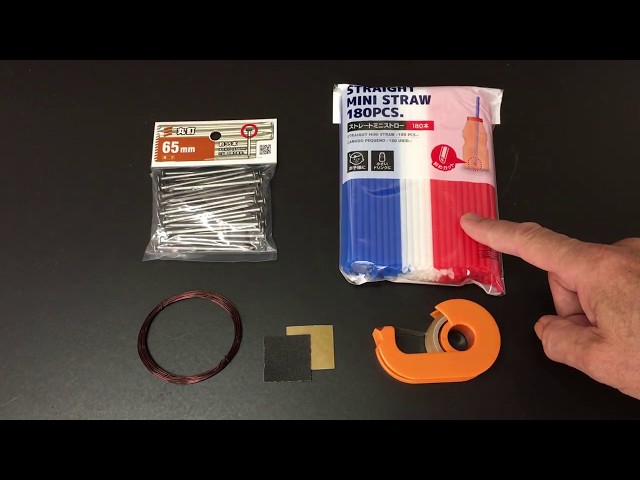
In 5th grade, you’ll likely learn about electromagnets at school.
For your summer break independent project, try making an electromagnet yourself and use it to investigate its properties.
An electromagnet works by making a coil with enameled wire and running an electric current through it to generate magnetic force.
It would be good to test various conditions—such as the number of turns in the coil, what you place as the core inside the coil, increasing the number of batteries or changing how they are connected—and compile a report on how the magnetic strength changes.

pinhole camera

Let’s try making a pinhole camera, a classic for independent research projects.
A pinhole camera is a camera that forms an image using a tiny pinhole instead of a camera lens.
There are methods using a milk carton or a paper cup, and it’s surprisingly easy to make.
If you choose a pinhole camera for your project, after building it you should observe how the image actually appears, think about why it appears that way, and compile your findings into a report.
Investigate the conditions required for seed germination

In fifth grade, students also learn about seed germination.
So let’s investigate, through experiments, the conditions necessary for seeds to germinate.
When examining which conditions are needed, you must conduct a controlled experiment: keep all other conditions the same and change only one condition for comparison.
Try various conditions to confirm what leads to germination.
You may have already learned about the conditions for germination in class; if so, this experiment would be a good way to review what you learned.
Paper chromatography

Chromatography refers to a method for separating mixtures, and paper chromatography is a type of chromatography that uses water and filter paper.
Although chromatography might sound like a formal chemistry experiment, it’s actually easy to try as a hands-on science project.
One simple activity is to use paper chromatography to separate the inks of water-based pens.
Water-based pen ink is made by mixing various colors; for example, when you separate green ink, you can see that it’s composed of multiple colors.
The method is simple: color a coffee filter with a water-based pen, then dip it in water and leave it.
The ink will separate as if it’s bleeding, revealing which colors were mixed.
Try separating and observing different colors, or investigate whether the mixture of colors differs between brands even for the same ink color.
Making alpha rice

Alpha rice is made by soaking freshly cooked rice in water, removing the moisture, and processing it so it can be eaten by adding water or hot water.
Here’s how to make this rice commonly used as preserved or emergency food.
After placing the cooked rice in a strainer and mixing it, spread it on a baking tray lined with parchment paper and heat it in the oven.
Stir the rice to dry it evenly, heating it about five times.
Once you take it out of the oven, tap the rice to break it apart, and your alpha rice is ready.
To rehydrate, simply add hot water equal to 1.5 go of water to the alpha rice and let it sit for about 15 minutes before eating.
It’s also great to take along for activities like camping or mountain climbing.

Making Colorful Flowers

Make Colorful Flowers: a fun experiment to learn what happens when you place flowers in inks of different colors.
Through experiments that make use of flowers’ natural features, you can deepen your knowledge while having fun.
Fill test tubes or plastic cups with printer ink or water mixed with food coloring.
Then simply place white flowers—such as roses, gerberas, or baby’s breath—into the solutions and leave them for 1 to 24 hours.
You can also split a stem in two to create a two-tone flower.
This experiment shows that plants draw water up through vessels called xylem, which carry the pigments.
Recommended independent research projects for 5th graders [Elementary Students] (21–30)
Self-made game in Scratch

Scratch is a game creation tool that makes it easy to give children opportunities to learn programming.
It’s free to use and runs in the browser—why not make game development your independent research project theme? Choose a game stage from a wide variety of backgrounds and give the stage a name by changing the costume name.
After creating three costumes for the stage, use a new message to set up character selection.
Prepare a character from “Choose a Sprite” and rename it.
By duplicating and modifying the code you create, you can experience programming.
With intuitive drag-and-drop operations, it’s a tool that helps you learn how to use a computer and how to make games.