

Recommended Independent Research Projects for 5th Graders [Elementary School Students]


Among summer vacation assignments, the most challenging one is often the independent research project.
Many elementary school students probably struggle each year with what topic to tackle.
So in this article, we’ll introduce independent research ideas especially recommended for fifth graders.
We’ve picked ideas mainly related to what fifth graders actually learn in science, social studies, and home economics.
You can choose a field that interests you from what you learned in the first term at school, or it’s also a good idea to work on something related to a topic that caught your attention while reading the textbook.
Now, let’s dive into the recommended ideas!
- [5th Grade Elementary School] Independent Research Themes & Crafts | A Collection of Ideas That Lead to Learning
- Simple and cute summer project crafts! A collection of ideas for girls that will make you want to create
- Elementary School Students: Simple One-Day Science Project and Craft Ideas
- For upper-grade boys! Simple yet awesome craft project [Don’t call it lazy]
- Simple but awesome! Craft ideas for upper-grade girls
- [Middle School Students] Easy One-Day Science Projects and Crafts Ideas
- Recommended for elementary school students! Science fair topics & craft ideas
- For summer vacation homework! Simple and amazing crafts for elementary school students that you’ll want to make after seeing them
- [For Upper Elementary Students] Simple but Awesome! A Collection of Summer Vacation Craft Ideas
- Recommended for high school students! A collection of easy one-day science project ideas
- Stand out with your junior high school independent research! A collection of fun experiment and craft ideas
- [Summer Vacation Crafts] Stylish Ideas for Girls
- [For Adults] Simple yet Impressive Crafts: A Stylish, Eye-Catching Collection
Recommended independent research projects for 5th graders [Elementary Students] (21–30)
paper lampshade

A paper lampshade that brightly illuminates a room is an item whose warm atmosphere and rounded form bring a sense of comfort.
Brush a glue mixture thinned with water onto a balloon, then apply layers of shoji paper.
Leave an opening where the light will go, and decorate with thin confetti paper used for paper showers or paper flowers.
Hang it with clothespins and let it dry for 1–2 days.
Pop the balloon with a toothpick or similar tool, place the light inside, and the lampshade is complete.
You can choose materials in your favorite colors, and kids will enjoy the process of sticking on the paper, making it a fun, original project.

Making solid fuel

A solid fuel made by compacting combustible materials to make it easy to carry and handle.
Here we introduce a method for making fuel at home that you can also buy at hardware stores or online.
Put 15 grams of soap shaved with a knife into a cup, then pour in 150 grams of denatured alcohol (fuel alcohol).
To completely dissolve the solids, warm it in a hot-water bath at a temperature that does not bring the methanol to a boil.
While it is still warm, pour it into a can to set; once solidified, the fuel is ready.
Methanol is highly toxic, so be careful not to ingest it.
The solidification speed varies depending on the size and shape of the can, so it’s also a great idea to make various solid fuels as a science project.
Recommended Independent Research Projects for 5th Graders [Elementary School] (31–40)
Handmade claw machine

Crane games that let you grab candy, plush toys, and figures are popular with kids.
Let’s try making a homemade device so you can enjoy the excitement of “I wonder if this prize can be picked up with this arm movement…” at home.
Build the main body using cardboard or empty boxes.
Next, create the crane arm with straws or wooden chopsticks, and connect it with thread so it can move.
Prepare prizes you like, such as small toys or snacks.
By researching how crane games work as you build, you’ll also discover the fun of crafting.
This is a science project idea that’s enjoyable not only during the building process but also when you play with the completed game.
String art
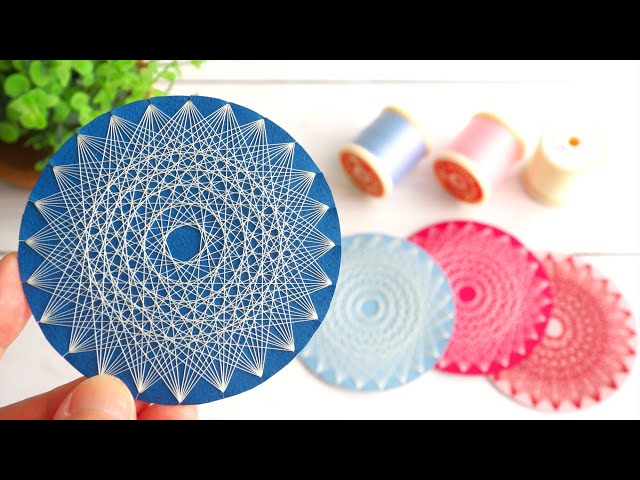
String art that spreads into beautiful petal-like patterns.
Traditionally, you need to hammer nails into a board to make it, but there’s an easy method you can try using paper by making small cuts.
After drawing evenly spaced lines on a circular piece of thick paper, align it with construction paper and cut them together.
If you write numbers on the cut sections, you can work without mixing up the order.
Hook the thread in sequence toward the cut opposite each number, and once you’ve gone all the way around, cut the thread.
From the second round, change the thread color and shift the starting position by one notch.
Repeat this process until the threading is complete, then attach construction paper to the back to finish.
Making a maglev train

Introducing how to make a linear motor car using dry batteries.
Attach two layers of magnets to a plastic sheet with double-sided tape.
The key here is to control the repelling force of the magnets and stick them on without any gaps.
Cut a melamine sponge for the vehicle body, and apply aluminum tape so it forms a U-shape.
Once you hook the magnet-mounted sheet onto the tape, connect clip wires to the rails.
Sandwich the lead wires in the aluminum tape, and connect the batteries in series to finish the setup.
It’s a great independent research project theme that lets you enjoy both a science experiment and toy-making at the same time.
Experiment on the action of flowing water

In fifth grade, I think you also learn in class about the work of flowing water, such as erosion, transportation, and deposition.
Let’s actually observe these processes through an experiment.
For the method, build a slope out of collected soil, make a channel for water, and run water through it.
Try observing how erosion, transportation, and deposition actually appear, whether these processes change depending on the amount of water, and whether the way they appear differs between a straight channel and a curved one.
Test various conditions and summarize your findings in a report.

Investigating rheotaxis in medaka

The topic of fish reproduction is also covered in the fifth grade, right? So, in connection with that, let’s look into rheotaxis, a behavior characteristic of medaka.
Rheotaxis is the tendency to move in a specific way in response to water flow; in the case of medaka, they swim against the current.
For the experiment, gently stir the water in a circular motion in the tank where the medaka are swimming to create a flow, and observe how they swim.
Additionally, related to this, you can cover the outside of the tank with striped paper and rotate it to observe how the medaka swim.
Combining these observations should make for an interesting report.