

For 6th Graders: Unique and Fun Ideas for Independent Research Projects


We’ve gathered recommended ideas for anyone looking for interesting summer independent study themes perfect for 6th graders! From “Let’s research the SDGs” to “Let’s make original Jomon-style pottery,” these topics showcase the creativity and ingenuity fitting for upper elementary students.
They’re full of unique ideas that will set you apart from your friends.
From projects you can start with familiar materials to more advanced experiments, you’re sure to find the perfect theme.
Kick off a fun and fitting independent study for your 6th-grade summer vacation!
- Recommended for elementary school students' independent research! Experiment and observation ideas using everyday materials
- Recommended for elementary school students! Science fair topics & craft ideas
- Simple but awesome! Craft ideas for upper-grade girls
- Recommended for middle school students! A collection of quick science project ideas you can do in a short time.
- Stand out with your junior high school independent research! A collection of fun experiment and craft ideas
- Elementary School Students: Simple One-Day Science Project and Craft Ideas
- DIY science projects that elementary school boys will love: ideas you can make with everyday materials
- Recommended for 6th graders! A collection of easy self-study ideas you can enjoy while learning
- Recommended for elementary students! A collection of fun craft ideas to make for 6th graders
- Craft ideas using plastic bottle caps [for boys]
- Self-directed study that impresses your teacher! Recommended independent science study ideas for 6th graders
- [For 4th Graders] Fun Independent Research Ideas You Can Do With Everyday Materials
- [For Upper Elementary Students] Simple but Awesome! A Collection of Summer Vacation Craft Ideas
For 6th Graders: Unique and Fun Science Project Ideas (31–40)
Let’s try mixing water and oil

This is an experiment to see what happens when you mix water and oil.
First, make colored water by adding food coloring to a glass of water.
In a separate glass, pour in some oil, then carefully pour the colored water on top.
Strangely, the colored water you added last will settle at the bottom of the glass, and the oil will form a layer on top.
Even if you stir it with a stick, they won’t mix at all.
It’s a fun experiment that overturns the common belief that liquids mix with each other.
Give it a try! The non-mixing liquid you make can also be put into a bottle to create a playful decorative piece.

Let’s explore the secrets of sound
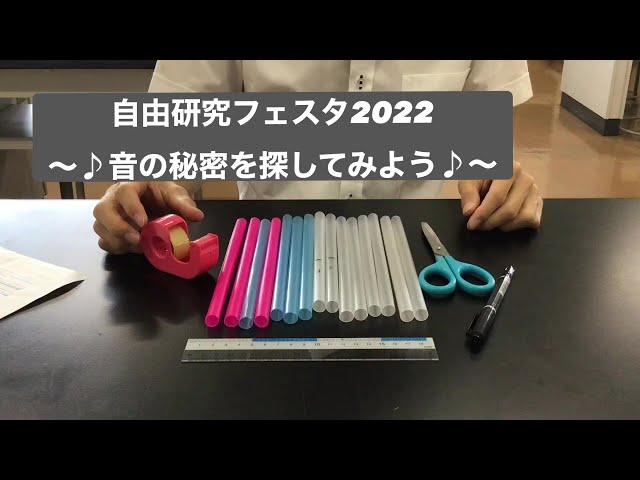
Here’s an idea for a flute you can make just by connecting straws.
Prepare straws that are all the same thickness and length.
You’ll need 8 straws for the mouthpiece, and since you’ll place spacer straws between them, prepare an additional 7, for a total of 15.
Cut the spacer straws to 5 cm.
The straws that become the flute pipes will vary in length depending on the pitch, so be sure to measure their lengths carefully with a ruler.
After cutting, seal one end of each straw with tape to make it a closed pipe.
Once everything is connected and glued together, it’s done.
Try experimenting with different lengths to see what sounds they make.
How to make rainbow punch

Rainbow punch is perfect for a science project where you can learn about color and state changes.
Divide shaved ice syrup into several cups and mix in your favorite colors.
Dissolve gelatin in hot water and combine it with each colored syrup, then chill in the refrigerator to set into jelly.
Place the colorful jellies in a glass, and finally pour in soda water—your rainbow drink will sparkle with fizzy bubbles.
By observing the transformation of gelatin from liquid to solid and how it interacts with carbonated water, you can deepen your understanding of color and temperature-related state changes.
It’s an idea that’s visually fun and scientifically rich, letting you enjoy both observation and experimentation.

Making a model of geological strata

Perfect for anyone interested in nature! Here are some ideas for making a geological layer (strata) model.
These ideas are recommended for people who enjoy detailed hands-on activities or are curious about natural principles.
Even if you’re not sure what strata are, try giving it a go with this video as a reference.
In the video, we clearly and carefully explain what strata are and the key points in the process of creating them.
Be sure to take this opportunity to give it a try!
Why can we see the Moon?

Let’s clear up some questions! Here are some ideas about why we can see the Moon.
How about researching things you find interesting or mysterious in your daily life? It’s a great way to expand your world, deepen your learning, and resolve your questions.
This time, let’s learn about some questions related to the Moon.
After watching the video, it’s a good idea to summarize what you learned with text and illustrations in a notebook or on poster paper.
Give it a try!
[For 6th Graders] Stand-Out and Fun Independent Research Ideas (41–50)
Properties of aqueous solutions

Let’s summarize the key features! Here are some ideas about the properties of aqueous solutions.
How about preparing aqueous solutions that share common elements and challenging yourself to summarize each of their characteristics? In the video, aqueous solutions are explained for elementary school students.
The explanations are organized in a clear, step-by-step way, so it’s recommended for anyone who wants to deepen their understanding of aqueous solutions! Using five types of aqueous solutions should also help when memorizing their features.
Definitely give it a try!
Sound experiment

Learn how sound travels! Here are some ideas for sound experiments.
What comes to mind when you think of sound? You’re surrounded by all kinds of sounds, aren’t you? This time, let’s deepen our learning with the theme of sound.
In the video, it seems you can learn about what sound is and how people perceive it differently.
By studying the properties of sound, you might make new discoveries in your daily life! The experiments feature ones using test tubes and ones using different materials.
Give them a try!