

Recommended for elementary school students' independent research! Experiment and observation ideas using everyday materials


Recommended for elementary school students who haven’t decided on a summer vacation independent research project yet! Choosing a topic can be tough, but in this article we introduce exciting ideas that will make you feel thrilled just reading them—from factory tours at candy makers to gemstone polishing, and even a DIY telescope you can build with materials you have at home! You’ll also find plenty of ideas you’ll want to tell someone about, like a curious experiment to check your ear age and a project to make water that’s both hard and soft.
You’re sure to find tips for independent research that use familiar items and are fun to try!
Recommended for elementary school students’ independent research! Ideas for experiments and observations using familiar materials (1–10)
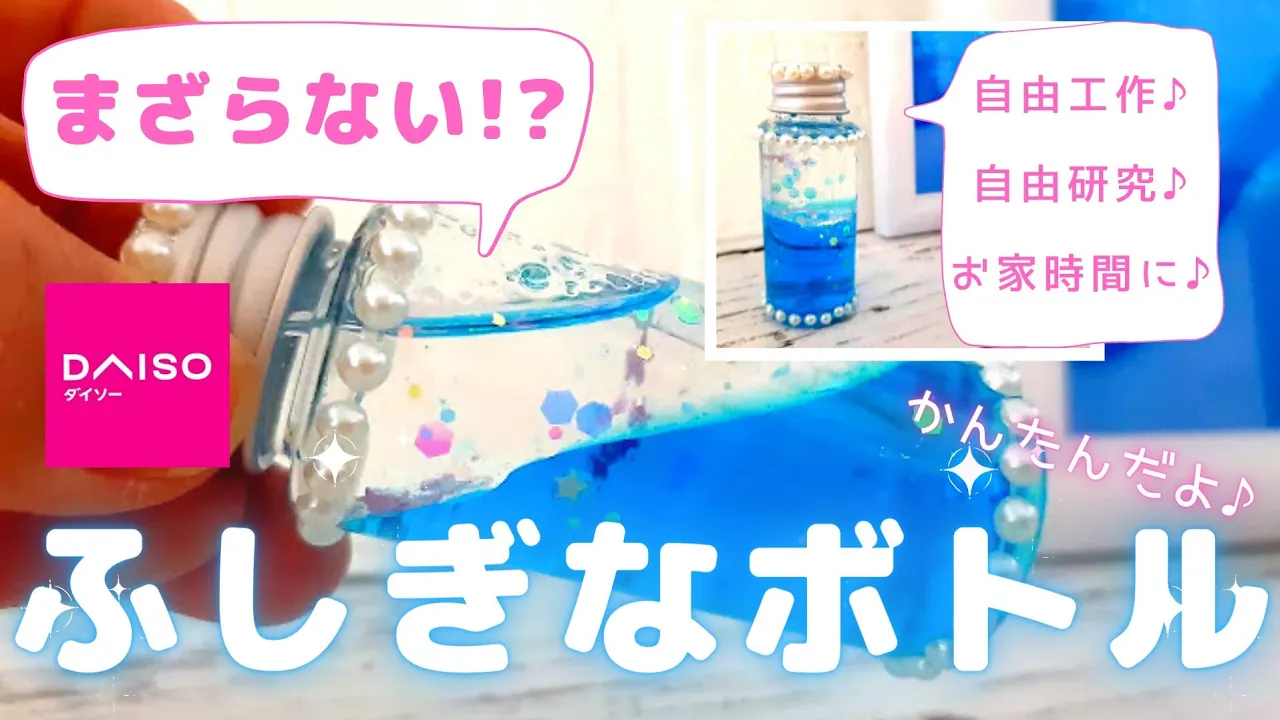
Cute mysterious bottle

A mysterious bottle where two liquids won’t mix even when tilted.
It’s a fun idea that works great as interior decor or a small gift.
First, fill the bottle about halfway with baby oil.
Next, add colored water tinted with food coloring.
Put in glitter or holograms as you like, cap it, and decorate the bottle to make it cute—and you’re done! The method is very simple, so even younger elementary school children can enjoy making it.
Along with the craft, try summarizing both your own ideas and the correct explanation for why baby oil and water don’t mix.

Edible jewels

If you’re unsure what to do for your independent research project, why not try making “edible jewels”? You’ll need 150 g granulated sugar, 100 ml water, 2 g agar, and a suitable amount of food coloring or syrup.
Put the sugar, water, and agar in a saucepan and heat.
Once it boils, reduce to low heat and stir well until it thickens.
When it has thickened, pour about half into a tray, then divide the rest into several containers and add color.
Drip the colored mixtures little by little into the liquid in the tray to create a marble pattern.
Chill in the refrigerator until set, then cut into your preferred sizes and shapes.
Let them dry in a well-ventilated place for 2–3 days, and they’re ready!
The relationship between bread and sugar

Let’s explore how different amounts of sugar change bread by conducting a free research project on the relationship between bread and sugar.
Prepare several bowls, each containing the same amounts of cake flour, dry yeast, salt, butter, and water.
Vary only the amount of sugar in each bowl, then knead the doughs.
Carefully observe how the dough feels while kneading: what texture appears in doughs with more sugar, and what texture appears in doughs with less sugar? It might be helpful to record each stage—first proof, second proof, and baking—with photos to see how the dough responds at each point.
Enjoy this hands-on research project using everyday bread!

Well-flying! Paper Airplane

Paper airplanes have long been beloved as a classic children’s pastime.
There are many ways to fold them, and the way they fly can vary greatly depending on the size and type of paper you use.
If you make different kinds of paper airplanes and investigate their flight paths and distances, it will not only be a fun independent project, but it’s sure to capture people’s interest.
It’s a perfect summer vacation project that will also come in handy when playing with friends.

Portable mysterious water

Let’s make mysterious water! Dissolve sodium alginate in water and mix well.
Next, prepare a calcium lactate aqueous solution.
Separately, have some plain water ready.
Here’s the fun part! Scoop up the sodium alginate solution with a spoon and dip it into the calcium lactate solution to create a mysterious blob of water! It’s also fun to add color and experiment!
Let’s make mysterious water that’s both hard and soft

Did you know that simply mixing potato starch and water turns it into a very mysterious kind of water? Put 200 grams of potato starch and one cup of water into a bowl and mix.
Just by mixing, you’ll create a mysterious liquid called a non-Newtonian fluid.
What’s so strange about it? Even though it’s like water, you can actually hit it.
Try bringing your fist down on it—it will feel solid, and your fist will stop before it reaches the bottom of the bowl.
But if you touch it slowly, since it’s still a liquid, your fingers will sink in.
Why not try making it for a science project?
Cute herbarium
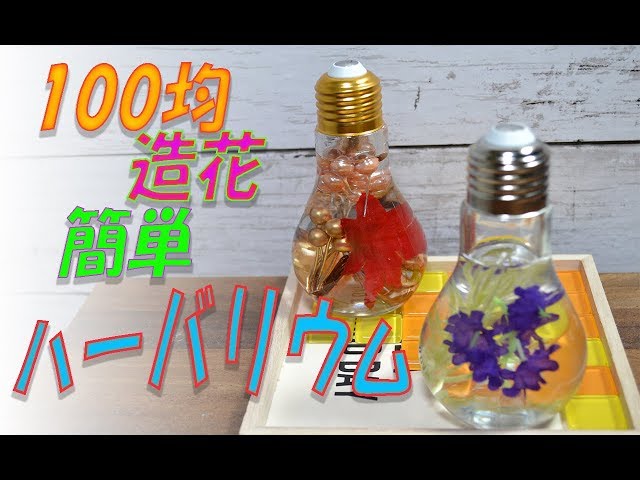
Why not try making a herbarium, a popular interior decoration? Prepare a container, your favorite flowers and beads, and baby oil.
First, place the flowers and beads into the container, being careful not to overfill it.
Also, if anything tends to float when put in liquid, soak it in the liquid beforehand.
Once you’ve added all the parts, slowly pour in the baby oil, close the container lid, and it’s done.
You can also focus on choosing a stylish container and decorate it with stickers or washi tape to make it extra cute.