

Recommended for elementary school students' independent research! Experiment and observation ideas using everyday materials


Recommended for elementary school students who haven’t decided on a summer vacation independent research project yet! Choosing a topic can be tough, but in this article we introduce exciting ideas that will make you feel thrilled just reading them—from factory tours at candy makers to gemstone polishing, and even a DIY telescope you can build with materials you have at home! You’ll also find plenty of ideas you’ll want to tell someone about, like a curious experiment to check your ear age and a project to make water that’s both hard and soft.
You’re sure to find tips for independent research that use familiar items and are fun to try!
- For 6th Graders: Unique and Fun Ideas for Independent Research Projects
- Elementary School Students: Simple One-Day Science Project and Craft Ideas
- Stand out with your junior high school independent research! A collection of fun experiment and craft ideas
- Recommended for elementary school students! Science fair topics & craft ideas
- For summer vacation homework! Simple and amazing crafts for elementary school students that you’ll want to make after seeing them
- Amazing discoveries with everyday materials! Fun summer vacation independent research ideas
- [For 4th Graders] Fun Independent Research Ideas You Can Do With Everyday Materials
- Third graders will be hooked! A collection of science project ideas using everyday materials
- [For First Graders] A Collection of Science Project Ideas Using Everyday Materials
- [For 2nd Graders] Make it with everyday materials! Irresistibly engaging ideas for independent research projects
- Make it with everyday materials! A collection of fun summer vacation craft ideas
- Recommended for middle school students! A collection of quick science project ideas you can do in a short time.
- Recommended Independent Research Projects for 5th Graders [Elementary School Students]
Recommended for elementary school students’ independent research! Experiment and observation ideas using everyday materials (61–70)
Specimen preparation

A great science project for kids who love insects is making specimen displays! Creating specimens can seem a bit challenging, but it’s sure to become a special summer vacation memory.
Some steps are tough for children to do alone, so it’s perfect for a parent–child challenge.
The key is to first collect insects in good condition.
Next, to shape them properly, soak the insects in hot water to soften them.
After soaking for about 30 minutes, arrange the shape, pin them to a base with dressmaker’s pins, and let them dry—that’s it! They’ll make a fine specimen as is, but if you encase them in resin, it will look even more professional.
Choose the method that suits your child’s age and give it a try!

A mysterious water that you can carry around, even though it’s water

It’s a very beautiful and delicious experiment.
I think it would be an appealing study for both boys and girls.
Gathering the materials might be a bit challenging, but since the basics are just mixing, it looks like you can have fun trying different colors and juices.
It’s a perfect, refreshing experiment for the hot summer, so dads and moms, please give it a try!
Let’s investigate how ice melts
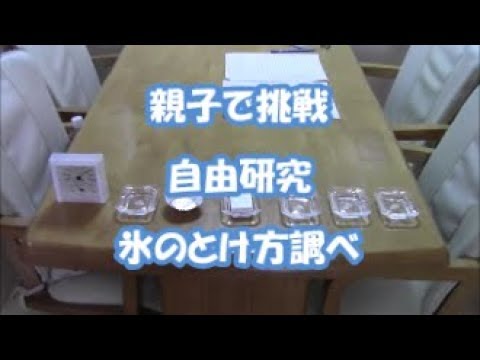
During the hot summer vacation, we often see ice—chilling drinks or eating shaved ice.
How about exploring ways to make ice last longer by researching how it melts? You can compare melting times under various conditions, such as placing aluminum foil or Styrofoam underneath, or mixing sugar, salt, or cola into the ice.
Since it’s hard to watch continuously, it’s a good idea to set a timer and check at intervals.
Let’s aim for a cooler summer with longer-lasting ice.

Floating vegetables? Sinking vegetables?

As a way to spark interest in science, trying out whether vegetables float or sink is a great idea.
First, prepare your favorite vegetables and drop them into a paper cup filled with water.
You should find that some vegetables float while others sink.
Next, try the same with saltwater and salad oil.
From these experiments, you can see that lighter things float and heavier things sink.
Finally, you can mix salad oil and water to let them separate, or compare the weight of water and saltwater.
This will make it easier to understand.

Rainbow Warabi Mochi

How about making colorful, jiggly rainbow warabi mochi and observing how their colors and flavors change? First, pour seven colors of shaved ice syrup into seven clear cups.
Then add three pieces of warabi mochi to each cup.
Decide on times to take them out—after 5 minutes, 1 hour, and 1 day—and place the dyed mochi on plates by time to compare them.
We’re using shaved ice syrup here, but it’s also fun to create your own colors with food coloring.
The steps are very simple and the changes are easy to see, so even younger elementary school kids can enjoy this activity.
It’s fun to look at, delicious to eat, and perfect for a summer science project that will become a great memory.
Make an electromagnet and investigate its properties
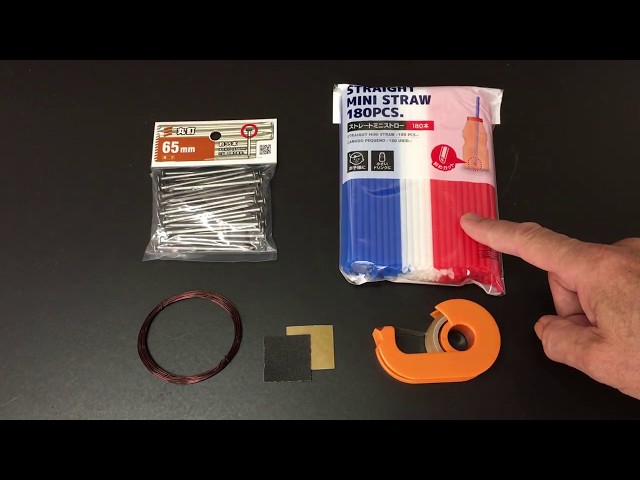
In 5th grade, you’ll likely learn about electromagnets at school.
For your summer break independent project, try making an electromagnet yourself and use it to investigate its properties.
An electromagnet works by making a coil with enameled wire and running an electric current through it to generate magnetic force.
It would be good to test various conditions—such as the number of turns in the coil, what you place as the core inside the coil, increasing the number of batteries or changing how they are connected—and compile a report on how the magnetic strength changes.

Let’s make a 10-yen coin shiny

Used 10-yen coins get dirty, don’t they? The grime is mainly a substance called copper oxide, which causes the dark discoloration.
Let’s try cleaning such 10-yen coins using condiments you have in the refrigerator, like soy sauce, mayonnaise, Worcestershire sauce, or vinegar.
Which do you think will make them the cleanest? Be sure to do the experiment and find out the answer for yourself!