

Great enka masterpieces and hit songs of the 1980s

The appeal of enka, a genre cherished as Japanese music for many years, has not faded.
Even today it’s featured on TV and in commercials, and many enka singers appear on the annual New Year’s Eve music show, the Kōhaku Uta Gassen.
In this article, we’ll showcase a selection of hit enka songs released in the 1980s—works that embody the very heart of Japan.
For those who remember the era, many of these tracks will feel nostalgic.
At the same time, we’ve chosen numerous timeless classics that people born after the ’80s are likely to know as well.
Take this opportunity to sit back and savor the enka masterpieces of the 1980s.
- [Enka] A special feature on female singers in their 80s. Singers who were active from the early to mid-Showa era.
- A roundup of male enka singers in their 80s: veterans who left their mark on the enka world
- Great enka masterpieces and hit songs of the 1970s
- Great enka masterpieces and hit songs of the 1990s
- Classic enka songs you’ll want to sing at karaoke: recommended popular tracks
- [1980s] A roundup of debut songs by enka singers
- [Showa Era] A Collection of Enka Hits: Timeless Classics Loved Across Generations
- A roundup of hit enka songs from the Heisei era
- Easy-to-sing enka: A roundup of recommended enka songs for karaoke
- A roundup of male enka singers in their 70s: legendary vocalists who support the enka world
- [2026] Representative Famous Enka Songs: A Compilation of Classic Favorites [Beginner-Friendly]
- Nostalgic enka. A collection of classic enka hits from the Showa era.
- Cool songs from the Showa era. Masterpieces from Showa that shine with sensuality, passion, and rugged charm.
Great Enka Masterpieces and Hit Songs of the ’80s (21–30)
With a fiery heartKobayashi Akira

It’s a song released by Akira Kobayashi in 1985.
It was composed by Eiichi Ohtaki, who was a fan of Kobayashi and created a grand piece to match Kobayashi’s image, with lyrics commissioned from Yū Aku.
The song continued as a long-running hit into the following year and was performed at the 1986 Kōhaku Uta Gassen.
Let yourself go with the flow of timeTeresa Ten

This is the third song by the duo of Toyohisa Araki and Takashi Miki for Teresa Teng, following “Tsugunai” and “Aijin.” Released in 1986, it won numerous awards, including the Japan Cable Radio Awards.
A timeless masterpiece, it continues to be sung today and has been covered by many musicians.
The third-year affairHiroshi & Kībō
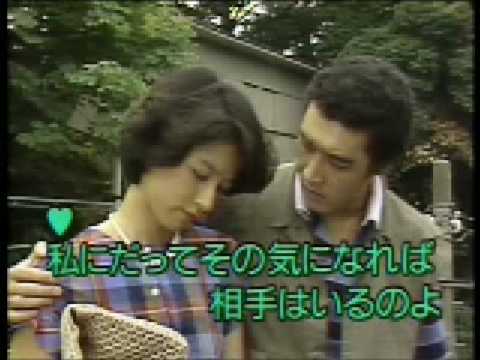
A shocking work on the theme of marital infidelity that sparked a social phenomenon.
Released as the debut single of Hiroshi & Kibo, it topped the Oricon Singles Chart for three consecutive weeks.
Its conversational, husband-and-wife-style lyrics must have resonated with many people.
Released in August 1982, the song became a massive hit, selling over 700,000 copies.
It caused such a stir that an answer song was later produced.
Although it never made it to the NHK Kouhaku Uta Gassen, it’s still frequently sung at karaoke today.
It might even be good to listen to during a marital spat—though cheating is never okay!
pledge; vow; promise; (contextually also) bond of love/sexual unionItsuki Hiroshi

The lyrics were written by Yu Aku and the music was composed by Hiroshi Itsuki; the song was released in 1982.
While the version he sang himself was of course a hit, what likely boosted the song’s fame significantly was the “Robot Itsuki” routine by the impressionist Korokke.
Life is full of ups and downs.Shimakura Chiyoko

One of Chiyoko Shimakura’s signature songs, it was released in 1987 and became a huge hit, selling over 1.3 million copies.
With a relaxed tempo and lyrics that aren’t densely packed, it explores the joys and sorrows of life, making it easy to sing calmly while checking each rhythm and scale.
The song is often called Shimakura’s “second debut,” and she performed it when she returned to the NHK Kouhaku Uta Gassen in 1988 after a two-year absence.
It was also used as the ending theme for the special Chibi Maruko-chan anime segment during Fuji TV’s 27-Hour TV in 2003.
It resonates not only with fans of enka but with listeners across generations, making it a great choice to liven up a karaoke session.
Life is like a Naniwa-bushi (a melodramatic ballad).Suizenji Kiyoko

Many people may associate the song “Naniwabushi Dayo Jinsei wa” with Takashi Hosokawa, but at the time, it was common practice for record companies to have multiple singers release competing versions of the same song.
It was perfectly normal for different artists to sing the same song around the same period.
Among these, Kiyoko Suizenji’s rendition of “Naniwabushi Dayo Jinsei wa” was also a hit, and at the 1984 Kōhaku Uta Gassen, a same-song showdown took place: Suizenji performed it for the Red Team, while Hosokawa performed it for the White Team.
Come back.Matsumura Kazuko

The song “Kaette Koi yo” was Kazuko Matsumura’s debut single, released in 1980.
Performing with a Tsugaru-shamisen and a distinctive vibrato, she drew widespread attention, winning the New Artist Award at the Japan Record Awards that year.
It was a hit that also earned her a spot on Kōhaku Uta Gassen.