

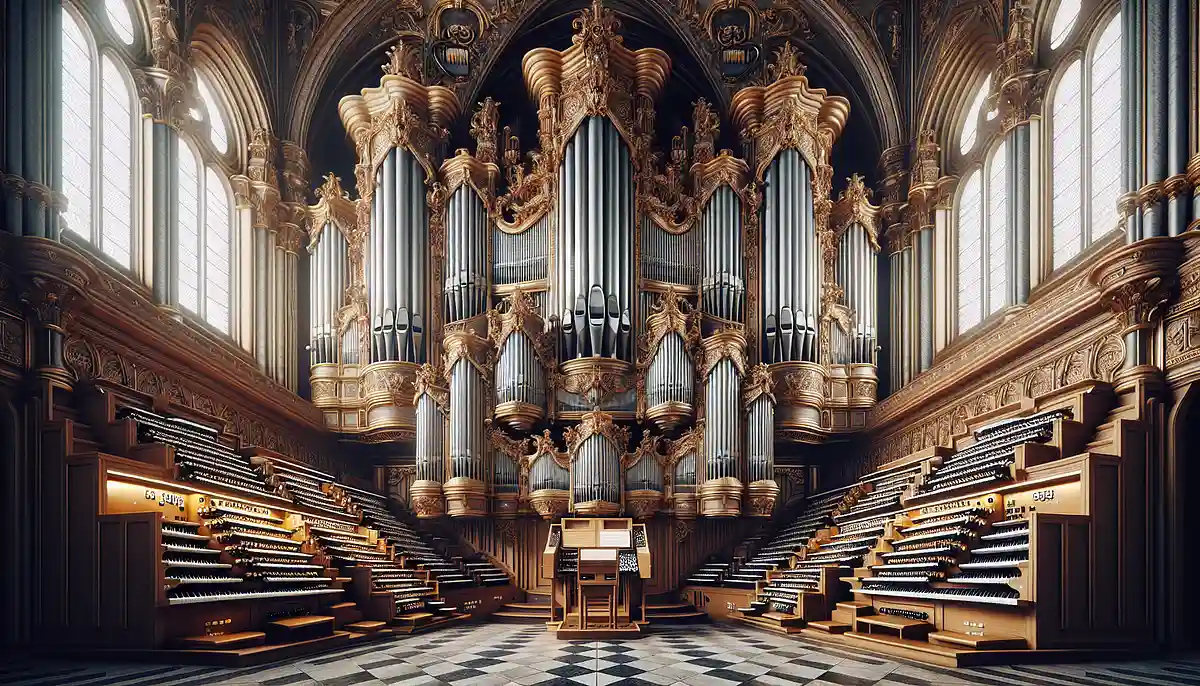

The pipe organ, often called the king of instruments.Many people may know the name, but are you familiar with its history and structure?This time, I’d like to delve into the allure of the pipe organ.
- [Classical] Exquisite Tones: Masterpieces and Popular Pieces for Pipe Organ
- It’s so cool if you can play these on the piano! A selection of irresistibly charming masterpieces.
- [Bereavement Song] To you whom I can no longer meet... Tear-jerking songs about death
- [Karaoke] A collection of easy-to-sing songs by Eve
- [List] Types of Keyboard Instruments [Piano, Synth, etc.]
- Today's Piano: Masterpieces and Popular Pieces Woven with Delicate Tones
- Characteristics of digital pianos you can tell by the manufacturer, as told by a former music store clerk
- A former music shop employee explains: a unique guide to choosing a digital piano, by price range.
- How to choose a digital piano, taught by a former music store clerk: How much should you spend?
- [Piano Piece] Enjoy Pachelbel’s Canon by Comparing Different Recordings — Jazz & Rock
- [Classical] Famous Piano Works | Gem-like Masterpieces You’ll Want to Play at Least Once in Your Lifetime
- The appeal of Yamaha’s new CLP series digital pianos
- Masterpiece Performances: Introducing Japan’s World-Renowned Pianists and Their Iconic Performances
Types and scales of pipe organs
https://pixabay.com/
When it comes to pipe organ music, a piece that everyone has heard would be...J.S. Bach“Toccata and Fugue in D minor”.
It’s a memorable masterpiece with an impact you can’t forget once you’ve heard it.
https://www.youtube.com/watch?v=Zd_oIFy1mxM
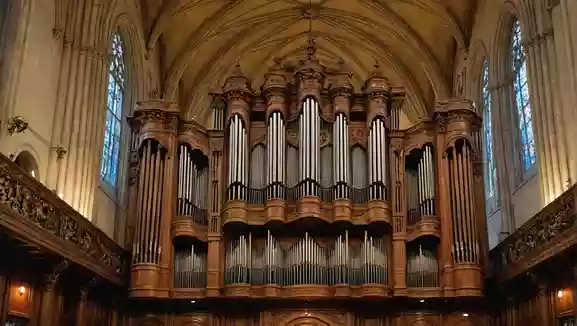
In the performance video of the late Karl Richter that I introduced, the magnificent pipe organ installed inside the church is shown.
In the Baroque era when Bach was active, pipe organs—inseparable from church architecture—also featured elaborate Gothic-style designs.
A pipe organ is an integration of the instrument itself and the space in which it is placed.
A church pipe organ is not merely a musical instrument; it is a sacred instrument that weaves music as an offering to God, and it is constructed at enormous cost.
Given its sheer size and the enormous construction costs,The king of musical instrumentsIt truly deserves to be called that.
Pipe organs vary in scale from instrument to instrument, and they come in a wide range of sizes and designs, from small to large.
The organ in the next video, as you’ll see, has five manuals arranged vertically.
Structure of a pipe organ
https://pixabay.com/
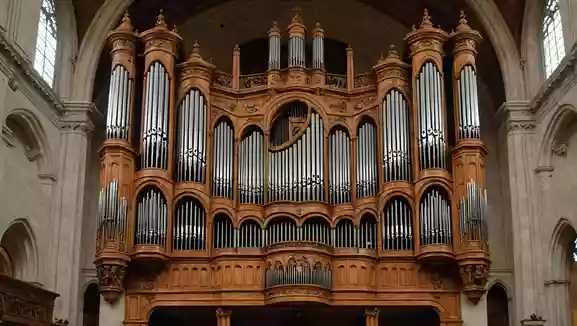
A pipe organ has many keyboards, but because it produces sound by sending air into pipes, its sound-producing mechanism places it in the category of wind instruments.
Each key has an assigned pipe,Since a single pipe can produce only one note, you need 56 pipes to produce the 56-key range.It is.
On an organ with three manuals, if each note has 10 different timbres assigned to it, that alone would amount to 560 × 3 × 10, resulting in as many as 16,800 pipes lined up.
The more pipes there are, the greater the variety of tones produced.
Not only can a single manual produce many different tones, but you can also layer them to combine sounds and create new ones.
Pipes include flue pipes, which produce sound based on the recorder (flute) principle.clarinetand/or; such as; or (used to list examples)saxThere are broadly three types: the 'reed pipe,' which produces sound based on the same principle; the 'diapason horn,' which works on a principle similar to brass instruments; and one more type.
Lined up next to the keyboardA button labeled “Stop” shaped like a small doorknobPulling it will turn on the switch and produce sound.
This is “Stop.”
The shape of the stops varies depending on the organ (some, like the Electone, use a tablet-style design).
「fluteIf you pull the stop labeled with that name, it produces a cute, flute-like sound.
In a state where the flute tone is sounding, "trumpetWhen you pull the stop called “,” the sounds of the flute and trumpet—two different timbres—overlap to create a new tone.
In this way, countless sounds can be created depending on the combinations, enabling performers to craft uniquely rich tones with their own sensibilities.
Even though it was the same organ, it often sounded like a completely different instrument.
First-rate organists are also first-rate when it comes to sound creation.
History of the pipe organ
The organ appeared in history long ago, with a prototype of the instrument existing several centuries before the Common Era.
used in Japanese gagakushō (shō; a Japanese free reed mouth organ used in gagaku)‘Shō’ is considered to be one of them as well.
In the pre-Christian era, a musical instrument called the “water organ” appeared in Alexandria.
It was a structure that sent air into the pipes using hydraulic power.
After the start of the Common Era, it evolved into a form that sent air into the pipes using bellows.
In the Middle Ages, organs—which at first had nothing to do with religion—came to be installed in churches as well.
Entering the Renaissance period, a structure close to the modern form of the organ became established.
Then came the Baroque era, the golden age of the pipe organ, and a boom in the construction of massive organs broke out, especially in northern Germany.
Pipe organs by the legendary masters Arp Schnitger and Silbermann were built in this era.
Johann Sebastian Bach, the father of music, was also strongly inspired by the sound of North German organs and left many masterpieces connected to Christian music.It is (that).
In the Romantic era, even larger organs with a more diverse range of timbres came to be built.
These organs, often called “romantic organs” or “symphonic organs,” possess timbres essential for performing organ works by Romantic composers, beginning with Liszt and Franck.
The piece titled “BACH” on the following list is an organ work dedicated to Bach, a grand composition that opens with the notes represented by B-A-C-H (B-flat, A, C, B).
Pipe organ performance technique
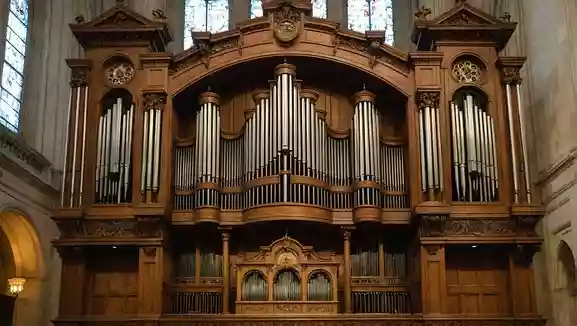
https://pixabay.com/
A major characteristic of the pipe organ is that its sound continues indefinitely as long as a key is pressed.
You can sustain the sound as long as you like, for as long as you want.
Many pipe organs have two or more manuals (keyboards).
Assign different timbres to each key and perform freely in all directions, moving your arms up and down.
There are even feats where you use only one hand—keeping your little finger on the first row of keys while striking a key on the second row with your thumb, for example.
Within a single piece, you can change timbre repeatedly, allowing performance on an orchestral scale—from pianissimo to fortissimo.
Flute on the first manual, and on the second manualoboeFor example, you can assign different timbres to each keyboard—cornet on the third manual, bassoon on the pedalboard—and you can also sound them all together to create a thicker tone.
By the way, there are also timbres unique to the pipe organ, such as the Principal and the Octave.
Pipe organs have something called a “pedalboard.”
As the name suggests, you play the keys with your feet.
Incidentally, to distinguish it from the pedalboard, the keyboard played with the hands is called the 'manual' (literally, 'hand keyboard').
You are required to play melodic passages using both feet.
The biggest hurdle when starting the organ is the pedalboard, and it takes a fair amount of time to develop the feel for playing it freely with your feet.
The primary role of the pedalboard is to handle the low bass, but it also sometimes plays melodic phrases. Therefore, an organist is expected to develop the ability to move the right hand, left hand, right foot, and left foot independently and freely.It is.
Please enjoy Bach’s timeless masterpiece that is indispensable when introducing the pipe organ: the Little Fugue in G minor.
This piece is a challenging work in which four melodies are skillfully interwoven, and it has always posed a test for organists.
A master from the NetherlandsTon KoopmanTheir innocent and passionate performance is wonderful.
Let's listen to the pipe organ!
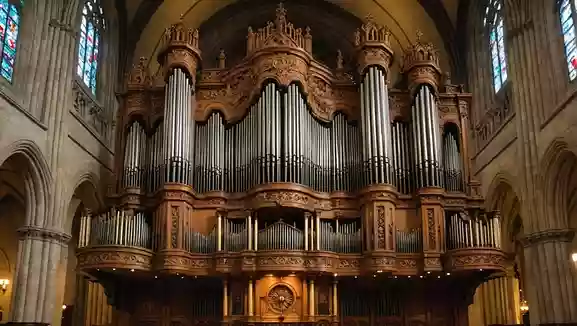
If you want to hear a live pipe organ, I strongly recommend a church organ.I will do it.
You can experience the majestic resonance unique to a pipe organ, harmonizing with the high-ceilinged stone architecture.
You might even feel so reverent that it seems as if a god is about to descend.
Some churches hold concerts that are open to the public, so please be sure to look for them.
Some concert halls also have an organ installed.
Each hall has a different tone color, so it's fun to compare how they sound!
If you search online, you’ll find pipe organ classes in many places, so if you’re interested, please try taking a trial lesson.
Lastly, please enjoy the author (Rila Takagi) performing on the organ.
Among the performance videos I’ve uploaded to YouTube, this is by far the most-viewed and popular track.
Bach’s organ piece “Wachet auf, ruft uns die Stimme” (“Wake, Awake, for Night is Flying”)