

[Beginner] Start Here: Classic Practice Pieces Recommended for Adult Piano Beginners


For beginner pianists, choosing practice pieces can be a real source of anxiety.
This is especially true if you’re starting to learn on your own as an adult—you may often wonder what pieces to choose to keep practice enjoyable and progressing smoothly.
When learning piano independently, there are two main approaches: focusing intensively on a limited selection of pieces, or practicing a balanced set of pieces that include a variety of technical elements while learning the basics of piano technique and music reading from the ground up.
In this article, we’ll introduce recommended practice pieces for those who prefer the latter approach and also want to build a solid foundation.
We’ve selected a wide range of pieces, from classical to popular, so feel free to start with whichever ones spark your interest.
- Recommended for piano beginners! 10 sheet music picks that adults can enjoy too
- [Piano Etudes] Recommended for Beginners! A Curated Selection of Easy, Playable Pieces
- [Beginner] Recommended for adult piano beginners! Beautiful & stylish piano pieces
- [Piano Beginners] J-POP That Looks Hard but Is Surprisingly Playable [2026]
- Beginner to Intermediate: Chopin pieces with relatively low difficulty. Recommended works by Chopin.
- [For Piano Beginners] How to Practice “Für Elise”
- [Free Piano Sheet Music] Beginner-Friendly! Carefully Selected Pieces Available for Immediate Download
- [For Piano Beginners] Play Right Now with Free Sheet Music! A Roundup of Recommended Practice Pieces
- Even beginners can play them easily on the piano! A curated selection of popular and latest J-POP songs.
- It’s so cool if you can play these on the piano! A selection of irresistibly charming masterpieces.
- [For Piano Recitals] Simple yet Cool Classical Pieces
- A must-see for piano beginners! Recommended training videos that are great for basic practice
- [Piano Pieces] Easy for Children to Play! A Roundup of Simple Classical Works
[Beginner] Start with this for your first practice piece! Classic practice songs recommended for adult piano beginners (41–50)
Serenade No. 13 in G Major “Eine kleine Nachtmusik,” II. AndanteWolfgang Amadeus Mozart

A masterpiece whose elegant, lyrical melody touches the heart.
Completed in Vienna in August 1787, this work features a middle section where gentle melodies flow and the soft timbre of the strings soothes the listener.
Because it is used as background music in films, TV programs, and commercials, many people have likely heard it before.
The piece reflects the delicate sensibility of Wolfgang Amadeus Mozart and is distinguished by the warm, supple sound of the strings.
It is an ideal choice for those looking to become familiar with classical music or to enjoy music in a calm, peaceful mood.
Minuet in F major, K. 5, from Nannerl’s Music BookWolfgang Amadeus Mozart

This is an elegant minuet that the six-year-old Wolfgang Amadeus Mozart wrote down for his sister, Maria Anna Mozart.
It is a dance in triple meter that, while employing triplets and an Alberti bass accompaniment pattern, lasts only about one minute and has a bright, approachable character.
Composed in July 1762, the piece, though simple, has a refined structure that highlights the beauty of its melody.
With its relaxed tempo and clear melodic line, it is a work that even those who have just begun learning the piano can approach with confidence.
While learning the fundamentals of musical expression, you can experience the splendor of classical music through this piece.
The River of That DayHisaishi Joe


This piece, from the film “Spirited Away,” leaves a lasting impression with its quiet, nostalgic melody that symbolizes the shifting emotions of the protagonist.
The gentle, unhurried piano timbre evokes a bittersweet yet warm feeling, as if recalling past memories or something precious.
In fact, this work was originally a song with vocals, included on the album “Spirited Away: Image Album” released in April 2001, and in the film it was used in an arrangement centered on the piano.
It has been loved beyond the framework of the movie, serving as background music for TV programs and stage productions as well.
It’s a perfect piece for those who want to play as if cherishing each note and weaving a story.
Aim for careful sound production that highlights the beauty of the melody, and try performing while picturing the scenes in your mind!
On a sunny dayHisaishi Joe
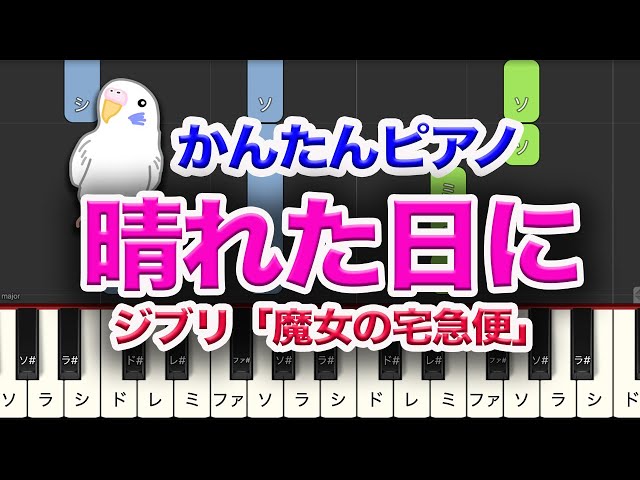
This buoyant waltz colors the scene in Kiki’s Delivery Service where the protagonist sets off with hope in her heart.
The melody, brimming with exotic flair from the accordion and mandolin, seems to capture the anticipation of entering a new world.
Although it was reportedly composed at a rapid pace to coincide with the film’s July 1989 release, the piece’s expansive, joy-filled lines betray none of that rush and are truly captivating.
Its steady, easy-to-grasp triple meter makes it a great recommendation for piano learners.
Start by playing the beautiful right-hand melody as if singing it, then add the simple accompaniment; you’ll find it leads smoothly to playing with both hands.
Hanyu no YadoInguranndo min’yō
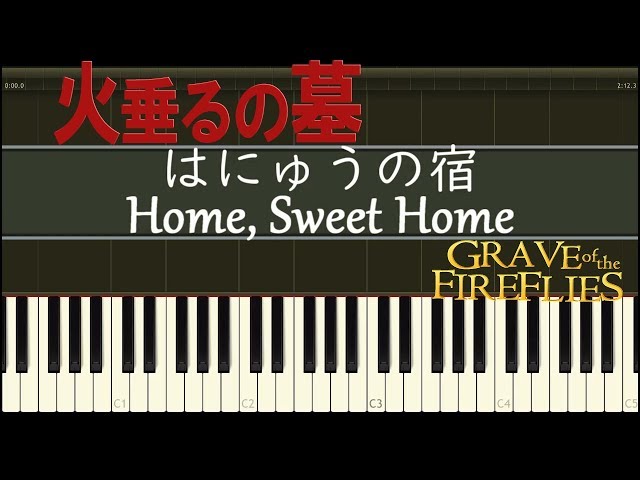

An insert song from Studio Ghibli’s film “Grave of the Fireflies,” whose gentle, faintly nostalgic melody sinks deeply into the heart.
Ever since the film’s 1988 release, many people may remember it as the music that plays in scenes symbolizing the days the brother and sister spent together.
The song’s theme—“No matter how humble the house, home is best”—is deeply intertwined with the story, softly speaking of a longing for the lost calm and a tender love for family.
Because of its relaxed tempo, playing without haste and cherishing each note leads to a beautiful resonance.
If you perform while imagining the story woven into the melody, it will surely reach the listener’s heart.
Round Dance of the Sunflower HouseHisaishi Joe

This piece, inspired by the “House of Sunflowers” that appears in the film Ponyo on the Cliff by the Sea, features a tender, compassionate melody that resonates with the heart.
Included on the album Ponyo on the Cliff by the Sea: Image Album released in March 2008, the track gently portrays the calm everyday life at the twilight of one’s years and the bittersweet wishes quietly held within it.
Its beautiful rondeau-like motif and clear, pure vocals warmly embrace the profound theme of the brilliance of life.
When playing it on the piano, try to spin the notes as if singing the melody, with a sense of care and affection.
Deeply connected to the story, this work is perfect for those who want to take their time and play a beautiful piece with heartfelt emotion.
Main themehoshikatsu


This is the music from the film Only Yesterday that evokes memories from long ago, as if they spring vividly to life in the protagonist’s heart.
Released in July 1991, the film uses this beautiful melody to accompany the inner landscapes of a 27-year-old woman as she recalls her 10-year-old self.
Featured on the album Only Yesterday Original Soundtrack, the piece is characterized by a quiet, nostalgic tone centered on piano arpeggios.
With its relaxed tempo and gentle movement, it’s approachable even for those new to the piano.
Cherish the clear, shimmering resonance—as if fragments of memory are sparkling—and play each note with care.