

The thirst for strength embedded in Akaza’s famous words: the warrior’s spirit dwelling in a demon’s heart.

In Demon Slayer: Kimetsu no Yaiba, one of the demons wielding immense power is Upper Rank Three, Akaza.
Along with his overwhelming combat prowess, the many words he spoke have left a deep impression on countless hearts.
While he bears the cold ruthlessness befitting a demon, he also continues to carry powerful feelings from when he was human—making his memorable quotes reflect a complex character, some even bringing tears to the eyes.
In this article, we introduce lines that offer a glimpse into Akaza’s subtle emotional shifts.
You’ll surely find yourself drawn into a world of words that distills the way he lived.
- The memorable quotes from Demon Slayer pierce the heart. These profound words cannot be read without tears.
- [Shaking the Soul] Kokushibo’s Famous Quotes: A Collection of Lines Radiating Overwhelming Presence
- Let Tanjiro Kamado’s famous words light a fire in your heart—words that teach both kindness and strength.
- Zenitsu Agatsuma’s famous quote: Words that resonate in the heart, becoming stronger while accepting one’s weakness.
- The famous quote by Kyojuro Rengoku, who enjoys immense popularity in Demon Slayer.
- Insect Hashira Shinobu Kocho’s Famous Quotes: Words of Strength and Resolve That Stir the Heart
- Inosuke Hashibira’s quotes pierce the heart! Fiery words that resonate with a headlong, boar-like charge spirit
- Nezuko Kamado’s famous quote. Words that convey kindness, strength… and a deep bond.
- A collection of Muichiro Tokito’s famous quotes: profound words from the Mist Hashira that leave a lasting mark on the heart.
- A collection of quotes from Lord Ubuyashiki Kagaya: words of unwavering resolve and salvation
- Exploring Sanemi Shinazugawa’s famous quotes: his hidden true kindness and strength
- Demon Slayer: A collection of Yushiro’s quotes that resonate with the heart—profound lines filled with his feelings for Lady Tamayo
- So strong it's tragic... What Kokushibo Yoriichi's famous quotes teach about true strength
The craving for strength embedded in Akaza’s famous quotes: the warrior’s spirit dwelling in a demon’s heart (1–10)
Even if you can’t go today, the fireworks will go up next year and the year after, so you can go then.

Back when he was still human and known as Hakuji, he said to the sickly Koyuki: “Even if you can’t go today, there will be fireworks next year and the year after—so you can go then.” It overflows with kindness, quite unlike the image of Akaza after he became a demon.
Since demons were originally human, each with their own story, this feels like a quintessential quote from a work that embraces that idea.
Perhaps this very contrast is what gives the story its depth and richness.
It’s a line made all the more poignant because he later becomes a demon.

I’m sorry, I’m sorry I couldn’t keep my promise. I’m sorry I wasn’t by your side when it mattered.
@mi4e7 Akaza’s past is the saddest.#AnimeEditingtranslation#DemonSlayerAkazaAkaza’s Past@Nonoha @c @Kokona @Raika @Kaede
Original song – ⟡.·*. – ⟡.·*.
These are lines spoken as Akaza looks back on his past and tries to reclaim who he once was, confessing his regrets.
As he wanders between his human self and the demon he became, the appearance of his lover triggers these words, and in that moment he pours out all his remorse.
Through this apology, you can feel his regret over losing someone precious while he was away, and over staining the fists meant to protect with blood.
It’s a raw expression of emotion that became the final catalyst for freeing himself from his demon self.

The one who should be suffering the most is the person themselves, and yet…
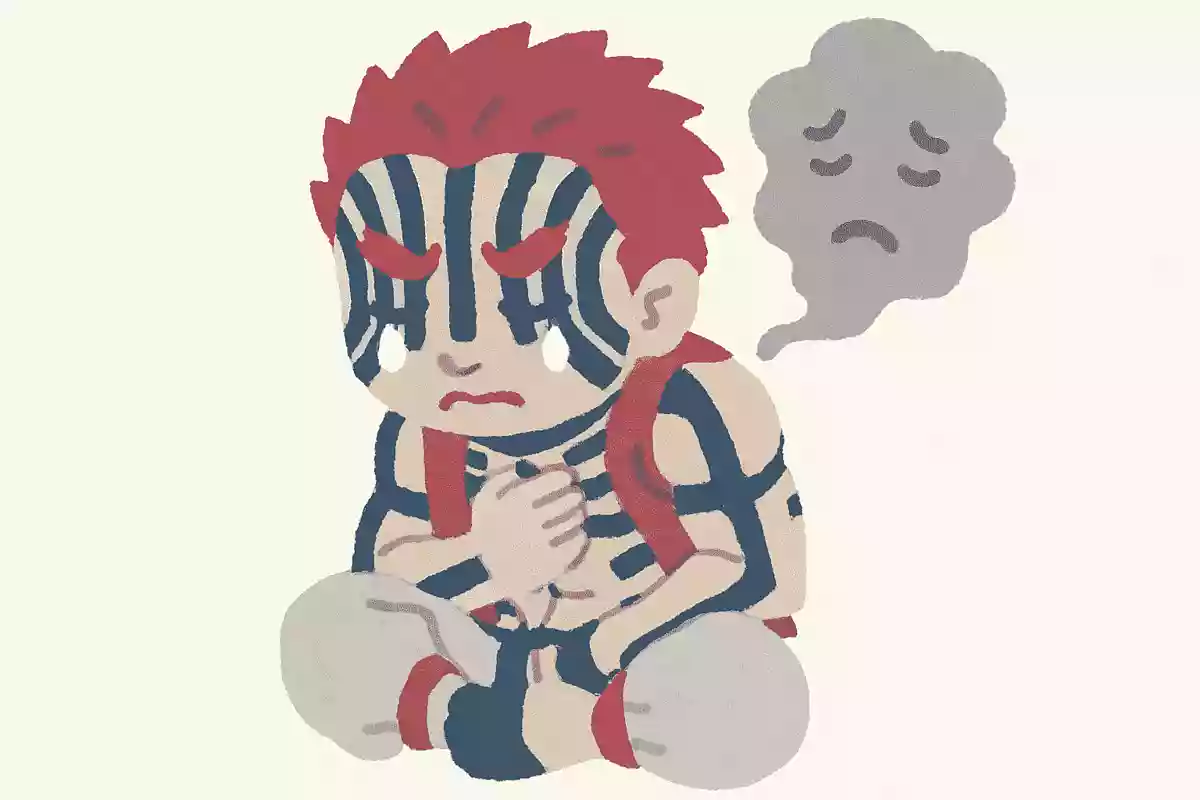
These words depict what Akaza felt when he was human, as he watched his ailing father and his lover.
He noticed that people suffering from illness are always apologizing to their caregivers, yet the one in the most pain is the person who is ill.
The words express the kindness of accepting that reality without apologies.
This connects to the pursuit of strength and becomes the starting point for his desire to protect the weak.
By describing supporting others as something natural, the words convey that he is truly a gentle person.
The yearning for strength embodied in Akaza’s famous quotes: The warrior’s spirit dwelling in a demon’s heart (11–20)
I feel nothing but disgust for the weak. They make me sick. Their being weeded out is nothing more than a law of nature.

This line he uttered when he reunited with Tanjiro and fought in the Infinity Castle is packed with everything that defines Akaza.
Shaped by his past, Akaza single-mindedly seeks strength, despises the weak, and proclaimed that it’s only natural for the weak to be weeded out.
In response, Tanjiro countered that the strong help the weak, and the weak will one day become strong and then help the weak in turn—that is the law of nature.
Akaza’s line became a memorable quote that clearly highlights the difference between their philosophies.

I will become stronger than anyone and protect you for the rest of my life.

These are the words he spoke to his lover when he was still human—the very reason behind Akaza’s lifelong pursuit of strength as a demon.
They express a pure wish: to gain the power to protect the one he loves, and to live happily together with that precious person.
Later, regret drives him to seek strength as a demon, but even in his role as a villain, his fixation on power may be influenced by the vow he made then.
It’s a heartbreaking line, because you can feel the kindness in that wish and see how it became distorted from this point onward.
I hate weak people.

This quote touches on why Akaza hates the weak.
He was born human.
He committed crimes for the sake of his sickly father, and as a result, a hopeless future befell him.
Yet he was given a chance to start over.
He met a girl who, like his father, was frail, and he began to change.
For the sake of what ultimately happened to the two of them, Akaza became a demon and lost his memories—but his contempt for the weak and obsession with strength are deeply tied to this past.
The phrase “the weak” is his way of referring to those who took his loved ones from him, but it also seems like he’s projecting it onto himself…

I can’t bear it—please die, Kyojuro. While you’re still young and strong.

These lines were spoken by Akaza during his battle with Kyojuro Rengoku, the Flame Hashira.
Moved by Rengoku’s strength, Akaza urges him to become a demon.
He thinks it’s a waste that humans can never reach the highest realm because they eventually die.
However, Rengoku refuses, saying he will not.
Their beliefs are fundamentally different and never intersect, which is why these words are spoken.
It’s a warped sentiment—he would rather Rengoku remain strong than grow old and weaken—but it’s a quote befitting Akaza, who despises the weak to the point of revulsion, and it has become a famous line.