


The thirst for strength embedded in Akaza’s famous words: the warrior’s spirit dwelling in a demon’s heart.

In Demon Slayer: Kimetsu no Yaiba, one of the demons wielding immense power is Upper Rank Three, Akaza.
Along with his overwhelming combat prowess, the many words he spoke have left a deep impression on countless hearts.
While he bears the cold ruthlessness befitting a demon, he also continues to carry powerful feelings from when he was human—making his memorable quotes reflect a complex character, some even bringing tears to the eyes.
In this article, we introduce lines that offer a glimpse into Akaza’s subtle emotional shifts.
You’ll surely find yourself drawn into a world of words that distills the way he lived.
The craving for strength embedded in Akaza’s famous quotes: the warrior’s spirit dwelling in a demon’s heart (1–10)
Won’t you become a demon too?
https://www.tiktok.com/@yuuna01060/video/7368760770823195911It’s one of Akaza’s most famous lines.
He acknowledges Kyojuro’s strength and then tries to persuade him to become a demon so he can grow even stronger.
Akaza believes that humans are weak because they inevitably die, while demons are strong because they never do, so he genuinely invites Kyojuro by saying, “Since you’re already so strong, become a demon and get even stronger.” Then, right after this line, he declares, “If you won’t become a demon, I’ll kill you,” showing that he doesn’t care about the means and is interested only in pursuing strength above all else.
It’s a quote that clearly reveals Akaza’s personality: he despises the weak and is obsessively devoted to being strong.

You were certainly not weak. I pay you my respects.

When Akaza first met Tanjiro on the Mugen Train, he didn’t even acknowledge him, and when they met again in the Infinity Castle, he insulted Tanjiro as a weakling.
However, immediately after taking Tanjiro’s attack, he recognized how much Tanjiro had grown stronger through relentless training and said this line.
Although Akaza is one of the Twelve Kizuki and an enemy of Tanjiro and his friends, his nature is to acknowledge and respect those who are strong.
Spurred by these words, the final showdown between Tanjiro’s group and Akaza began.
That’s right—what I wanted to kill was…
https://www.tiktok.com/@kt__bk/video/7168067206570315010These lines are spoken like a conclusion Akaza reaches after confronting his past through the battle with Tanjiro and Giyu.
It’s revealed that the reasons he became a demon and sought strength were rooted in his past, leading him to realize what he truly needed to overcome.
Until now he had labeled his opponents as “the weak,” but through this flashback it’s shown that the one who was truly weak was himself.
Regrets over failing to protect the one he loved, and over staining the power meant to protect with blood—his past suffering is woven into this dialogue.

As I thought, you should become a demon, Kyojuro.
https://www.tiktok.com/@lj…rk/video/7284168841893072130In the Mugen Train arc, the moment he met Kyojuro Rengoku and recognized his strength, Akaza invited him by saying, “Why don’t you become a demon?” Kyojuro immediately refused, and the two launched into a fierce battle.
During the fight, Akaza rapidly regenerated from any damage he took, while Kyojuro’s injuries steadily piled up.
Even so, when Akaza saw Kyojuro unleash another powerful technique despite being wounded to the point where he could have been unable to move at any moment, he delivered this line.
Akaza continued to argue that demons are superior to humans, but Kyojuro refused his invitation and fought on as a human until the very end.
What a miserable, ridiculous, and trivial story.

While Akaza was reflecting on the memories of his human days, he let slip this line about his own life.
His name as a human was Hakuji, and his life was harsh and sorrowful.
He led a rough life—stealing and resorting to violence—but underneath it all was his desire to protect his family and those dear to him.
After becoming a demon, when Hakuji’s memories resurfaced, these words came out as if he were mocking his own life.
Even though he appeared as a loathsome foe to Tanjiro and the others, many people couldn’t help but feel sympathy after learning his background, don’t you think?
I lost. In that moment, I was utterly defeated. It was fair and square—a splendid technique.
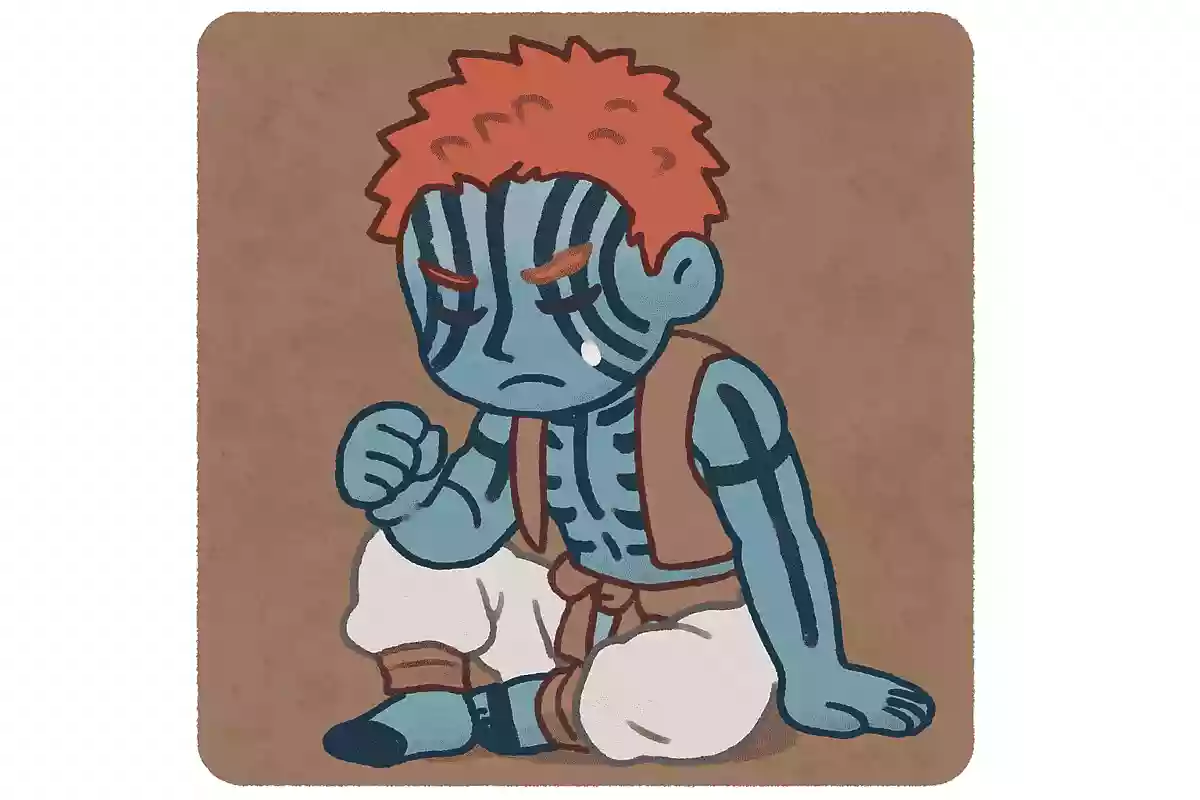
These are the words Akaza speaks to himself as he regains his senses during the battle with Tanjiro and Giyu, seeking to accept defeat.
At this moment, he also recalls his human past and is ready to acknowledge his loss and fade away, yet the part of him that is a demon refuses to allow it—his final inner struggle.
It’s not merely an internal conflict, either; the will of the demon is linked to Kibutsuji Muzan, so it also conveys his severance from the demons.
In the way he tries to accept defeat head-on, you can feel the warrior’s pride that lies at the core of Akaza.
Don’t die, Kyojuro.

The famous line “Kyojuro, don’t die” continues with “Even if you fight with your very flesh worn away, it’s all pointless, Kyojuro.” Akaza, who constantly seeks battles with the strong, fought the Flame Hashira, Kyojuro Rengoku, on the Mugen Train and, impressed by his strength, urged him to become a demon.
Rengoku refused due to their differing values.
Even so, this line from Akaza—who had grown so fond of Rengoku that he didn’t want to kill him—stirs the heart despite its sense of contradiction.
It’s a memorable quote that colors the scene depicting the differences between humans and demons.
