

Anti-war songs that pierce the heart: Japan’s masterpieces conveying prayers for peace


Music sometimes has the power to move people’s hearts and exert a great influence on society.
Among such works, anti-war songs imbued with wishes for peace have appealed across generations, conveying both the horrors of war and the preciousness of peace to many.
The anti-war songs etched into Japan’s musical history contain profound messages that we who live today must never forget.
In this article, we highlight Japanese anti-war songs—focusing mainly on popular Japanese music—and explain the backgrounds of the tracks and the sentiments embedded in their lyrics.
We invite you to take this opportunity to reflect anew on war and peace.
- “Song of War”: A classic that sings of the tragedy and folly of war
- [Songs Praying for Peace] To Prevent Repeating Tragic History | A Collection of Peace Songs That Resonate with the Heart
- [Song for Supporting Ukraine] A moving anthem that conveys hopes for peace & songs of Ukraine
- Masterpieces of Japanese music that delve into various social issues, such as war and environmental problems
- The lyrics are profoundly good. The more you listen, the more it sinks in. Masterpieces of Japanese music, recommended popular songs.
- [2026] Anti-war songs in Western music. Songs that wish for peace.
- Japanese music themed around prayer. A song whose warm message resonates in the heart.
- Tear ducts guaranteed to burst! Heart-wrenching masterpiece songs I’d recommend to Gen Z
- [For when you want to cry or feel sad] Tear-jerking masterpieces that make you cry when you listen
- [Classic and Contemporary Hits] Emotionally Stirring, Heart-Touching Songs
- [Recommended for elementary school students] Songs that touch the heart! Moving and comforting songs of gratitude
- Timeless classics only! Showa-era hit songs perfect for acoustic sing-alongs
- Songs of anger. Western music anger songs. Recommended masterpieces and popular tracks.
[Anti-war songs that pierce the heart] Prayers for peace conveyed by Japan’s classic masterpieces (61–70)
mabatakiVaundy

Although Vaundy’s song “mabataki” is not a track about war, many listeners may have sensed a stance against war and a wish for peace in its lyrics.
The recurring question “What if things had been different?” suggests a longing for a peaceful world where people care for one another.
Vaundy’s delicate sensibility as a multi-artist resonates deeply with listeners throughout the piece.
This song, which conveys a yearning for peace through music, is a remarkable work that reaffirms the power of music.
Sugarcane fieldNatsukawa Rimi

Rimi Natsukawa, an Okinawa-born singer, covers a song meant to soothe the souls of those who perished in the Battle of Okinawa, said to have been the most brutal battle at the end of World War II.
The distinctive refrain evokes the sound of wind blowing through midsummer sugarcane fields.
Natsukawa’s clear voice brings a sense of calm, and I hope it also prompts those of us who have never experienced war to reflect on the Battle of Okinawa.
There are versions of the same song by Naomi Chiaki and Ryoko Moriyama as well, so please give them a listen.

Himeyuri ~Poem of the Lily~MONGOL800

When we hear “Himeyuri,” it evokes events related to the Battle of Okinawa, such as the Himeyuri Student Corps and the Himeyuri Monument.
This song carries the hope that it will serve as an opportunity for today’s younger generation—who may feel distant from war—to learn about those tragic events that occurred in Okinawa just 70 years before the song’s release in 2015.
The lyrics, which express a yearning for peace, are filled with words that prompt reflection on peace and are sure to move the listener.

heiwaRIZE

RIZE’s 2000 track “heiwa” carries a powerful anti-war message.
More than just delivering a pleasant melody, the song directly conveys the band’s strong rejection of war and their desire for peace.
While RIZE has long had a distinctive presence in Japan’s rock scene, this work captures listeners with a quiet, heartfelt emotion that contrasts with their typically energetic sound.
In particular, its compelling content prompts us to reconsider our awareness of peace today and is sure to resonate across generations.
Highly recommended for anyone looking for songs about peace or wanting to feel a message that truly speaks to the heart through music.
Upon the boundless earthKatō Tokiko

Tokiko Kato’s “On the Boundless Earth” is an anti-war song that single-mindedly voices a prayer for peace.
True to its title, the lyrics weave deep empathy and hope for people exposed to lands where conflict never ceases, and their words carry a trembling power of conviction.
One cannot help but wish that the message carried by her voice will reach people’s hearts directly.
By each of us drawing closer to the world of the song and facing its truth, we may once again recognize the importance of remembering mistakes that must never be repeated.

Song of ChintamakeNozaka Akiyuki
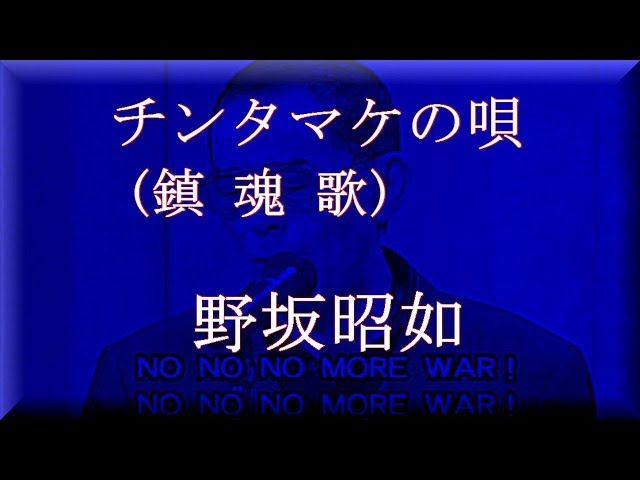
This is an anti-war song by Akiyuki Nosaka, the author of Grave of the Fireflies.
The title “Chintamake” is an Okinawan dialect word meaning “requiem.” In Okinawan dialect, it powerfully expresses anger toward war and a wish for peace.
It is a song that strongly appeals to people outside Okinawa to understand Okinawa’s wartime experiences.
For first-time listeners, reflecting on the meaning conveyed by the lyrics can be an opportunity to reaffirm their desire for peace.
Only One,Only YouGLAY

As a visual kei rock band, GLAY has been active on the front lines for over 20 years.
Their 60th single, “Only One, Only You,” released in 2022, is an anti-war song written by the band’s leader, TAKURO, in response to the invasion of Ukraine.
The lyrics, depicting everyday life falling apart and cityscapes reduced to rubble, likely resonate with many who have seen these heartbreaking realities on the news or social media.
Stop the fighting, and wish for peace not just for yourself, but for everyone.
It’s a song that strongly conveys that sentiment.
