

[2026] A compilation of bands, artists, and singers from Kyushu


When you think of artists from Kyushu, who comes to mind?
In recent years, the rock band WANIMA—hugely popular at major festivals around the country and on TV—are famously from Kumamoto, right?
Plus, Masaharu Fukuyama and Tsuyoshi Nagabuchi are strongly associated with being from Kyushu as well!
But there are many more singers and bands from Kyushu!
In this article, we’ll introduce a wide range of Kyushu-born artists who keep delivering music with passionate hearts!
- Artist Kingdom: Artists, Singers, and Idols from Fukuoka
- Kyushu-Otoko Popular Songs Ranking [2026]
- Bands, artists, and singers from Kumamoto Prefecture
- Artists from Kagoshima: From Famous Singers to Popular Bands, All in One Go
- Bands, artists, and singers from Saga Prefecture
- A famous song about Fukuoka. The heart of the hometown passed down through song.
- Masculine Allure: Artists and Bands with Husky Voices
- Lesser-Known but Amazing Singers | A Ranking Focused on Pure Talent
- Showa Era Popular Artist Rankings [2026]
- Songs that hype up Sports Day and Athletic Festivals: Japanese Music / J-Pop Artist Rankings [2026]
- A Japanese soul singer. The stirring SOUL OF JAPAN.
- I want to sing at karaoke! Songs by male artists recommended for Gen Z
- Nothing but masterpieces! Love songs by male artists recommended for Gen Z
[2026] Compilation of Bands, Artists, and Singers from Kyushu (41–50)
metropoliskurisutaru kingu

A band from Nagasaki in Kyushu that gained popularity with high-quality songs strongly influenced by Western hard rock, featuring twin vocals covering both low and high ranges.
They produced numerous hits that many listeners still recognize today, including “Daitokai,” which sold over 1.5 million copies, and “Ai o Torimodose!!,” famous as the theme song for the TV anime Fist of the North Star.
Also, the fact that the setting of “Daitokai,” often assumed to be Tokyo, is actually Hakata in Fukuoka Prefecture reflects their deep affection for Kyushu.
They were a band that took Japan’s rock scene by storm from the 1970s through the 1980s.

piercingKubota Kai

Kobuta Kai, often hailed as a new-generation rapper from Fukuoka.
He apparently uploaded several of his own tracks to YouTube, and the response led to his debut.
That story alone already gives off big-star vibes, doesn’t it? The first artist he ever loved was Kobukuro, and that might be where the freedom in his music—though he’s labeled a rapper—really shows.
I personally recommend his song “Pierce”; the lyric that likens the hollow left by heartbreak to a pierced ear hole is brilliant.
Toughness and tenderness, mellow and melancholic—his music shifts through countless shades.
You won’t regret giving it a listen!
budObuchi Kentaro
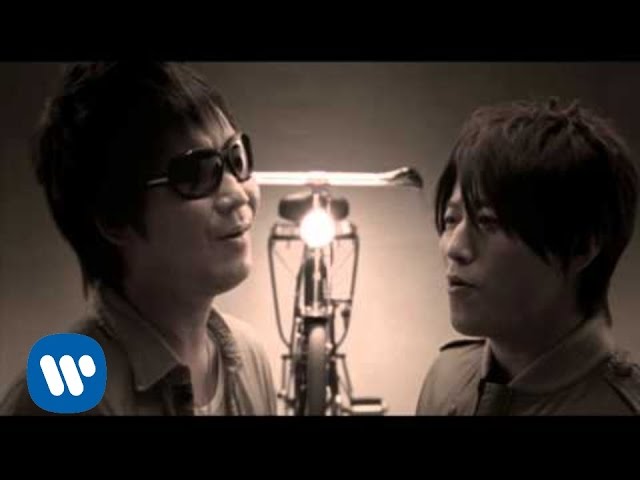
Although Kobukuro is strongly associated with Osaka, in fact the guitarist Kentaro Kobuchi is from Miyazaki Prefecture.
After entering the workforce, he began doing street performances in his spare time, which led to his meeting Shunsuke Kuroda and the formation of Kobukuro.
They made their major-label debut in 2001 with the single “YELL ~Yell~/Bell,” and have captivated many fans with songs that resonate warmly with listeners, evoke a refreshing breeze, and at times carry powerful energy.
Their 2005 single “Sakura,” which became a massive hit, was a song Kobuchi had been working on when Kuroda approached him about forming the duo.

TRUE LOVEFujii Fumiya

Fumiya Fujii, a native of Kurume City in Fukuoka Prefecture, debuted in 1983.
He rose to fame as the lead vocalist of the seven-member pop band The Checkers.
After the group disbanded in 1992, he began a solo career.
His second solo single, TRUE LOVE, served as the theme song for the TV drama Asunaro Hakusho and became one of his signature songs.
He went on to produce numerous other hits, including Another Orion.
He is also active as a producer, writing songs for other artists.
I can’t say it.Gō Hiromi

Hiromi Go, who, together with Hideki Saijo and Goro Noguchi, was known as one of the “New Big Three,” enjoyed immense popularity.
Hailing from Fukuoka Prefecture, Go has remained youthful at any age and continues to deliver sharp, dynamic dance performances.
In 1971, he was scouted by the late former president of Johnny & Associates, Johnny Kitagawa, and joined the agency.
A year later, he made his acting debut in the historical drama series New Tale of the Heike, and subsequently made his singing debut with the single Boy & Girl.
He has performed numerous long-loved hits, including Oyome Samba and 240 Million Eyes.
His dazzling “jacket play,” in which he swiftly takes his jacket off and on, is one of Hiromi Go’s signature moves.
moonlightOnitsuka Chihiro

Chihiro Onitsuka, whose tender, gently resonant singing voice brings to life songs filled with poignant melancholy, has won widespread popularity.
Hailing from Miyazaki Prefecture, she made her debut as a singer in 2000 at age 19 with the single “Shine.” Her first album, “Insomnia,” released a year after her debut, became an immediate million-seller.
She followed with a string of hits, including “Gekkou,” which was chosen as the theme song for the smash-hit drama Trick.
Her distinctive word choice has consistently drawn attention to her lyrics, and she won the Japan Record Award for Songwriting for the single “Memai/edge.”
dazzlingKamishiraishi Mone

Mone Kamishiraishi is a multi-talented performer active as an actress, singer, and voice actor.
Originally from Kagoshima Prefecture, she entered the entertainment industry after receiving the Special Jury Prize at an audition held in 2011.
She made her singing debut with the 2016 mini-album “chouchou,” which features a cover of the theme song from a smash-hit animated film.
This release drew significant attention to her clear, translucent vocals.
She went on to score another hit with “Happy End,” the theme song for a drama in which she starred.
As an actress, she has also earned high acclaim, winning the Newcomer of the Year Award at the 38th Japan Academy Film Prize for the movie “Lady Maiko.”