


Speaking of sports days, they’re full of excitement with a variety of fun events like relays, cheer battles, tug-of-war, relays, and ball tosses! School sports days in Japan, long beloved as a traditional event, actually hide plenty of trivia and fun facts that will make anyone say, “Wow!” Why are there Red and White teams at sports day? When did the bread-eating race start? This quiz-style introduction shares general trivia and tidbits about sports days that answer such simple questions.
Why not explore the history and enjoy sports day even more?
- Trivia quiz about schools: a roundup of fun facts you’ll want to brag about
- Make your summer festival even more fun! Trivia quizzes and fun facts for kids
- Enjoy summer festivals even more! Trivia quiz & fun facts collection
- A collection of quiz questions related to sports
- So nostalgic! A lively school lunch quiz. Let’s look back on those memories from back then.
- [For General Audience] Trivia & Fun Facts Quiz on the Olympics and Paralympics
- Get the Crowd Going at the Kids’ Club! A Collection of True-or-False Quizzes Everyone Can Enjoy
- Exciting! Trivia quizzes that you’ll want to tell others about. A collection of surprisingly little-known facts.
- Trivia quiz with useful tips to know: fun facts that come in handy at school or at home [for kids]
- [Great for speeches] Trivia and fun-fact quizzes recommended for morning assemblies
- How many can you answer? A collection of fun school-related quiz ideas to guess and enjoy
- [For Elementary School Students] Sports Quiz
- [Tokyo 2025] World Athletics Trivia Quiz! Try your hand at surprising facts you might not know
Get hyped with sports day trivia quizzes! Fun facts worth knowing (1–10)
In which era was the first sports day held in Japan?
- Meiji era
- Taisho era
- Showa era
See the answer
Meiji era
It is said that the first sports day in Japan was held in the Meiji era. Called the Kyōtō Yūgikai (Competitive Games Meet), it took place on March 21, 1874, at the Naval Academy in Tsukiji, Tokyo. At the time, the concept of “sports” did not exist in Japan, and students at the Naval Academy spent most of their time in seated classes. For that reason, the head of the British Naval Advisory Mission recommended holding Japan’s first sports day, the Kyōtō Yūgikai. It is said that one of its purposes was to help students relieve stress.

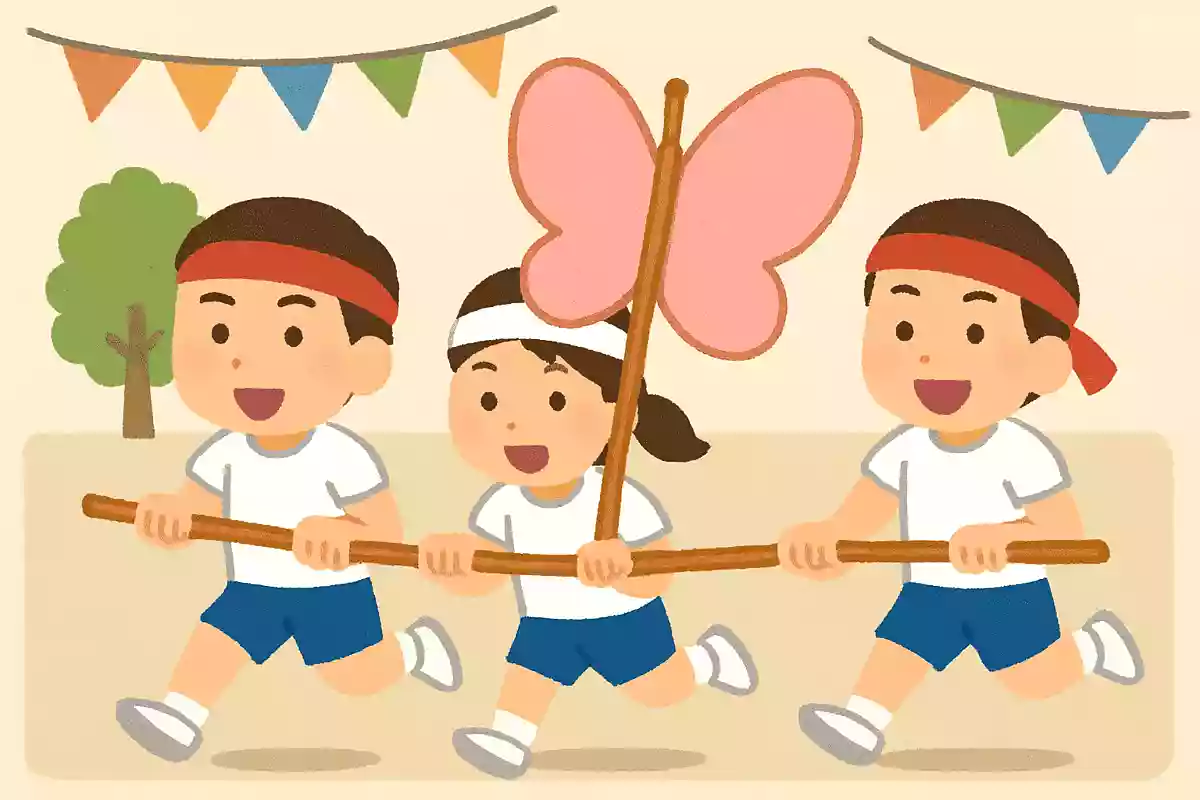
What is “tefu no hanaohi” called in modern competitive terms?
- ball toss (traditional Japanese beanbag/ball-throwing game)
- Three-legged race
- Relay
See the answer
Three-legged race
“Tefu no Hanaoi” may sound like an incantation, but it was actually one of the events held at athletic meets in the Meiji era. It is said that “Tefu no Hanaoi” was a competition similar to a three-legged race. At the time, Japan was actively adopting Western culture. In fact, instructors invited from Britain held an event called a kyōtō-yūgikai—the forerunner of today’s sports days—at Japan’s naval academy as well. The athletic meet program was written entirely in English. Because there were no equivalent Japanese events, instead of translating the names directly into Japanese, they devised four-character compound names for the competitions.
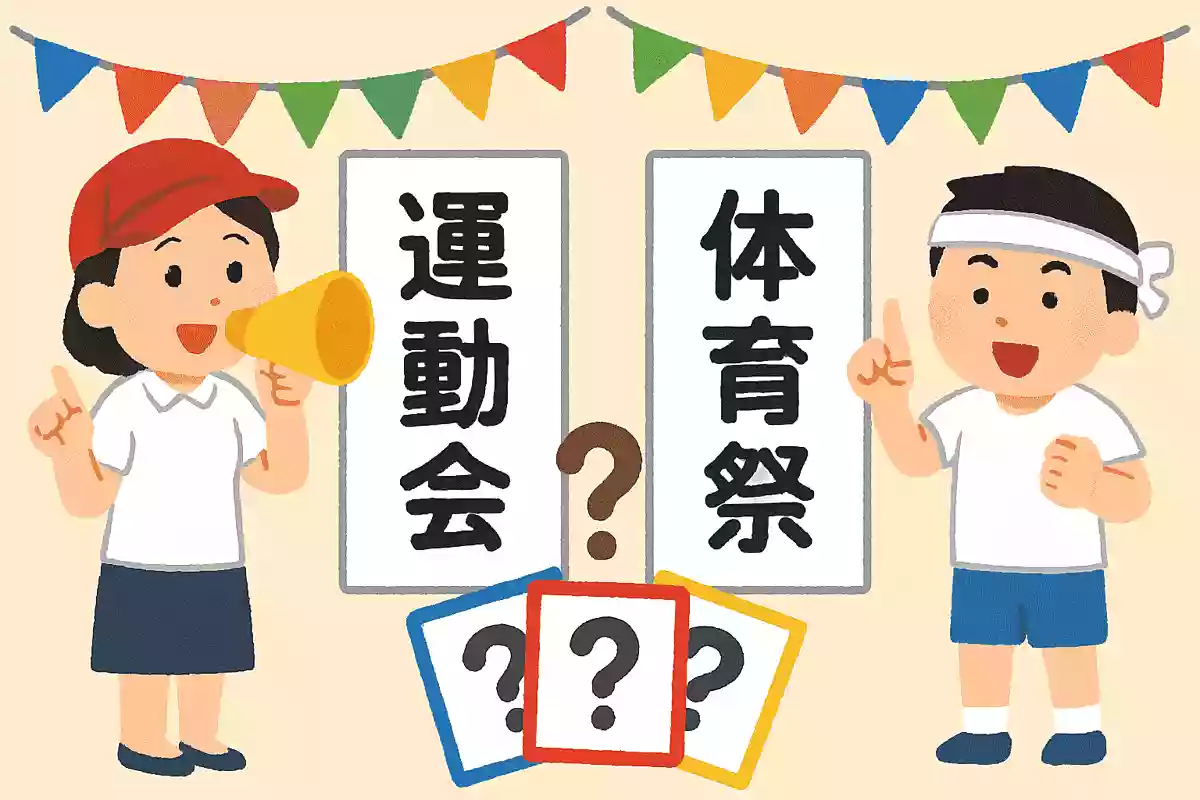
What is the difference between an undokai and a taiikusai?
- Mandatory participation or voluntary participation?
- Teacher-centered or student-centered?
- There is no particular difference.
See the answer
Teacher-centered or student-centered?
From kindergarten and daycare through high school and university, many schools hold sports days or athletic festivals. The difference between a sports day and an athletic festival lies in how they’re run—whether teachers or students take the lead. Sports days, which are often held up through elementary school, are typically organized by teachers. Athletic festivals, on the other hand, are more often run by a student executive committee, which may also plan the events and competitions.
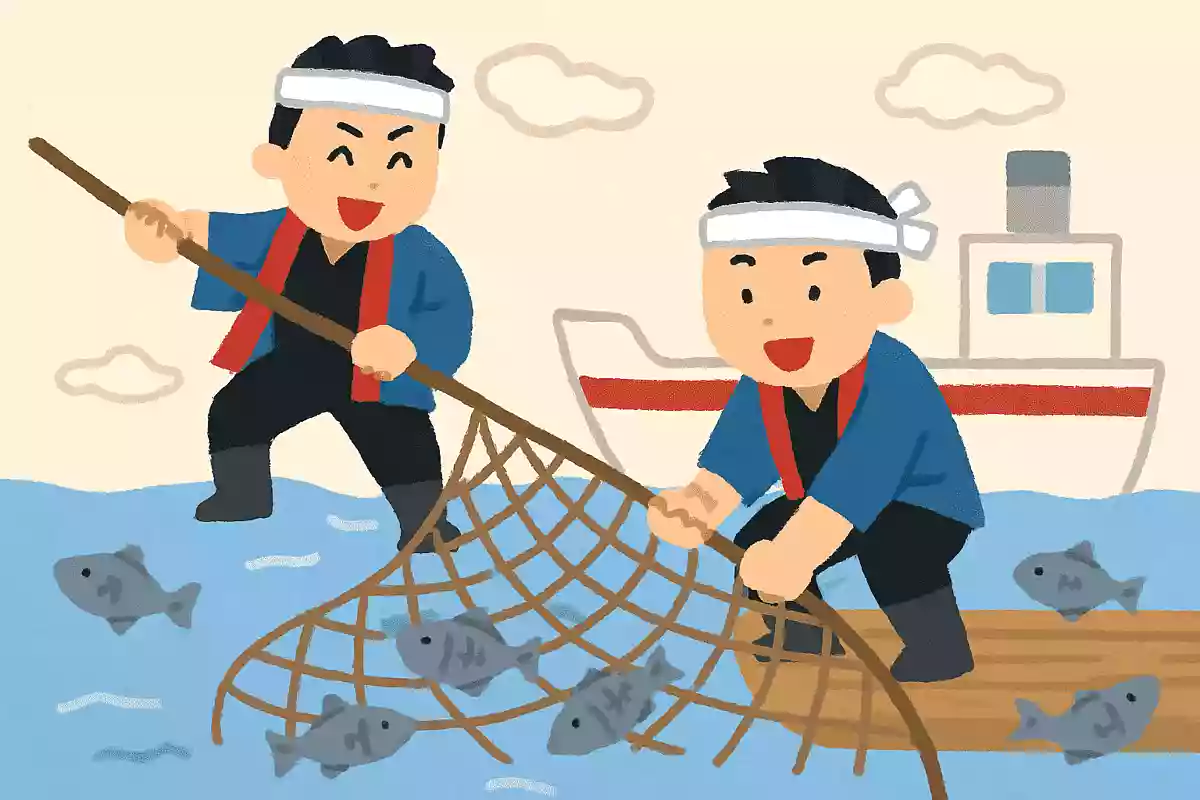
In what type of fishing was the song ‘Soran Bushi,’ often danced at sports festivals, originally sung?
- tuna
- squid
- herring
See the answer
herring
The song 'Soran Bushi' was originally sung during herring fishing work. It’s a lively, spirited song that was mainly performed in Hokkaido. Scooping herrings up into the boat was extremely strenuous labor, so the song was sung with the chant 'Soran, soran' to add force and help the workers coordinate their efforts. Singing also served to boost the workers’ morale.
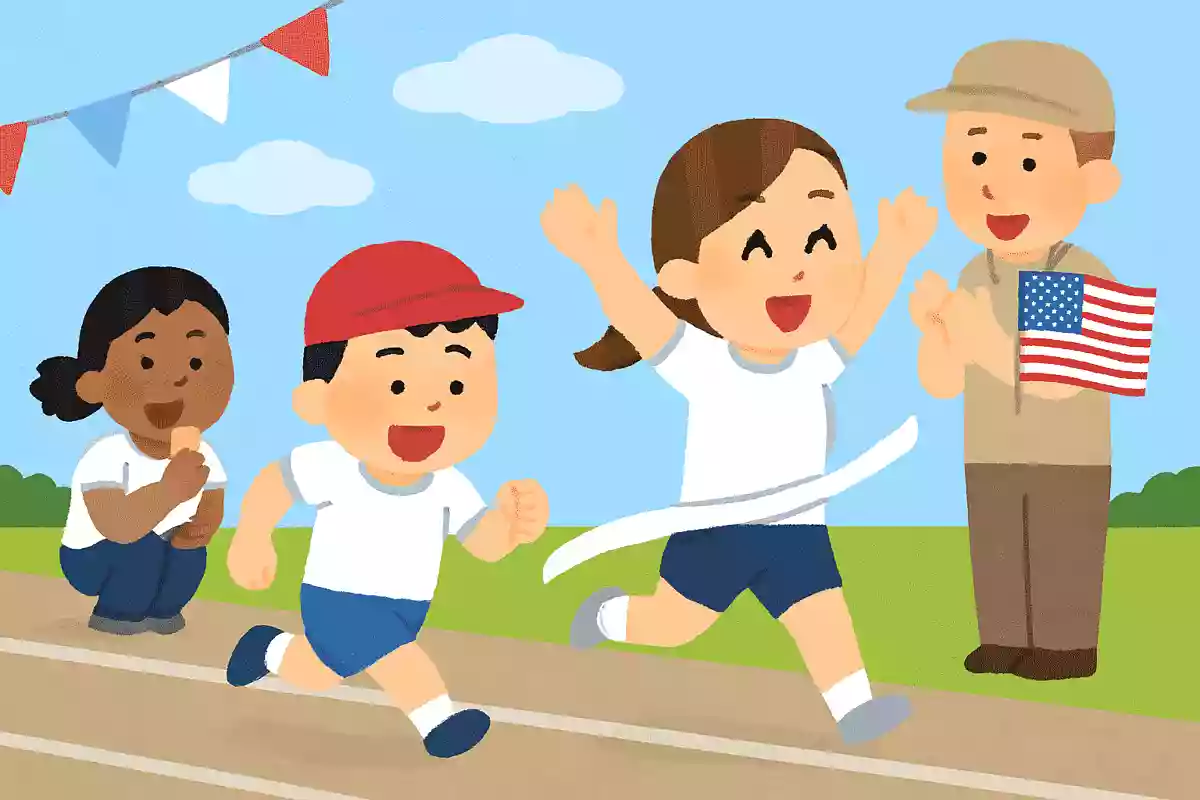
Which event corresponds to a Japanese sports day in the United States?
- Field day
- Sports day
- P.E.day
See the answer
Field Day
In the United States, there is an event called “Field Day,” where relays, beanbag tosses, and various games are held, much like Japan’s undokai (sports day). It’s a staple event hosted once a year at many schools. In the U.S., sports days are often held by class or by grade level.

Which country’s university was the first in the world to systematically hold an athletic meet?

- United Kingdom
- Australia
- Brazil
See the answer
United Kingdom
Sports festivals, which are held at many schools, daycare centers, and kindergartens in Japan today, are said to have been first organized systematically by the University of Oxford in the United Kingdom. Japan’s first such event, known as the Kyōtō Yūgikai (Competitive Games Gathering), is also said to have originated in Britain.
What kind of bread was used in the first-ever bread-eating race?

- cream bun
- jam bun
- anpan
See the answer
anpan
In today’s bread-eating races, it’s common to see a variety of breads. When the bread-eating race was first held, they reportedly competed by eating anpan (sweet red bean buns). At the Kyōtō Yūgikai, the first athletic meet in Japan, held at the Naval Academy in Tsukiji, Tokyo, there is a theory that Kimuraya Sohonten’s anpan was used in the event. This is considered to be the origin of the bread-eating race.