

So nostalgic! A lively school lunch quiz. Let’s look back on those memories from back then.

School lunches are a special time packed with memories that many children look forward to.
So, how about revisiting those lunchroom memories together with a quiz about school lunches? In this article, we’ve prepared a fun quiz that lets you learn trivia about school lunches—such as nostalgic menu items, the history of school meals, and regional specialties.
Take a trip down memory lane and try it with your family or friends! You might discover something new when people of different ages join in.
Nostalgic! The exciting school lunch quiz. Let’s look back on those memories (1–10)
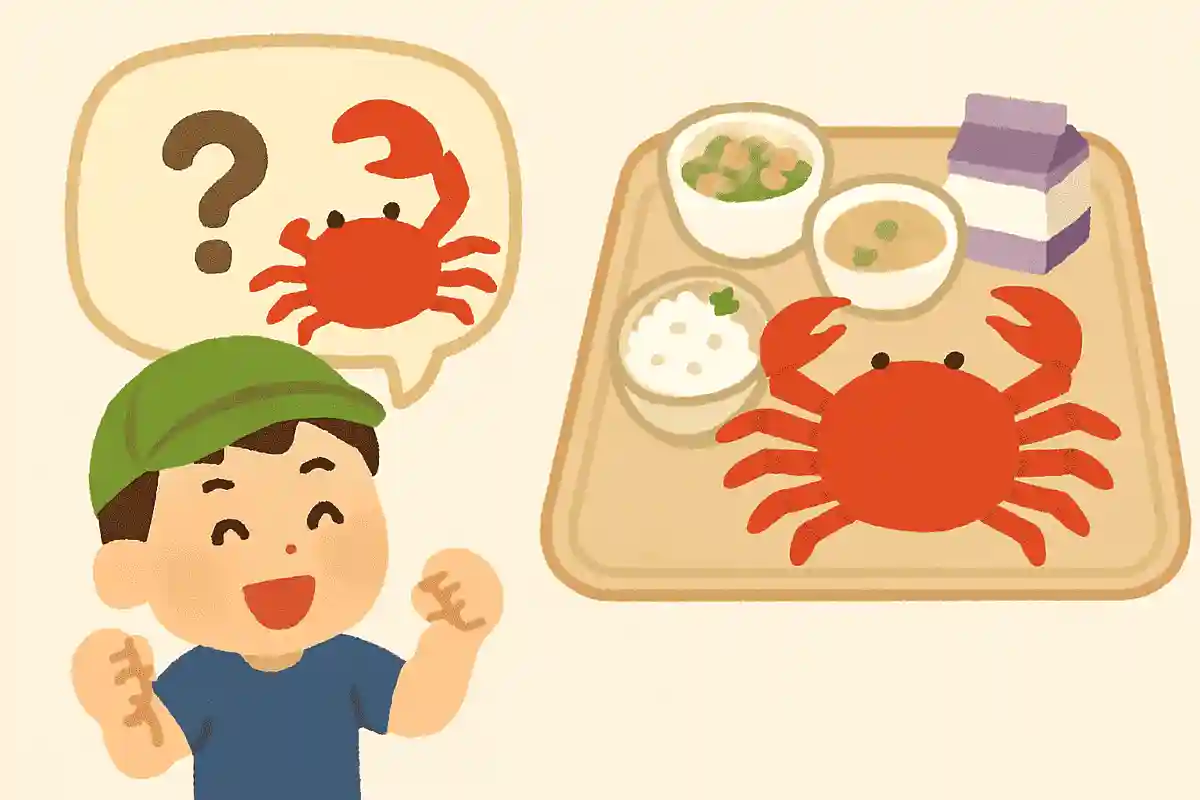
Where do they serve one whole red snow crab in a school lunch?
- Tottori Prefecture
- Toyama Prefecture
- Kyoto Prefecture
See the answer
Toyama Prefecture
School lunches often draw attention for their unique menus that make the most of local specialties. In Toyama Prefecture, which borders Toyama Bay rich in seafood, fresh red snow crabs are readily available, so sometimes each student is served a whole red snow crab in their school lunch. Using local ingredients also creates opportunities to learn about the region’s food culture and local industries.

What was served instead of milk until the late 1960s?
- barley tea
- skim milk powder
- soy milk
See the answer
skim milk powder
In postwar Japan, skim milk powder was distributed in school lunches as a substitute for milk to provide nutrition. Skim milk powder is made by removing the fat from milk and processing it into a powder, and it was adopted partly because it is easy to store and transport. By the late 1960s, due to its flavor, children’s reactions, and changing social circumstances, schools shifted to fresh milk. It’s often remembered as a nostalgic menu item, distinctive taste and all.
What is the recommended number of chews per mouthful?
- ten times
- 30 times
- 50 times
See the answer
30 times
It is considered ideal to chew about 30 times per bite during meals. The reason we’re encouraged to chew well is that it aids digestion, helps you feel full more easily, and can prevent overeating. In addition, because you can more fully savor the flavors of the ingredients, meals can become more enjoyable. This is often taught as a first step toward a healthy diet.
What does the “ponch” in fruit punch mean?
- Dessert
- alcohol
- sweet
See the answer
alcohol
The “ponchi” in fruit punch is written as “punch” in English and originally means a fruit cocktail made with alcohol. It’s a drink that came from Britain via India, containing fruit, sugar, spices, and originally alcohol such as rum. School lunches in Japan don’t use alcohol, but the name still reflects that origin.
Where was the first place to start serving school lunches?
- Hokkaido
- Yamagata Prefecture
- Niigata Prefecture
See the answer
Yamagata Prefecture
The first introduction of school lunches in Japan took place in Yamagata Prefecture. It is said to have begun in 1889 (Meiji 22), when the private Chūai Elementary School in Tsuruoka, Yamagata, provided rice balls, fish, and other foods free of charge to children from impoverished families. This initiative spread nationwide and became established as an indispensable part of running schools.
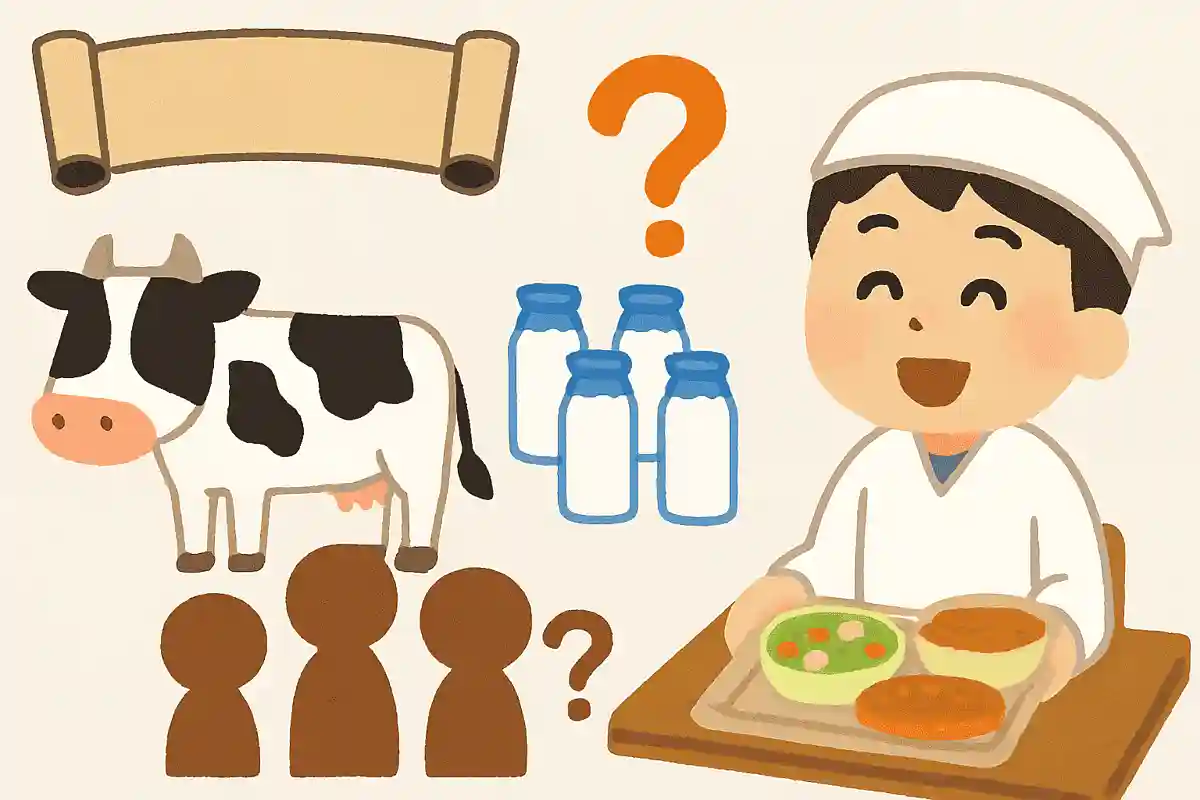
How many people can be supplied by the amount of milk produced per cow?
- About 50 people
- for about 150 people
- for about 300 people
See the answer
for about 150 people
It is said that a single dairy cow produces about 20 to 30 liters of milk per day. Since the milk distributed in Japanese elementary school lunches is about 200 ml per bottle, one cow provides roughly enough for about 150 children. It’s data that deepens our appreciation for how one cow supports the lunches of so many children.
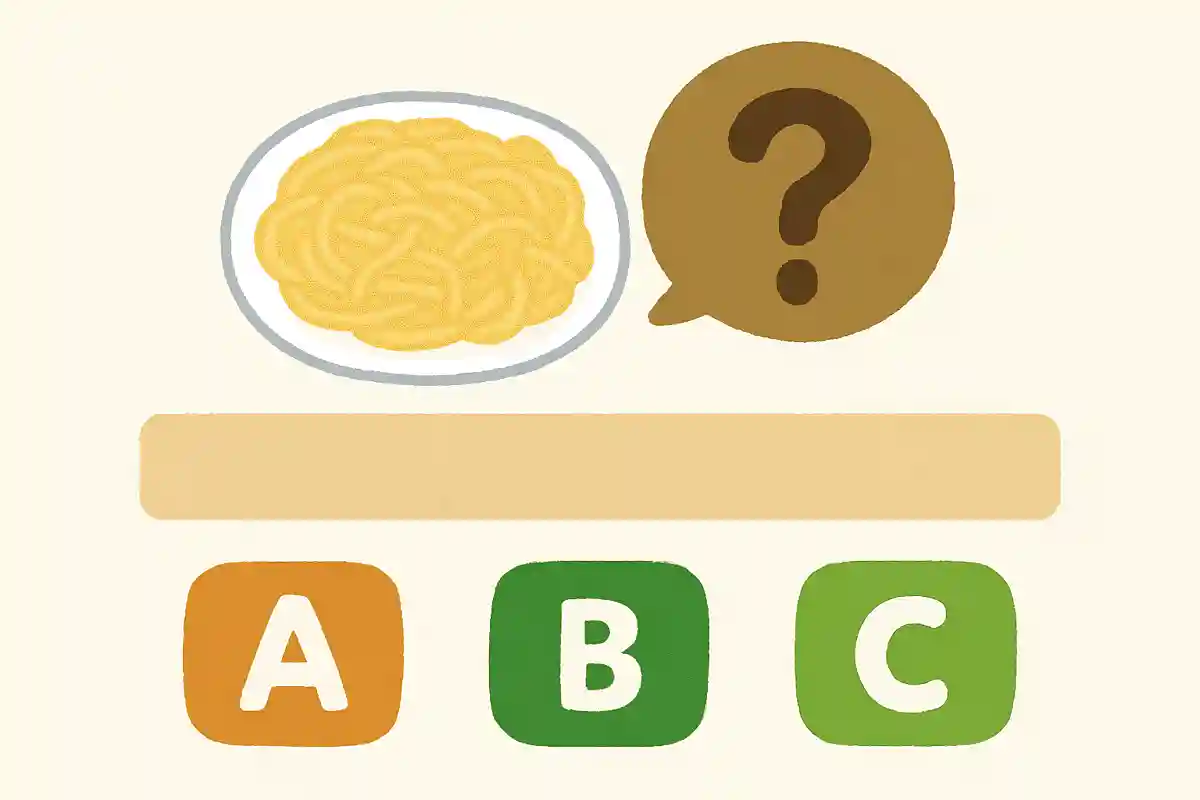
What is the official name of “soft noodles”?
- soft spaghetti-style noodles
- Soft udon-style noodles
- Soft Chinese-style noodles
See the answer
soft spaghetti-style noodles
Soft noodles, a popular item long beloved in school lunches across Japan since the late 1960s, are officially called “soft spaghetti-style noodles.” They are thicker than regular spaghetti and are cooked for a shorter time, making them easier for children to eat, and were typically served with curry or meat sauce. They originally arose out of considerations for storage and serving, and are indispensable when talking about how school lunches have changed over time.