

Children’s Songs You Can Sing in August: Summer-Friendly Kids’ Songs and Fingerplay Rhymes


Here are nursery rhymes and fingerplay songs for August that you can sing and enjoy! We’ve got a full lineup: songs that capture the fun of summer, tunes about tasty foods you’ll crave in the heat, and songs perfect for August events.
We also introduce tracks you can enjoy with fingerplays and dances, so try using them for indoor play during the sweltering summer or for activities in childcare settings.
Many are classic summer songs that have been passed down for generations, making them perfect for family time at home as well.
Teach children summer songs and enjoy a delightful time together while reminiscing about the past!
- [Childcare] Summer songs: Full of fun! Summer nursery rhymes & finger-play songs
- [Sea Nursery Rhymes] Fun children's songs themed around the sea
- [Tanabata Children's Songs] Fun hand-play songs and a nostalgic collection of traditional nursery rhymes and folk songs
- Nursery rhymes I want to sing in July: fun summer songs
- [For Seniors] Recommended Summer Songs for August [2026]
- [August Songs] Carefully selected masterpieces, classics, and the latest hits you’ll want to listen to in midsummer!
- [Children’s Songs for June] Fun finger-play songs and traditional nursery rhymes perfect for the rainy season
- Children’s songs, folk songs, and nursery rhymes about insects
- Recommended Summer Songs for Elementary School Kids | A Pick of Refreshing, Popular Tracks!
- [Childcare] Recommended songs and nursery rhymes for November: Fun autumn fingerplay songs
- [For Seniors in Their 80s] Recommended Summer Songs: From Enka and School Songs to Folk Songs
- Recommended summer songs for kids: Popular J-POP/Japanese hits [2026]
- Kids go wild! Popular hand games and fun sing-alongs
[Children’s Songs You Can Sing in August] Summer Fun Kids’ Songs & Hand-Play Songs (21–30)
coconutSakushi: Shimazaki Tōson / Sakkyoku: Ōnaka Toraji

This is the children’s song “Yashi no Mi” (Coconut), sung by Rimi Natsukawa, who is famous for “Nada Sōsō.” It’s a well-known piece that many people have probably heard at least once, and Natsukawa’s voice vividly conveys the song’s grand imagery.
The lyrics were written in 1901 and have been sung for over a hundred years.
As a result, the wording is a bit old-fashioned, but it’s a very summery and pleasant song.

A tadpole is a frog’s child.Sakushi: Taniguchi Kunihiro / Sakkyoku: Nakagawa Hirotaka
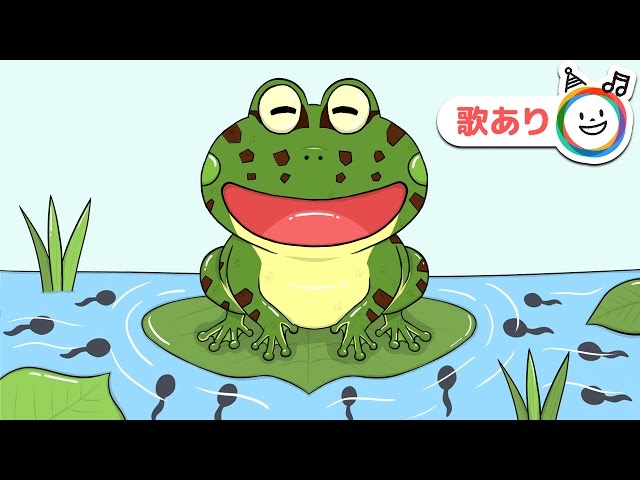
Speaking of August, it’s the height of the season when the tadpoles that hatched in spring have all turned into frogs and are hopping about! Among frogs, there are even some curious species whose tadpoles are huge, but become small once they turn into frogs.
Try singing “Otamajakushi wa Kaeru no Ko” and see for yourself!

echo gameSakushi: Ouchi Yasuyuki / Sakkyoku: Wakatsuki Akito

As the title “Echo Play” suggests, this is a fun song where you continue singing in a round after the lead singer, like an echo.
Because you can sing with the same rhythm, pitch, and lyrics as the initial melody, it’s friendly even for children singing it for the first time.
It might be charming to sing it in the mountains in summer.
It’s a lively children’s song that everyone can enjoy singing together.
The frog’s fluteSakushi: Saitō Nobuo / Sakkyoku: Kainuma Minoru

“Kaeru no Fue” (The Frog’s Flute) is a Japanese children’s song that premiered on NHK radio in August 1946 (Showa 21).
The line “Let’s go home because the crow is cawing” actually came after “Let’s go home because the frogs are croaking” in song history.
It makes me realize just how closely frogs have long been connected with children’s lives and play.
The chorus of frogs echoing against the backdrop of a summer sunset may be a uniquely Japanese and deeply cherished sentiment.
We are children of the sea.Monbushō shōka

“Ware wa Umi no Ko” often plays in commercials during the summer, doesn’t it? While the children’s song “Umi” mainly highlights the ocean’s vastness and gentleness, “Ware wa Umi no Ko,” which also sings of the sea, brings its power to the forefront.
You can almost see the spray of the waves.
Somen, nyumen, chilled somen

When it comes to summer foods, the first thing that comes to mind is probably sōmen noodles.
Chilled sōmen—and nagashi-sōmen, with its playful element of catching noodles flowing in water—are quintessential symbols of summer.
This hand-play song that uses sōmen has been sung since long ago, but the lyrics are nonsensical and have a mysterious feel.
Pinching, rubbing, and tickling appeal to young children’s senses and make for a fun way to enjoy physical bonding.
Be sure to sing it while having fun with your child or friends.

One, two, three

Let me introduce the upbeat song “One, Two, Three.” The lyrics feature animals like frogs and penguins.
It might be fun to change the way you jump for each animal, adding variety to your movements as you dance.
As you sing, it turns into an energizing song that fills you with hope and courage for the future.
Try dancing and enjoying it while imagining a bright future! Adding some hand claps might make it even more fun.
