

Children’s Songs You Can Sing in August: Summer-Friendly Kids’ Songs and Fingerplay Rhymes


Here are nursery rhymes and fingerplay songs for August that you can sing and enjoy! We’ve got a full lineup: songs that capture the fun of summer, tunes about tasty foods you’ll crave in the heat, and songs perfect for August events.
We also introduce tracks you can enjoy with fingerplays and dances, so try using them for indoor play during the sweltering summer or for activities in childcare settings.
Many are classic summer songs that have been passed down for generations, making them perfect for family time at home as well.
Teach children summer songs and enjoy a delightful time together while reminiscing about the past!
- [Childcare] Summer songs: Full of fun! Summer nursery rhymes & finger-play songs
- [Sea Nursery Rhymes] Fun children's songs themed around the sea
- [Tanabata Children's Songs] Fun hand-play songs and a nostalgic collection of traditional nursery rhymes and folk songs
- Nursery rhymes I want to sing in July: fun summer songs
- [For Seniors] Recommended Summer Songs for August [2026]
- [August Songs] Carefully selected masterpieces, classics, and the latest hits you’ll want to listen to in midsummer!
- [Children’s Songs for June] Fun finger-play songs and traditional nursery rhymes perfect for the rainy season
- Children’s songs, folk songs, and nursery rhymes about insects
- Recommended Summer Songs for Elementary School Kids | A Pick of Refreshing, Popular Tracks!
- [Childcare] Recommended songs and nursery rhymes for November: Fun autumn fingerplay songs
- [For Seniors in Their 80s] Recommended Summer Songs: From Enka and School Songs to Folk Songs
- Recommended summer songs for kids: Popular J-POP/Japanese hits [2026]
- Kids go wild! Popular hand games and fun sing-alongs
[Children’s Songs You Can Sing in August] Summer Fun Kids’ Songs & Hand-Play Songs (21–30)
Ebi-Kanix Bon DanceKeroponzu
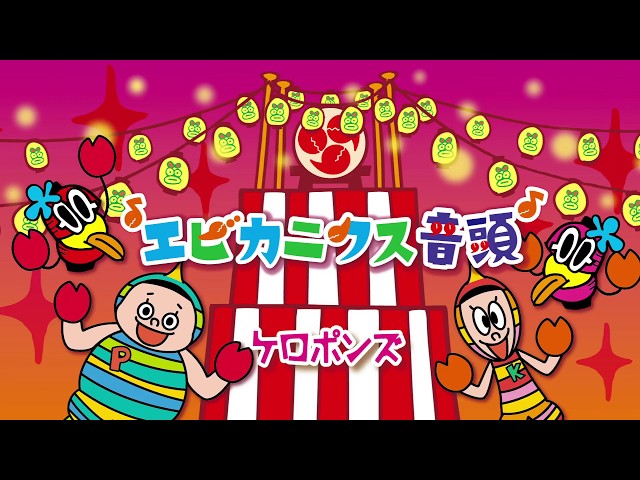
Keropons is a duo known for creating many popular children’s play songs, and their signature piece is “Ebi Kanix.” Originally, it was a track that incorporated aerobics-like movements, but this “Ebi Kanix Ondo” is an arrangement of that song into an ondo rhythm perfect for Bon Odori.
Bon Odori is a summer tradition, and many small children may not be very familiar with it, but with this song, they’ll likely enjoy dancing along.
Let’s draw a picture in the blue sky.Sakushi: Kazumi Kazuki / Sakkyoku: Hajime Kamishiba

A children’s song composed by Hajime Kamishiba and Kazumi Kazuki, “Let’s Paint a Picture in the Blue Sky.” Compared to other children’s songs, it’s not very well-known, but our research suggests that it’s also favored by adults.
That’s because, at first glance, the lyrics convey a bright, forward-looking message, yet the melody features occasional minor chords.
The contrast between the cheerful lyrics and the wistful melody creates a unique atmosphere.
That gap may be one reason it’s popular among adults.
Hearing this, you might think it’s aimed at grown-ups, but the vocal line is crafted with the simplicity typical of children’s songs, so even small children can enjoy singing it.

Children’s Songs You Can Sing in August: Summer Fun Kids’ Songs & Hand-Play Songs (31–40)
Oh, oops.Sakushi: Sakata Hiroo / Sakkyoku: Yuyama Akira

The song’s thumping, bouncy rhythm is intriguing, and even from the title you can imagine the sweltering, sweaty heat of midsummer.
There are many children’s songs about summer, but this one stands out for its playful, rhyme-heavy word choices that feel almost like rap, and its rhythmic feel makes it fun to sing.
It’s a track you’ll want to belt out together, with feeling, on an unbearably hot midsummer day.

To the Sun in the Palm of Your Hand

Since it was featured on Minna no Uta in 1962, “Tenohira wo Taiyou ni” has been beloved by many children.
The lyrics were written by Takashi Yanase, with the music crafted by Mariko Miyagi.
The words, which portray the mystery and vitality of life, are sure to energize both singers and listeners.
Another charm of the song is how easy it is to add simple choreography that matches the lyrics, such as raising your hands or mimicking animals.
Adding movement while singing can help you immerse yourself even more in the world of the song.

sunflowerSakushi: Kadokura Satoshi / Sakkyoku: Sasaki Nobutsuna

One of the symbols of summer is the sunflower.
The song “Himawari” sings about its beautiful appearance.
It was written by Satoshi Kadokura, with music composed by Nobutsuna Sasaki.
The first half of the song depicts sunflowers in the daytime, while the second half portrays them at night.
The lyrics, which compare sunflowers to other summery things, spark the imagination.
Try singing while thinking, “What kind of scene is this part describing?” The somewhat wistful ending that evokes the close of summer is also part of its charm.
Yah-ho-ho! Summer vacation!sakushi: itou akira / sakkyoku: kobayashi asei

When we were kids, the thing we most looked forward to as summer approached was probably summer vacation.
The children’s song “Yah-ho-ho! Summer Vacation” captures those feelings.
Its lyrics convey the excitement of a long break—missing your friends for a while, but bursting with things to look forward to.
It’s a perfect song to sing while imagining classic summer fun like trips, pools, shaved ice, and fireworks.
Keep singing it over and over until summer vacation ends and the new term begins!

Banana Parent and ChildSakushi: Seki Kazuo / Sakkyoku: Fukuda Kazuha

Banana songs really do suit summer, don’t they? Here’s a popular tune that’s been around since it aired on NHK’s “Okaasan to Issho” in 1982.
The lyrics are like a tongue twister, repeated while gradually speeding up, so it’s a song you can sing like a game.
What’s more, although it starts in 4/4 time, it ends with the tongue-twister section in 3/4, making it a tricky, high-difficulty piece.
If you listen to this song from a young age—before you even have much concept of time signatures—it might just help you in your future musical life!
