

[Practice!] Practice Songs for Beginner Bassists During Spring Break


If you’re a student bassist, I bet many of you are thinking of using spring break to get in a lot of bass practice.
If you’re in a light music club, you’ll be getting new juniors, and if you’re starting as a freshman in April, you’ll make new friends—so you want to show them how cool you can play the bass, right? In this article, we’ll introduce a bunch of recommended songs for those of you who want to practice bass intensively over spring break! We’ve got everything from very easy pieces to slightly more challenging tracks, so definitely give them a try and level up!
- Practice songs for beginner electric bass players
- [2026] Easy J-Pop and Japanese Rock Songs Recommended for Beginner Bassists
- Master one song over summer break! Recommended practice songs to level up your bass
- Recommended songs for beginner bands: simple and crowd-pleasing tracks.
- [Winter Break Intensive Practice] A roundup of easy cover songs recommended for beginner bands
- Recommended songs for beginner band members by instrument
- Packed with slap groove vibes! A collection of songs with cool bass
- [Rock] Easy Band-Style Vocaloid Songs for Beginners [Simple]
- [Low End] A Collection of Japanese Songs Featuring Standout Bass Solos [2026]
- Practice Pieces for Rock Beginners
- [For Piano Beginners] Play Right Now with Free Sheet Music! A Roundup of Recommended Practice Pieces
- Love at first sight with a bass girl! The female bassist of a popular band
- Western songs with cool bass lines: classic and popular tracks recommended for bassists
[Practice!] Practice Songs for Beginner Bassists during Spring Break (51–60)
Kokoro-eroodo obu mejyaa

Let’s put the fine techniques aside for now and focus on being able to play through one full song! This track is by the rock band Road of Major, released as a single in 2004.
It became a hit after being selected as the opening theme for the anime Major: 1st Season.
The passionate sound arrangement really highlights vocalist Kenichi Kitagawa’s clear, expansive voice.
The bass is mostly root notes, so once you memorize what’s coming next, you should be able to play it without rushing.
Just be careful in the interlude section not to carry over the momentum from earlier parts.

NOT FOUNDMr.Children

The bass is essentially meant to be played in sync with the drum rhythm without mistakes.
You don’t need any extra chord progressions.
This song serves as a fundamental example of that approach.
If you master it, I believe you’ll have a solid foundation.
It’s also good to play single-note glissandos carefully.
Dan Dan Kokoro HikaretekuFIELD OF VIEW
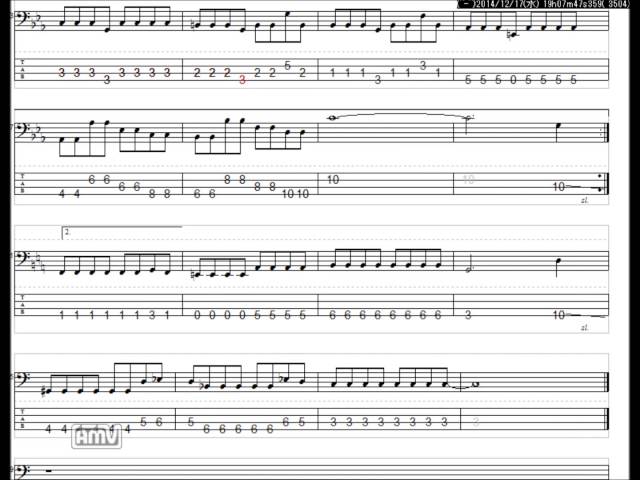
It’s the theme song from Dragon Ball GT.
It was a huge hit at the time.
The song was written by Izumi Sakai from ZARD, and there’s also an Izumi Sakai version.
It’s a piece I’d love for you to play while singing.
J-pop has simple bass progressions, so it’s great for practice.
Let’s practice J-pop!
GIVE ME FIVE !AKB48

It’s quite common for idol group songs to be performed by studio musicians and feature advanced playing techniques.
However, AKB48’s “GIVE ME FIVE!” is arranged like a band-style ensemble, and aside from the horn section, it’s a great pick as a song you can tackle with a straightforward rock band setup.
It’s also known that the selected members practiced extensively and actually performed it as a live band.
As for the bass, the basic approach is root notes, with a slightly more active phrase in the intro—making it a perfect level of difficulty for practice.
Beginner bassists should definitely give it a try!

[Practice!] Practice Songs for Beginning Bassists over Spring Break (61–70)
SchoolChilli Beans.

When it comes to a trio that handles vocals, instruments, and songwriting across the board—and has made a strong mark on the Reiwa-era Japanese music scene with successes like a sold-out Nippon Budokan show and numerous tie-ins—it’s Chilli Beans.
Their songs are hugely popular, especially among younger listeners, and many require a high level of musicianship.
That might make beginners feel hesitant to dive in, but from a bass perspective, School is a relatively approachable track worth recommending.
It’s a beloved hit with relatable lyrics and irresistibly catchy melodies, and its bass line—featuring frequent use of higher positions—is a great challenge for anyone looking to break out of the beginner stage.
Windy DayELLEGARDEN

ELLEGARDEN enjoyed immense popularity in Japan’s rock scene of the 2000s.
After becoming a legend during their hiatus, they announced their first return in ten years in 2018, and since then they’ve continued to run at the forefront of the scene as a top band that transcends generations.
Their songs remain hugely popular even today in the Reiwa era as covers at school festivals and the like, and this time we’re introducing an early classic, “Kaze no Hi,” as a track that’s easy for beginner bassists to take on.
The moving Japanese lyrics and melody, along with a sound that’s aggressive yet tinged with melancholy, resonate not only with younger listeners but also with people in their 30s and 40s.
From a bass-playing perspective, it’s fundamentally rooted in playing the root notes, while incorporating melodic phrases that use slides and other techniques throughout, making it a great piece for beginner bassists to study arrangement as well.
TRUE BLUELUNA SEA

Formed in 1989, LUNA SEA is a band that created numerous legends in the 1990s music scene, transcending the so-called visual kei framework.
Although they disbanded in 2000, after regrouping they gained many fans among younger generations as well, and today they are a living legend, earning overwhelming support not only from music fans but also from fellow musicians.
J, LUNA SEA’s bassist, is one of the figures who shattered the stereotypical image of the bassist as “somewhat a subdued position,” and even now in the Reiwa era, there are surely many people who started playing bass because they admire him.
J’s bass playing can either remain firmly supportive as the foundation or move around like a lead instrument.
For beginner bassists, the recommended song is the classic TRUE BLUE.
Composed by J himself, it’s an aggressive, uptempo track characteristic of his style, yet the bass line is largely built on root notes and kept relatively simple.
It’s a great piece to challenge yourself with to get accustomed to fast tempos.
For pick players, it also serves as practice for precise alternate picking, and in the accent hits, be sure to lock in tightly with the drums for a crisp, tight performance.