

Games using beanbags (otedama)

Let me introduce a game using beanbags (otedama)!
Otedama are small cloth bags filled with azuki beans or rice.
In Japan, they’ve long been loved as children’s playthings.
Many of you have probably tried the game where you toss several otedama into the air and keep them going without dropping any, right?
In this article, we’ll introduce otedama tricks, traditional children’s songs you can play along with, and games using otedama that everyone from kids to adults can enjoy.
Try adding it to your everyday playtime!
- [For Seniors] Liven Up Your Day Service! Fun Beanbag Toss Activity
- [Hand Play] Popular with kids! A collection of trendy hand-play songs and nostalgic traditional children’s songs
- Useful for childcare! Today’s recommended recreational activities, including fingerplay and games!
- Traditional Games: Fun Old-Time Play. Popular Activities Useful in Childcare
- Kids go wild! Popular hand games and fun sing-alongs
- [Children’s Club] Easy and fun indoor games. Exciting party games
- [For Seniors] Simple Recreational Activities You Can Enjoy While Seated
- [Nursery/Kindergarten] Make Your Sports Day a Hit! A Collection of Fun Beanbag Toss Variations
- Get excited! A list of popular and fun hand games that captivate children
- Handkerchief and Towel Play! A Collection of Fun Play Ideas
- Popular hand games and hand game songs for toddlers and children! Full of ideas for childcare/early childhood education.
- Play ideas kids can enjoy from 1st to 6th grade [indoors & outdoors]
- A collection of simple indoor recreational games
Games Using Beanbags (21–30)
Children’s song “Gicchō Rice-Pounding”
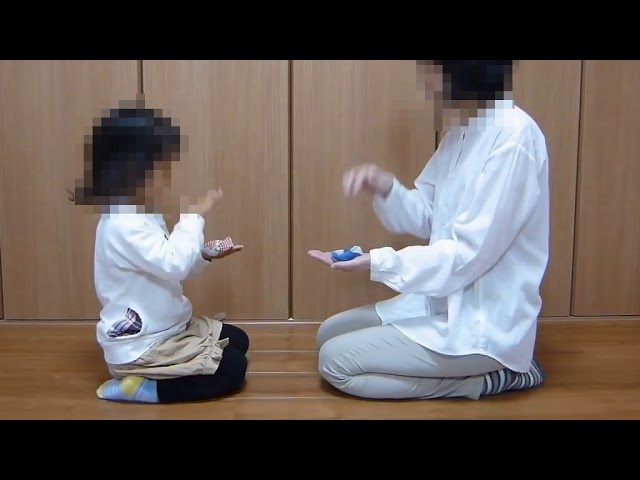
Imagine the beanbags as rice, and while singing, pat them with your hands like pounding mochi.
After that, raise a beanbag high with one hand and get the other hand ready as a catch tray.
At the right moment in the song, release the hand holding the beanbag—if you catch it cleanly, you succeed.
These beanbags make a satisfying shaka-shaka sound, feel great to the touch, and are super satisfying to grab.
You can play solo or with a partner, so give it a try!
Nursery rhyme “Otebushi Tebushi”

Play along with the nursery rhyme “Otebushi Tebushi.” When you play this game, prepare a beanbag small enough to fit in both hands.
The rules are very simple: while singing, hide the beanbag in your hands and shake them back and forth.
At the end, hide the beanbag in one of your hands and have the other person guess which hand it’s in.
Kids love guessing games, so they’re sure to have a great time!

Goodbye, ankoro mochi.

“Sayonara Ankoromochi” is a simple beanbag game that people of all ages—from children to seniors—can enjoy.
If you don’t have a beanbag, you can substitute a handkerchief rolled into a ball.
While singing “Sayonara ankoromochi,” pass the beanbag back and forth between your right hand and left hand.
While chanting “Mata kinako,” place the beanbag on top of your head, and then, as everyone says “Konnichiwa” and bows, the beanbags plop-plop down from their heads.
It’s an irresistibly cute, soothing game, so enjoy it on many different occasions.

Bake some rice crackers.

Here’s a children’s hand game song you can play with one beanbag called “Let’s Toast a Rice Cracker.” You pretend the beanbag is a rice cracker, and play at toasting it and brushing on soy sauce or sake.
It’s very simple, so a child around two years old can join in.
You can brush on anything you like instead of soy sauce—try jam or chocolate, or whatever your child wants to use.
Once your rice cracker is ready, pretend to munch it up.
And don’t forget to finish with a polite “Thank you for the meal!”
Beanbag Treasure Hunt

This is a game where you hide a beanbag under one of several overturned paper cups and guess which one it’s in.
Since you only need a tabletop and minimal preparation, it’s enjoyable for a wide range of ages, from children to seniors.
You can play head-to-head by taking turns lifting cups, or compete to see who can find the beanbag hidden under the cups placed in front of each player first.
It’s nice that the simple rules allow for many variations.
By increasing the difficulty—such as by re-covering cups after they’ve been opened—it also becomes a memory-training activity.
It’s an easy-to-play treasure-hunt game.

Gengo Mekaka-sama

In the nursery song “Gengome Kakasama,” you play with two beanbags.
The rules are simple: toss the beanbags you’re holding in each hand up to the rhythm of the song and catch them.
That said, when you catch them, you must use the opposite hand from the one that tossed the beanbag, which makes it a bit challenging.
Also, on the final beat of the song, you catch the beanbag on the back of your hand after throwing it, so be sure to practice that well.
The trick is to straighten your fingers to keep the back of your hand flat.
First, practice tossing the beanbags in time with the rhythm.
The very first is Ichinomiya.

There are many kinds of counting songs among children’s folk songs, and the ones people are familiar with likely differ by region.
“Ichiban hajime wa Ichi no Miya” is one such counting song.
As you sing, you rhythmically toss beanbags.
Children can usually learn to do it with practice from about elementary school age.
Since it’s quite a long counting song, it’s fun to see how long you can keep the beanbags going! Beanbag play doesn’t just use your hands—it also helps you pick up the rhythm.
Once you learn it, you’ll find yourself absorbed in the game.