

Masterpieces of the bolero. Recommended popular pieces in bolero form and outstanding performances.

When people hear “Boléro,” most think of the piece by the French composer Maurice Ravel, but in fact it is also a genre of dance music with Spanish origins.
Of course, Ravel’s Boléro is the most famous and has become synonymous with the genre, influencing many composers.
For example, the theme of the period drama Mito Kōmon uses the bolero rhythm, and the style of building grandeur by repeating the same melody with evolving arrangements is used to great effect in Time to Say Goodbye and in the orchestral arrangement of Hikari from Kingdom Hearts by Hikaru Utada.
Given the bolero’s powerful influence, you might be surprised to find that some of these pieces are boleros too!
We’ve gathered such works and outstanding performances by various artists.
By all means, listen beyond just Ravel’s Boléro and discover other pieces in this vein.
- Introducing Maurice Ravel’s Famous and Representative Works
- Cool classical masterpieces. Recommended classical music.
- Rachmaninoff’s masterpieces. Recommended pieces by Rachmaninoff.
- Masterpieces of Ballet Music: Introducing Classic Favorites
- [Classic] Masterpieces of Contemporary Music
- Vivaldi’s masterpiece. Popular classical music.
- Handel’s Masterpieces | A Comprehensive Introduction to His Popular Works
- Berlioz’s famous piece. Popular classical music.
- Gabriel Fauré | Introduction to His Famous and Representative Works
- Debussy’s masterpiece. Popular classical music.
- Jacques Ibert Popular Song Ranking [2026]
- Classical Masterpieces: Recommended Works You Should Hear at Least Once
- A masterpiece by Alexander Borodin. Popular classical music.
A masterpiece of bolero. Recommended popular pieces in bolero form and outstanding performances (21–30)
「Bolero」Maurice RavelMaurice Ravel/Fransu Kokkuri Kagengakudan Rorin Mazeeru shiki

Maurice Ravel’s ballet music Boléro by the French composer.
While an unchanging triple-meter rhythm is maintained throughout, two types of melodies are repeated and layered as the instrumentation changes, creating a distinctive sound structure reminiscent of ocean waves.
Premiered in 1928, it remains widely loved not only by ballet enthusiasts but as a classic masterpiece.
Boléro can differ greatly depending on the performer.
First, we will introduce Ravel’s Boléro in various interpretations by different performers, followed by related works.
Here is a performance by the Orchestre National de France under the baton of Lorin Maazel—renowned for his delicate yet dynamic conducting that evokes vast landscapes—recorded in September 1981.
..
「Bolero」Maurice RavelMaurice Ravel/berurin firuhāmonī kangengakudan heruberuto fon karayan shiki

The exhilaration that Boléro brings to its audience is known to be exceptionally high—especially compared to other works—thanks to its regular repetition of phrases, its steady rhythmic recurrence, and the finely crafted design of the overall sound.
This is powerfully and dynamically performed by the Berlin Philharmonic under Herbert von Karajan in the New Year’s Eve Concert 1985.
Please enjoy this performance from the very heartland of classical music: December 31, 1985, at the Berlin Philharmonie.
「Bolero」Maurice RavelMaurice Ravel/Pari Kangengakudan Kurisutofo Esshenbaha shiki
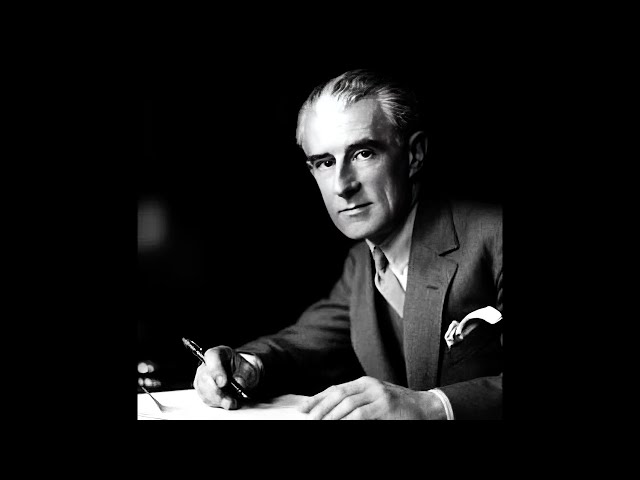
There are many different kinds of conductors, each offering performances that make full use of their individuality.
Christoph Eschenbach is a German pianist and conductor.
He has served simultaneously as music director for two top-tier orchestras—The Philadelphia Orchestra in the United States and the Orchestre de Paris in France—and at one point even led three ensembles concurrently during his final season with the NDR Symphony Orchestra, making him a highly popular figure in the heartlands of classical music.
When he visited Japan for the 2007 NHK Music Festival, he delivered many outstanding performances, and the final piece he chose was Boléro.
It’s a must-hear rendition.
Personally, I would also highly recommend the orchestral version of La Valse, which was performed alongside it—an exceptional performance.
「Bolero」Maurice RavelMaurice Ravel/Tomita Isao

Isao Tomita is both a great Japanese arranger and a synthesizer performer.
Born in 1932, he gained international recognition from a very young age as a synthesizer player and a pioneering composer of electronic music, earning high praise and popularity overseas from early on.
This work dates from 1979.
As is true of Tomita’s output in general, his use of timbre and the expressive nuance of each individual note embody both an artistic sensibility and a highly sophisticated understanding and realization of techniques that evoke vast worlds in sound.
In this Boléro as well, it is far more than a simple transposition of Ravel’s piece onto synthesizers; an entirely different artistic dimension is added.
It presents the world of Ravel’s Boléro in a way that is completely unlike the classical Boléro.
「Bolero」Maurice RavelTokyo Firuhāmonī Kōkyō Gakudan Ōtomo Naoto Shiki

Originally composed for the Russian ballerina Ida Rubinstein.
Its structure sustains an extremely distinctive, steady rhythm throughout.
On stage, this style is rarely adopted; especially in ballet, it’s common to layer highly complex rhythms and melodies to infuse the music with emotion.
In that sense, this piece turns its back on such conventions and feels strikingly mechanical.
However, simply by changing instruments as they enter in a kind of pursuit, and by varying the combinations of overlapping instruments, remarkable depth and expression emerge—making it a truly masterful and technically ingenious work.
This refers to the much-remembered performance at the end of 2015, when Sylvie Guillem—undoubtedly at the pinnacle among the world’s male ballerinas—danced Béjart’s choreography to Boléro at the Tokyu Silvester Concert, a year-end countdown tradition, as the final stage of her life.