

[Piano Recital] Recommended for Boys! A Curated Selection of Cool, Impressive, and Popular Pieces


Speaking of piano lessons, there used to be an image that they were for girls, but these days—perhaps due to the influence of video sites, social media, and the street piano trend—more and more boys want to learn piano as well.
As a result, many parents are enrolling their sons with the hope that “I want my son to be able to play too!” And one milestone they’ll almost certainly encounter is the piano recital.
In this article, we introduce stylish, stage-ready pieces that are perfect for boys as candidate pieces for the recital that every child taking piano lessons is bound to experience.
Why not pick out some possibilities early so your child can answer when the teacher asks, “Is there anything you’d like to play?”
- [For Elementary School Students] Brilliant, Showy Masterpieces That Sound Impressive at Piano Recitals
- [Intermediate Level] Cool Piano Pieces You Can Play [Great for Recitals Too]
- [For Piano Recitals] Simple yet Cool Classical Pieces
- [Piano Recital] Perfect Pieces for Middle Schoolers! A Curated Selection of Impressive, Audience-Pleasing Works
- [For 6-year-olds] A curated selection of standout pieces for piano recitals!
- It’s so cool if you can play these on the piano! A selection of irresistibly charming masterpieces.
- Piano Masterpieces: Surprisingly Easy Despite Sounding Difficult!? A Curated Selection Perfect for Recitals
- [Popular Piano] Capture the Audience’s Attention! Recommended Pop Songs That Shine at Piano Recitals
- [Piano Recital] Carefully Selected Classical Pieces Recommended for Upper Elementary School Students
- [For Intermediate Players] Challenge Yourself! Recommended Masterpieces That Shine at Piano Recitals
- [Beginner] Recommended Piano Pieces to Play at a Recital
- [Classical Music] All pieces under 3 minutes! A collection of short and cool piano pieces
- [For 5-year-olds] A curated selection of recommended pieces for a piano recital!
[Piano Recital] Recommended for Boys! A Curated Selection of Cool, Impressive Crowd-Pleasers (21–30)
Jazz PreludeWilliam Gillock

Jazz Prelude, included in William Gillock’s piano collection “Jazz Style Piano,” is, as its title suggests, a very cool piece with a jazzy vibe.
Jazz rhythms might feel unfamiliar at first, but once you get the hang of them, they can be addictive! Unlike standard classical repertoire, this piece has a stylish, mature atmosphere that could make a big impact at a recital.
It’s the perfect choice for a boy who wants to play something with a different feel from everyone else!

Eight Concert Etudes: PreludeNikolai Girshevich Kapustin

This is the first piece from the Concert Etudes composed by Nikolai Girshevich Kapustin.
Born in Ukraine in 1937, Kapustin is known for his distinctive style that fuses classical music with jazz.
This work is built on an eight-beat groove infused with Latin rhythms, resulting in a vibrant piece that evokes the streets of South America.
Its rhythmic, sunny musicality stands out, and the bursts of continuous sixteenth notes create a richness of sound that feels far beyond what a single piano could produce.
Highly recommended for those who want to enjoy dazzling pianistic virtuosity or are interested in the fusion of classical and jazz.
La CampanellaFranz Liszt
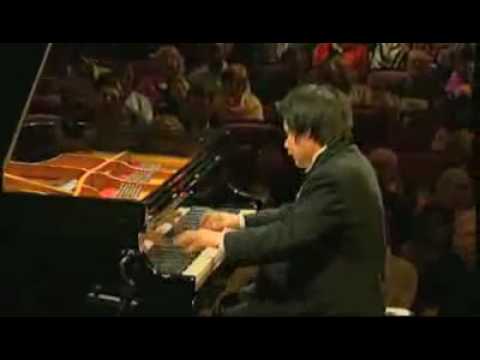
This is a virtuosic piano piece composed by the world-renowned Romantic composer Franz Liszt.
Based on Paganini’s violin concerto, Liszt wrote it when he was 21 years old.
The title means “little bell.” Its high-register melody evoking the sound of bells is striking, and the piece is known for pushing the technical limits of the piano.
Liszt pursued supreme virtuosity in this work, driven by his goal of becoming the “Paganini of the piano.” Featuring wide leaps, rapid trills, and other demanding techniques, it is a notoriously difficult piece, but its performance has a powerful impact that overwhelms audiences.
It’s a masterpiece that fully brings out the piano’s allure, and it would look especially cool when played by a boy.
knightDmitri Kabalevsky

The Knight by Russian composer Dmitry Kabalevsky—who wrote many pieces for children—is a sharp, stylish piece that evokes the brave figure of a knight.
The piece is divided into three sections: the melody starts in the left hand, moves to the right hand in the middle section, and returns to the left hand for the finale.
Since beginner piano scores often lock you into “melody in the right hand, accompaniment in the left,” choosing a piece where both hands take the lead can be a bold and highly recommended choice for a recital!
Turkish MarchWolfgang Amadeus Mozart

This melody by Mozart that everyone knows is actually the third movement of the landmark Piano Sonata No.
11 in A major, K.
331.
The piece embodies the “Turkish style” music that swept Europe in the late 18th century, brimming with exotic flair—one can almost picture a military band marching boldly by.
Its glittering, powerful character is sure to resonate with elementary and middle school students who look up to adulthood.
It even became a hot topic as a commercial jingle in 1985.
While the tune is familiar, mastering the precise, meticulously crafted lines so characteristic of Mozart is a rewarding challenge.
It’s perfect for children who want to be the star of the recital with a cool piece—the sense of accomplishment when you finish playing it is second to none!
25 Etudes, Op. 100 No. 20 “Tarantella”Johann Burgmüller

Burgmüller’s 25 Etudes Op.
100 is a famous collection that every pianist inevitably encounters in their studies.
No.
20, “Tarantella,” is a vigorous dance primarily in 6/8 or sometimes 3/8 time.
In particular, the eighth rest between the two eighth notes starting at measure 17 must be neither too long nor too short—an exquisite balance is required.
This piece helps develop delicate touch and precise control of tone, so why not tackle it as a recital piece to take your playing to the next level?

Polonaise héroïque, Op. 53Frederic Chopin

Composed in 1842 by Frédéric Chopin, a leading composer of the 19th-century Romantic era, this brilliant piano solo adopts the form of the Polish national dance, the polonaise.
Its powerful melody, imbued with deep love for his homeland and a longing for independence, together with the highly demanding virtuosity required of the performer, instills courage and hope in listeners.
Following a solemn introduction, a radiant main theme unfolds, and the middle section is marked by striking left-hand octave repetitions.
Symbolizing Chopin’s patriotism and the national spirit of Poland, this work can be called a cool, crowd-pleasing masterpiece of classical music—perfect for boys learning the piano.