

Cello Masterpieces: A comprehensive introduction to exquisite classical works that let you savor its profound timbre

The cello is said to resemble the male voice and can be played across a wide range of four to five octaves.
Many people love the cello’s soft, warm tone with its rich depth.
This time, we’re spotlighting famous pieces for the cello!
We’ll introduce a broad selection, from the calm, measured works of the Baroque era to modern and contemporary pieces that mix a variety of techniques.
Why not spend a peaceful night drifting off to sleep, or a refreshing morning waking up, accompanied by the comforting sound of the cello?
- [Masterpiece Classics] A special showcase of gem-like masterpieces so beautiful they’ll move you to tears
- [Quartet] Masterpieces and Popular Pieces for String Quartet
- Classical Masterpieces: Recommended Works You Should Hear at Least Once
- Cool classical masterpieces. Recommended classical music.
- A poignant classic masterpiece. Recommended classical music.
- Brahms's masterpieces. Popular classical music.
- Sweet, gentle tones and resonance: A selection of enchanting classical guitar masterpieces
- Timelessly beautiful classical masterpieces. Recommended classical music.
- Rachmaninoff’s masterpieces. Recommended pieces by Rachmaninoff.
- [Violin] A curated selection of beloved classic masterpieces and popular pieces that continue to be cherished across eras
- Today's Classics: Recommended classical music and great performances to listen to today
- Oskar Merikanto Popular Song Rankings [2026]
- Masterpieces of the bolero. Recommended popular pieces in bolero form and outstanding performances.
Cello Masterpieces: A Comprehensive Introduction to Exquisite Classical Works Showcasing Its Profound Tone (11–20)
Cello Concerto in A minor, Op. 129Robert Schumann

It is Robert Schumann’s Cello Concerto in A minor, Op.
129.
It consists of three movements: I.
Nicht zu schnell, II.
Langsam, and III.
Sehr lebhaft.
Although there are relatively few cello concertos, this one stands out for its structure, in which all movements are performed without a break, and it is a work frequently chosen by cellists.
Cello Concerto No. 1 in A minor, Op. 33Camille Saint-Saëns
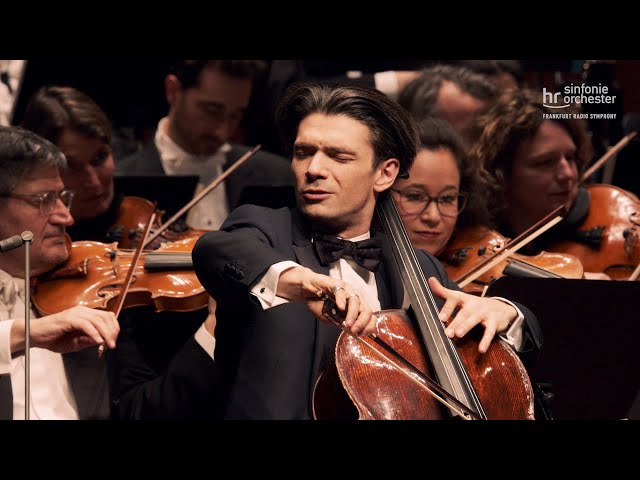
Camille Saint-Saëns’s Cello Concerto No.
1 in A minor, Op.
33, which allows listeners to revel in the cello’s rich timbre, is a highly acclaimed work that has captivated many with its beauty and opened up new possibilities for French music.
The moment when the cello solo emerges from within the orchestra’s harmonies is especially exquisite, and the skillful transformation of the main theme invites a range of emotional imagery.
The seamlessly connected passages, flowing from one melody to the next, are ideal for experiencing the profound depth of the cello’s music.
Cello Concerto in E minor, Op. 85Edward Elgar

Edward Elgar’s late masterpiece, the Cello Concerto in E minor, Op.
85, is said to have been written while the composer was bedridden.
From the searing cello solo that opens the first movement, you can sense a composer confined by illness and shadowed by the Great War, striving to pour the instrument’s full expressive power into a single work.
It’s a piece to listen to when you want to linger in sentiment or quiet your mind—an invitation to sit with your feelings and listen deeply.
Elegy in C minor, Op. 24Gabriel Fauré

Élégie in C minor, Op.
24, is a work for cello and piano composed in 1880 by the French composer Gabriel Fauré.
Known as a masterpiece of the cello repertoire, it is a work of profound emotional depth.
From its quietly unfolding, narrative-rich opening melody to the sudden climax that seems to portray the poignancy of lost love, it powerfully moves the listener.
Premiered by Jules Loëb, who helped probe its deeper layers, this piece showcases the full expressive range of the cello.
Symphonic Concerto in E minor, Op. 125, for Cello and OrchestraSergei Prokofiev

It is Sergei Prokofiev’s Symphonic Concerto in E minor, Op.
125, a work for cello and orchestra composed between 1951 and 1952.
It is regarded as a revision of his Cello Concerto No.
1, Op.
58.
The renowned cellist Mstislav Rostropovich, a leading figure of the latter half of the 20th century from the former Soviet Union, assisted with the revision, gave the premiere, and was the dedicatee of the work.
Variations on a Rococo Theme in A major, Op. 33Pyotr Tchaikovsky

It is “Variations on a Rococo Theme in A major, Op.
33,” composed by Pyotr Ilyich Tchaikovsky.
Written in A major for cello and orchestra, it is also sometimes translated as “Variations on a Rococo-Style Theme.” Consciously evoking the 18th century, when the Rococo style flourished, it was conceived for a small orchestral ensemble.
Cello Masterpieces: A Showcase of Exquisite Classical Works to Savor Its Profound Tones (21–30)
Cello Sonata in G minor, Op. 19Sergei Rachmaninov

Sergei Rachmaninoff’s Cello Sonata in G minor, Op.
19.
Composed in 1901, this four-movement sonata for cello and piano assigns a major role to the piano.
The premiere took place in Moscow, Russia, in November 1901, with cellist Anatoliy Brandukov performing on cello and the composer himself at the piano.