

[For Kids] Trivia Quiz & Fun Facts About Rain

For children, rain can feel like a bundle of gloom—it can cause events like field trips and sports days to be canceled, keep them from playing outside, and mean they have to carry extra things like umbrellas.
That said, rain also has many good sides: it helps crops grow and cleans the air.
In this article, we’ll introduce fun facts and trivia about rain in the form of a quiz—perfect for kids who don’t like rain to learn something new.
It’s an easy, child-friendly multiple-choice quiz, so feel free to give it a try when you have to spend a rainy day at home!
- Learn to Love the Rain! Fun Facts & Trivia Quiz about the Rainy Season for Kids
- Get Interested in Rain! A Collection of Trivia and Fun Facts
- Rainy season trivia roundup: fun facts you'll want to share with someone
- [For Kids] Fun Summer Trivia Quiz & Facts
- Trivia quiz with useful tips to know: fun facts that come in handy at school or at home [for kids]
- Make weather forecasts more fun! Trivia and fun facts about the weather
- [Trivia] Did You Know? A Collection of Weather Proverb Quizzes!
- A multiple-choice quiz with three options for upper elementary students. Questions you can enjoy between classes or at home.
- [Play Right Away!] Multiple-Choice Quiz Questions for Lower-Grade Elementary School Students
- A multiple-choice quiz with three options for upper elementary students. Fun questions that build thinking skills.
- Learn while having fun! Ocean Trivia Quiz & Fun Facts for Kids
- For trivia-loving kids! A recommended collection of scary trivia and fun fact quiz questions
- Make your summer festival even more fun! Trivia quizzes and fun facts for kids
[For Kids] Trivia Quiz & Fun Facts About Rain (11–20)
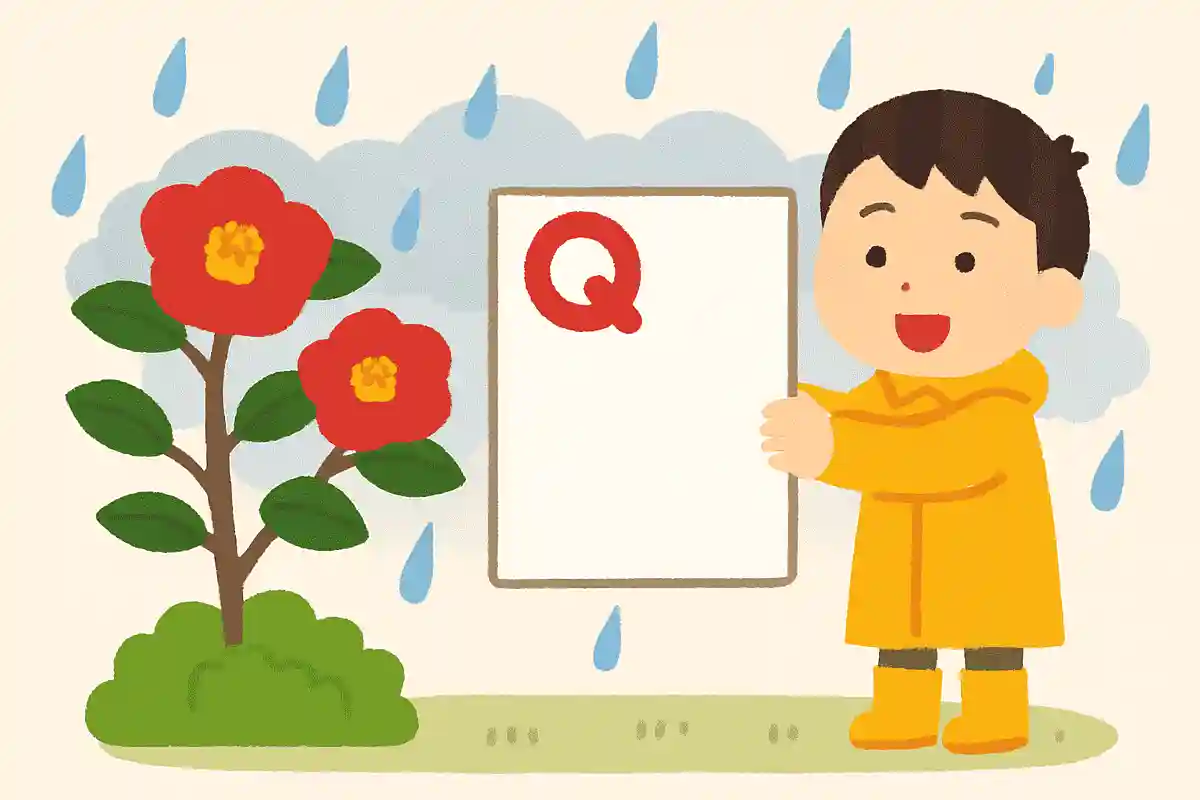
What time of year does the ‘sasanqua rain’ (mountain camellia rainy season) refer to?
- Mid-January to mid-February
- early September to early October
- late November to early December
See the answer
late November to early December
Sazanka-tsuyu refers to a spell of prolonged rain seen in Japan from late November to early December. The name comes from the fact that the flowers of the sasanqua camellia begin to bloom during this period. Like the summer rainy season (tsuyu), it is characterized by continuous rainfall and tends to arrive at the seasonal transition from the end of autumn toward winter.

What do you call the rain that falls on the day before Tanabata?
- Cleansing Rain
- rainy day for doing laundry
- rain after car wash
See the answer
rain after car wash
The rain that falls on the day before Tanabata is called “carriage-washing rain,” and this name is closely tied to the Tanabata legend. On Tanabata, Orihime and Hikoboshi, who are allowed to meet only once a year, cross the Milky Way to reunite. It is said that the water used to wash the ox-drawn carriage that Orihime rides to go see Hikoboshi is this carriage-washing rain.
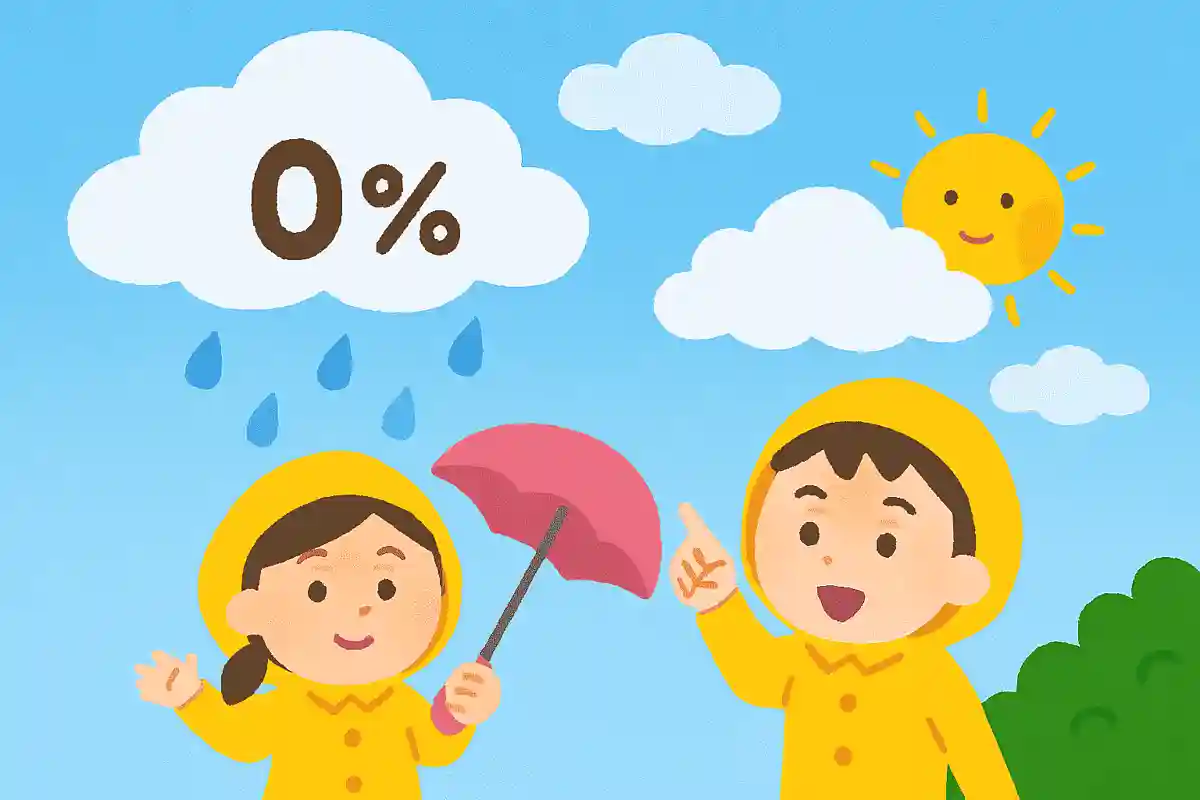
How has it been decided that the ‘0%’ chance of precipitation should be read?
- Zero percent
- Lei Percent
- Either is fine.
See the answer
Lei Percent
In official contexts such as the Japan Meteorological Agency, a precipitation probability of “0%” is designated to be read as “rei percent.” While “zero” is commonly used to read the number 0 in fields like mathematics and science, for precipitation forecasts it is stipulated to be read as “rei.” Many people may have heard announcers on weather reports say “rei percent.”
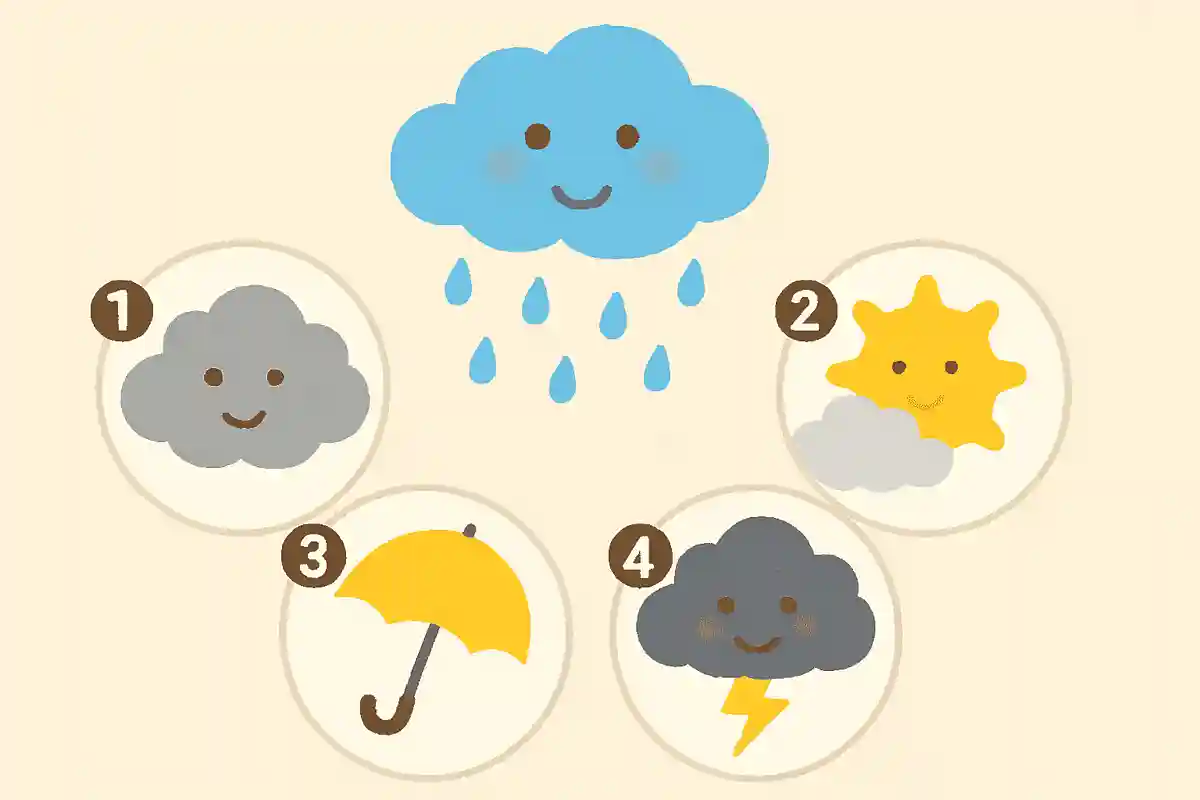
Which is the weather symbol for rain?
- ●
- ◎
- 〇
See the answer
●
Among weather symbols, the one that represents rain is “●”. Weather symbols used by organizations like the Japan Meteorological Agency have fixed marks for each condition. Rain is depicted by filling in the circle completely in black. If you see this symbol on a weather map, assume it indicates rain and prepare accordingly.
What can you stick to the soles of your shoes on rainy days to make them less slippery?
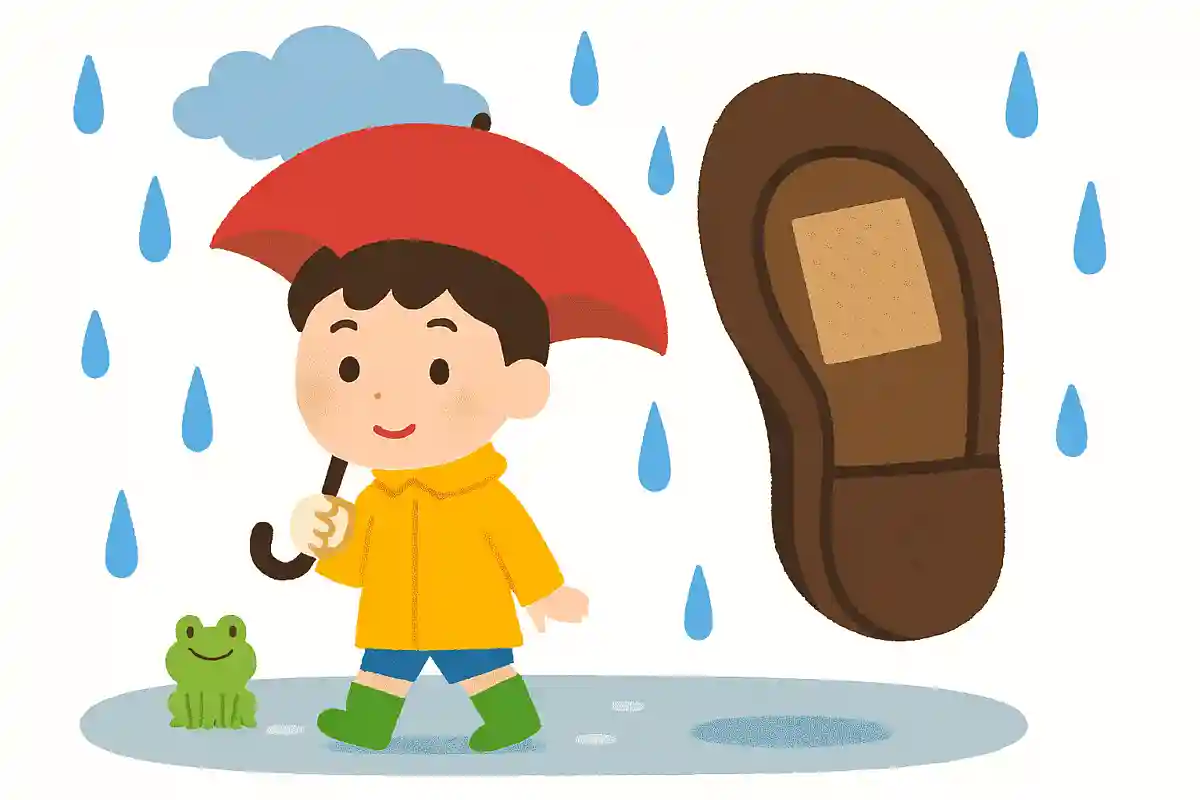
- bandage
- ship
- sticker
See the answer
bandage
It’s said that putting adhesive bandages on the soles of your shoes on rainy days makes them less slippery. The surface of a bandage is rough, which provides traction. Since bandages are easy to keep at home and to get hold of, they’re a handy item—give it a try!
In conclusion
We introduced a trivia quiz and fun facts about rain for kids—what did you think? By learning about rain in a fun way through quizzes, even rainy days should feel a little brighter! Be sure to enjoy the quiz with children who might be feeling down because the rain has disrupted their plans.